Best additive for Dry Mix Mortar
Modern dry mix mortar performance depends heavily on functional additives.
Without proper additives, mortar suffers from:
- Poor workability
- Cracking
- Sagging
- Low adhesion
Top 3 Essential Additives
1. HPMC (Cellulose Ether)
- Water retention
- Open time control
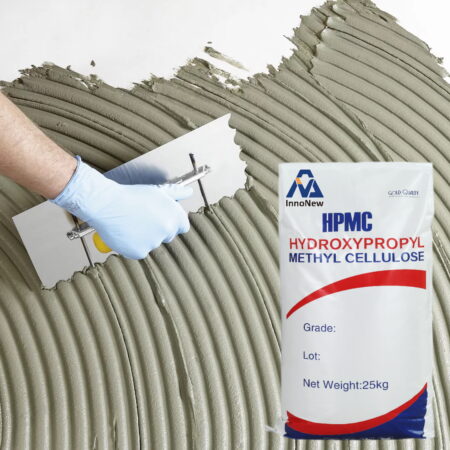
HPMC (Hydroxypropyl Methyl Cellulose) is the primary water retention & thickening agent. It prevents rapid water loss to ensure full cement hydration, extends open time, improves workability, and boosts anti-sagging performance for vertical applications.
2. HPS (Hydroxypropyl Starch Ether)
- Anti-sagging
- Rheology control
- Workability enhancement
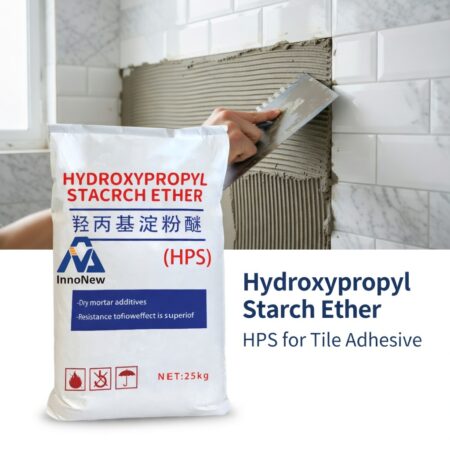
HPS Powder enhances anti-sag, anti-drip, and thixotropic properties, optimizes trowel feel, reduces HPMC dosage to cut costs, and works synergistically with cellulose ethers for better cohesion and workability.
3. RDP (Redispersible Polymer Powder)
- Adhesion improvement
- Flexibility
- Crack resistance
RDP forms a polymer film to improve bond strength, flexibility, crack resistance, water resistance, and weather durability; it also reduces shrinkage and enhances adhesion to difficult substrates.
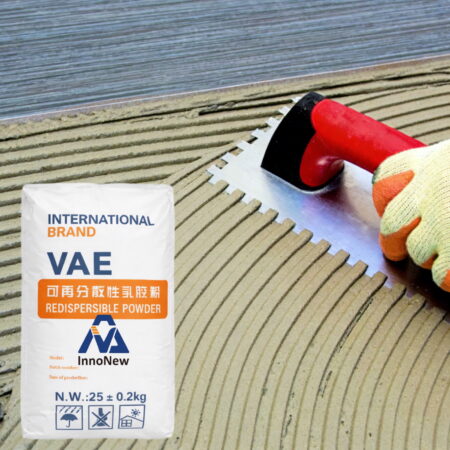
Advanced Additive System
✔ Ideal formulation:
- HPMC: 0.2–0.5%
- HPS: 0.02–0.1%
- RDP: 1–5%
Application-Specific Optimization
- Tile Adhesive → High anti-slip (HPS critical)
- Putty → Smooth finish (HPS + HPMC)
- Self-Leveling → Stability control (HPS key)
Conclusion
HPS is now a must-have additive in high-performance dry mix mortar systems.
FAQ:
HPMC mainly provides water retention and workability, while HPS focuses on anti-sagging and thixotropy to improve construction performance.
RDP improves flexibility, bond strength and crack resistance, reducing mortar brittleness and shrinkage.
Excessive HPMC may slow down curing, increase viscosity excessively and affect final strength development.
HPS is recommended for vertical mortars to enhance anti-sagging, anti-dripping and troweling performance.
Use HPMC for water retention, HPS for anti-sag, and RDP for adhesion; adjust ratios based on application requirements.
Contact Us
Hebei InnoNew Material Technology Co., Ltd. delivers premium PCE, HPMC, HPS & RDP additives tailored for dry mix mortar—solving sagging, boosting water retention, adhesion & durability, with third-party tested quality & global supplyHebei InnoNew Material Technology Co., Ltd..
Get your custom formulation & free sample today →
Contact us: chris@innonew-material.com | WhatsApp: +86 17736063980