
PVA for Wood Glue – High Performance Polyvinyl Alcohol for White Adhesives
Polyvinyl Alcohol (PVA) is the core raw material for wood glue (white glue), widely used in furniture manufacturing, plywood bonding, lamination, and woodworking assembly.
Choosing the right PVA grade directly determines:
- Bonding strength
- Drying speed
- Viscosity stability
- Final adhesive performance
At InnoNew Material, we supply a full range of PVA grades optimized for wood adhesives, including:
- Standard grade (1788)
- High strength grades (2488 / 2688)
- Fast drying grade (0588)
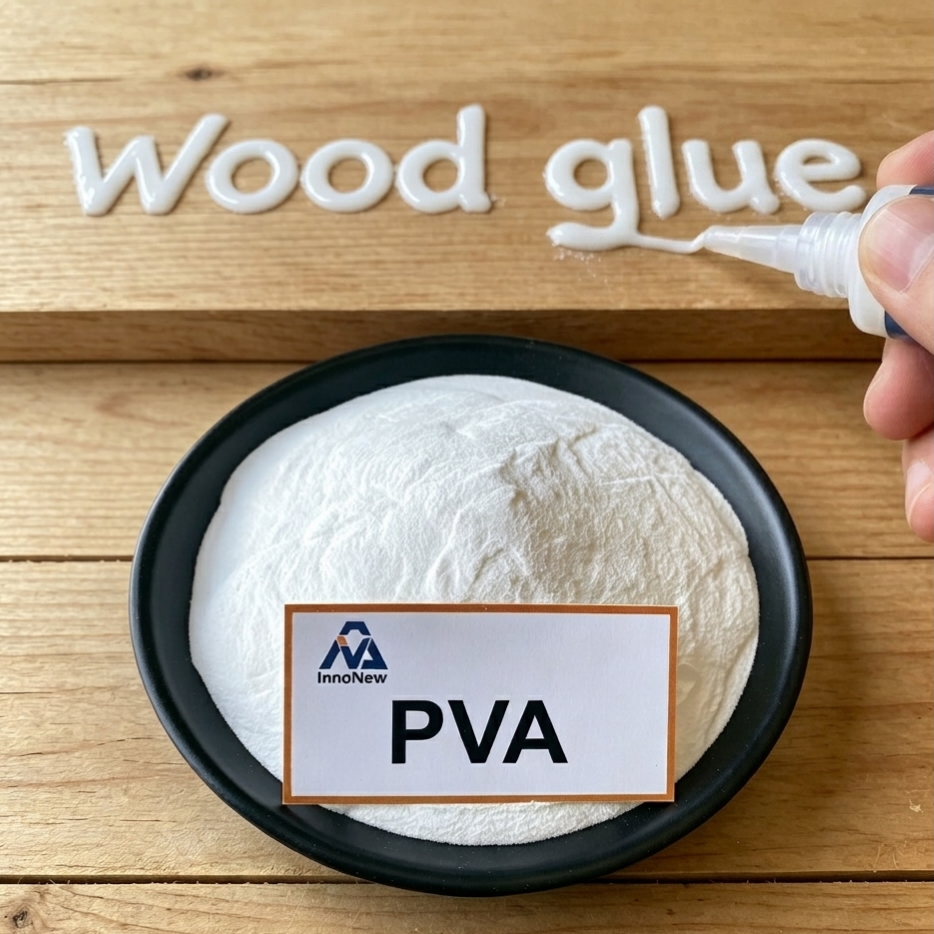
Why PVA is Essential for Wood Glue
- Excellent adhesion to wood fibers
- Strong film-forming ability
- Good flexibility and toughness
- Non-toxic & eco-friendly
- Compatible with various additives
👉 Compared with starch-based adhesives, PVA provides much higher bonding strength and durability
Recommended PVA Grades for Wood Glue Applications
1. Standard Wood Glue (Most Common – White Glue)
Best Choice: PVA 1788
Application:
- Indoor furniture
- Wood assembly
- General bonding
Advantages:
- Balanced viscosity
- Stable performance
- Cost-effective
High Strength / High Viscosity Wood Glue
Best Choice: PVA 2488 / PVA 2688
Application:
- Heavy-duty woodworking
- Plywood & lamination
- Thick wood bonding
Advantages:
- Higher bonding strength
- Stronger film
- Better durability
- Slower drying time (better penetration)
3. Fast Drying / Low Viscosity Wood Glue
Best Choice: PVA 0588
Application:
- Thin wood bonding
- Paper lamination
- DIY & handicrafts
- Fast assembly
Advantages:
- Fast drying
- Easy spreading
- Smooth application
PVA for Wood Glue Formulation Guide
Typical formulation includes:
- PVA (10–20%)
- Water
- Fillers (Calcium Carbonate)
- Plasticizers
- Preservatives
Performance Adjustment:
- Increase viscosity → Use PVA 2488 / 2688
- Faster drying → Use PVA 0588
- Balanced performance → Use PVA 1788
Performance Advantages of Our PVA for Wood Glue
- Strong bonding strength
- Stable viscosity during storage
- Excellent film flexibility
- Good resistance to cracking
- Compatible with additives
Applications
Wood Glue Applications
Furniture Manufacturing
Plywood & Laminated Boards
Interior Decoration
DIY Woodworking
Paper & Wood Bonding
Technical Specifications
| Property | Value |
|---|---|
| Appearance | White Powder |
| Hydrolysis | 86–89% |
| Viscosity | 5–68 mPa.s (depending on grade) |
| pH | 5–7 |
| Moisture | ≤5% |
Why Choose Our PVA for Wood Glue?
- ✔ Stable viscosity control
- ✔ Consistent batch quality
- ✔ Wide grade selection (0588 / 1788 / 2488 / 2688)
- ✔ Factory direct pricing
- ✔ Fast global delivery
- ✔ Free samples & formulation support
We help adhesive manufacturers improve performance while reducing cost.
FAQ (Frequently Asked Questions)
What is the best PVA for wood glue?
PVA 1788 is the most commonly used grade for standard white glue, while PVA 2488 and 2688 are preferred for high-strength applications.
What is the difference between PVA 1788 and 2488?
PVA 2488 has higher viscosity and stronger bonding strength, suitable for heavy-duty wood bonding.
Can PVA be used for plywood adhesive?
Yes, high viscosity grades like PVA 2488 and 2688 are ideal for plywood and lamination.
Is PVA wood glue waterproof?
Standard PVA is water-based, but formulations can be modified for water resistance.
CTA
Looking for a reliable PVA supplier for wood glue production?
👉 Contact us now to get:
- Free sample
- Custom formulation support
- Competitive factory price