
HPMC for Self-Leveling Compound
Improve Flowability, Water Retention & Surface Smoothness
Overview
Hydroxypropyl Methyl Cellulose (HPMC) is a critical additive in self-leveling compounds, designed to optimize flowability, water retention, workability, and crack resistance.
In modern dry mix mortar systems, choosing the right HPMC for self leveling compound directly impacts surface smoothness, leveling performance, and construction efficiency.
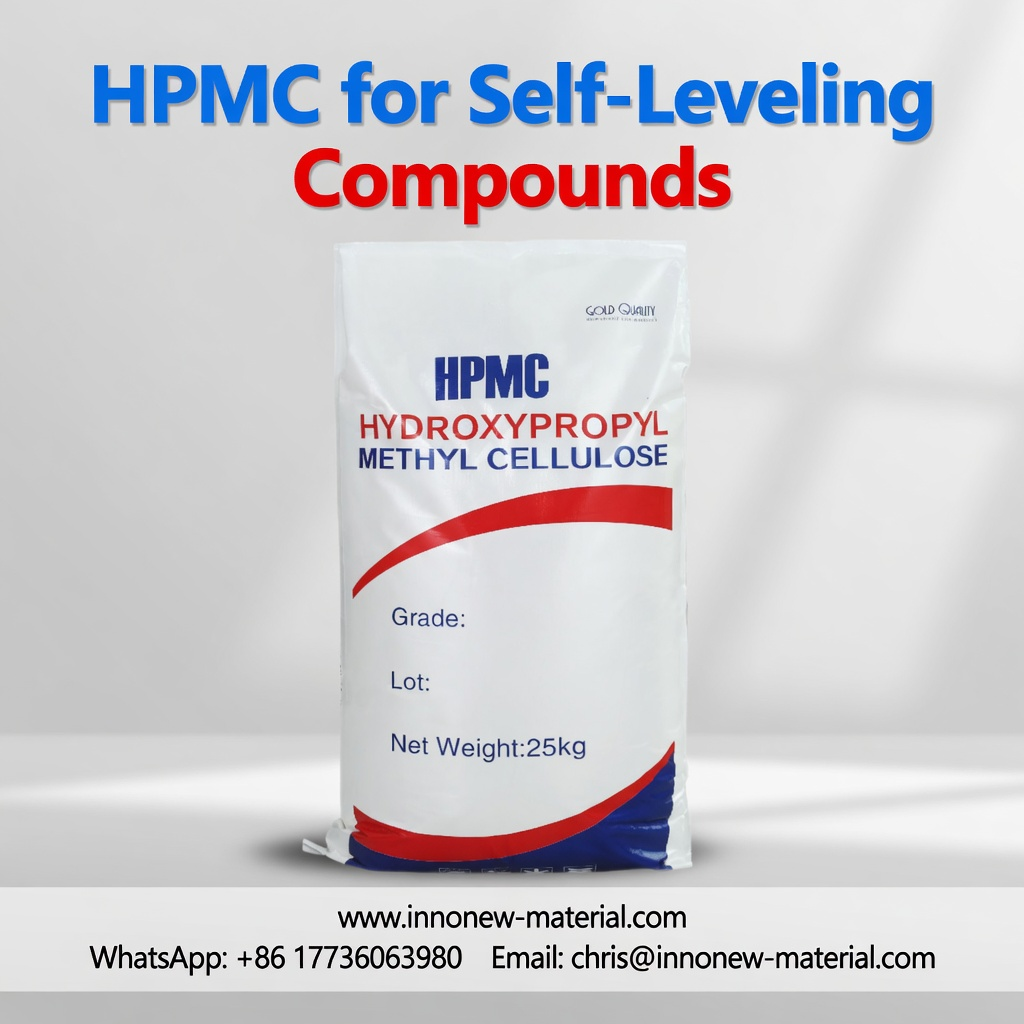
Key Functions of HPMC in Self-Leveling
1. Improve Flowability & Leveling Performance
- Ensures smooth and even surface spreading
- Prevents segregation and bleeding
- Enhances self-leveling effect
2. Water Retention Control
- Reduces rapid water loss
- Ensures proper cement hydration
- Improves bonding strength
3. Extend Open Time
- Allows longer working time
- Improves construction flexibility
4. Anti-Cracking Performance
- Reduces shrinkage stress
- Prevents surface cracks
Recommended HPMC Specifications
| Property | Recommended Range |
|---|---|
| Viscosity | 40,000 – 100,000 mPa.s |
| Methoxy Content | 19–24% |
| Hydroxypropyl Content | 4–12% |
| Moisture | ≤5% |
| Ash Content | ≤5% |
HPMC vs Other Additives
| Additive | Function | Limitation |
|---|---|---|
| HPMC | Water retention + flow control | Slight air entrainment |
| HEMC | Better temperature stability | Higher cost |
| Starch Ether | Anti-sagging | Poor water retention |
| PCE Superplasticizer | Flow improvement | No water retention |
👉 Conclusion: HPMC is an irreplaceable core functional material in self-leveling systems.
Application in Self-Leveling Systems
- Cement-based self leveling compound
- Gypsum-based self leveling
- Industrial flooring
- Commercial floor leveling systems
How to Choose the Best HPMC for Self-Leveling
- Moderate viscosity (to avoid excessive dosage that impairs fluidity)
- Low air entrainment
- Stable water retention
- Good compatibility with PCE Superplasticizier Powder
👉 Recommendation: The use of medium-viscosity HPMC (60,000–80,000 mPa·s) is optimal.
Common Problems & Solutions
Why does self-leveling crack?
- Water loss too fast
- Poor formulation
- Low-quality HPMC
Solution:
- Use high-quality HPMC for self leveling
- Optimize water retention
How to improve flowability in self leveling compound?
- Adjust HPMC viscosity
- Combine with superplasticizer (PCE)
- Control water ratio
What is the dosage of HPMC in self leveling?
- Typical dosage: 0.2% – 0.5%
Why Choose Our HPMC
- Stable viscosity & performance
- Low impurity, high purity cellulose ether
- Strong compatibility with cement systems
- Factory direct price
- Free sample support
Call To Action
👉 Get Free Sample Now
👉 Contact HPMC Manufacturer
👉 Custom Formulation Support Available
Email: chris@innonew-material.com | WhatsApp: +86 17736063980
FAQ
What does HPMC do in self leveling compound?
HPMC improves water retention, enhances flowability, and prevents cracking in self leveling systems.
Is HPMC necessary in self leveling mortar?
Yes, HPMC is essential for controlling workability and ensuring surface quality.
How much HPMC should be added?
Typically 0.2%–0.5% depending on formulation.
Which viscosity HPMC is best?
Medium viscosity (60,000–80,000 mPa.s) is recommended.