
Repair Mortar Solution: Advanced Concrete Repair System for Durable and Structural Performance
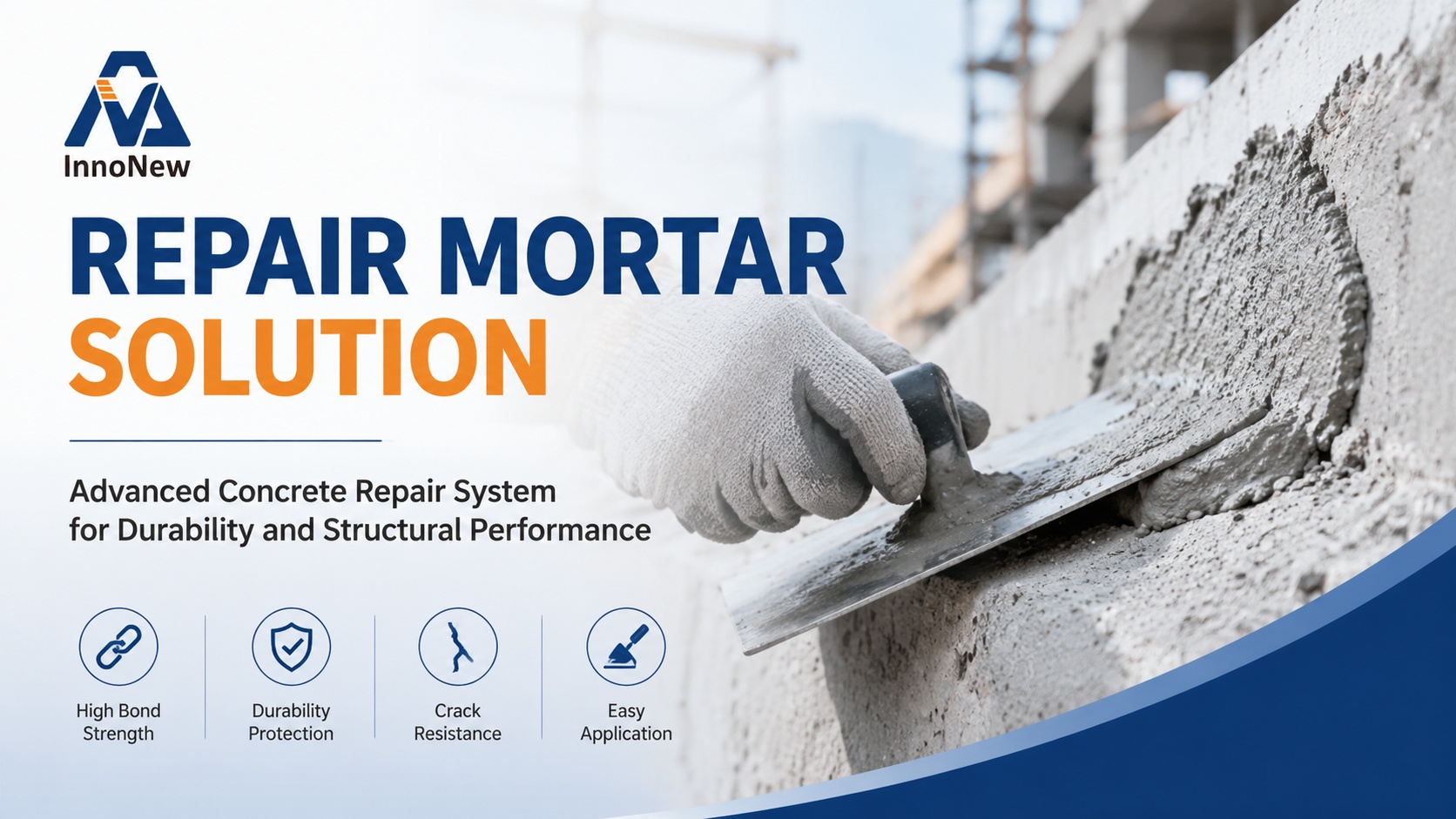
Professional Guide to Polymer Modified Repair Mortar, Material Design, Additives Technology and Middle East Applications
Introduction: Modern Concrete Repair Requires More Than Traditional Mortar
Concrete is one of the most important construction materials in modern infrastructure. From high-rise buildings and industrial facilities to bridges, tunnels, precast components and marine structures, reinforced concrete provides excellent mechanical strength and long-term durability.
However, even well-designed concrete structures gradually deteriorate during their service life due to environmental exposure, mechanical stress and chemical attack.
Common concrete deterioration problems include:
- Concrete cracking
- Surface spalling
- Honeycomb defects
- Carbonation damage
- Chloride penetration
- Reinforcement corrosion
- Abrasion damage
- Water leakage
- Freeze-thaw deterioration
Traditional cement mortar was widely used for concrete repair in the past. However, conventional mortar often cannot meet the performance requirements of modern rehabilitation projects because of:
- Low adhesion strength
- High drying shrinkage
- Poor crack resistance
- Limited durability
- Weak resistance to harsh environments
A professional Repair Mortar Solution is not simply a cement-based filling material. It is an engineered Concrete Rehabilitation System designed to restore damaged concrete, improve interface bonding and extend the service life of structures.
Modern repair mortar technology combines:
- Cementitious binder technology
- Polymer modification
- Rheology control
- Fiber reinforcement
- Shrinkage compensation
- Durability enhancement additives
The objective is not only to repair visible damage but also to rebuild the protective and mechanical performance of concrete structures.
1. Understanding Concrete Failure Mechanisms Before Selecting Repair Mortar
A successful concrete repair project begins with understanding why the original concrete has deteriorated.
Selecting a repair mortar without analyzing the failure mechanism often leads to repeated repairs and increased maintenance costs.
1.1 Concrete Cracking and Shrinkage Problems
Concrete cracking is one of the most common repair challenges.
Main causes include:
Plastic Shrinkage
During the early curing stage, rapid water evaporation causes volume reduction before sufficient hydration develops.
Common in:
- Hot climate areas
- Low humidity environments
- Direct sunlight exposure
Drying Shrinkage
After hardening, moisture loss causes internal stress.
If shrinkage stress exceeds tensile strength:
- Micro-cracks appear
- Crack networks develop
- Repair layers may detach
Professional repair mortar systems reduce shrinkage through:
- Optimized particle grading
- Polymer modification
- Fiber reinforcement
- Water retention technology
1.2 Poor Bonding Between Old Concrete and New Repair Material
The interface between existing concrete and repair mortar is the most critical area in rehabilitation projects.
Repair failure frequently occurs because of insufficient bonding.
Main reasons:
Contaminated Surface
Existing concrete may contain:
- Dust
- Oil
- Loose particles
- Carbonated layers
Different Mechanical Behavior
Old concrete and new mortar have different:
- Elastic modulus
- Shrinkage characteristics
- Moisture movement
Without proper formulation, stress concentration occurs at the interface, resulting in:
- Debonding
- Cracking
- Water penetration
High-performance repair mortar requires:
- Excellent adhesion
- Controlled shrinkage
- Flexible polymer network
1.3 Chloride Attack and Reinforcement Corrosion
For coastal infrastructure, chloride penetration is one of the most serious durability problems.
Typical environments:
- Marine structures
- Coastal buildings
- Parking structures
- Ports
- Bridges
Chloride ions penetrate concrete and destroy the passive protection layer around steel reinforcement.
The corrosion process causes:
- Expansion of steel reinforcement
- Internal pressure
- Concrete cracking
- Structural deterioration
A durable repair mortar system should provide:
- Low water absorption
- Dense cement matrix
- Strong adhesion
- Improved chemical resistance
2. What Is an Advanced Repair Mortar Solution?
A professional Repair Mortar Solution is a specially engineered cement-based material designed for restoring damaged concrete structures.
It consists of multiple functional components working together.
Typical repair mortar system includes:
| Component | Function |
|---|---|
| Portland Cement | Hydraulic strength development |
| Graded Silica Sand | Mechanical skeleton |
| RDP / VAE | Adhesion and flexibility improvement |
| HPMC/MHEC (High gel temperature) | Water retention and workability control |
| PP Fiber | Crack resistance |
| Defoamer | Air control and density improvement |
| Special Additives | Performance optimization |
The performance of repair mortar depends not only on individual raw materials but also on the compatibility and balance between these components.
3. Polymer Modified Repair Mortar Technology
Why Is Polymer Required in Repair Mortar?
Cement-based materials have excellent compressive strength but relatively low tensile strength and flexibility.
Polymer modification improves the weak points of traditional cement mortar.
Redispersible Polymer Powder (RDP) forms a flexible polymer film inside the cement matrix after hydration.
This polymer network provides:
3.1 Improved Bond Strength
RDP enhances adhesion between:
- Repair mortar and old concrete
- Mortar and substrate surface
Benefits:
- Reduced debonding risk
- Better long-term stability
3.2 Improved Crack Resistance
Polymer modification allows repair mortar to better absorb stress caused by:
- Thermal movement
- Drying shrinkage
- Substrate deformation
3.3 Improved Durability
Polymer reduces capillary pores and improves matrix density.
This helps improve resistance against:
- Water penetration
- Chloride attack
- Environmental exposure
4. Role of Construction Chemical Additives in Repair Mortar
The performance of repair mortar depends heavily on functional additives.
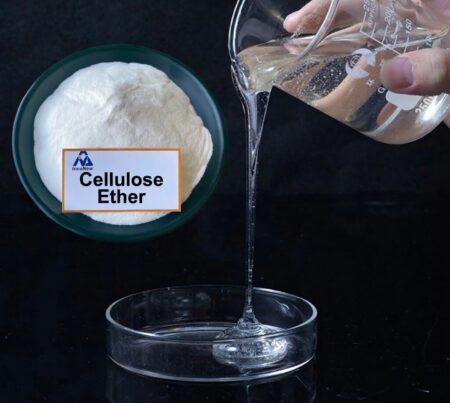
4.1 HPMC / MHEC for Water Retention and Workability Control
Cellulose ether is an essential additive in dry-mix repair mortar systems.
Main functions:
Water Retention
Prevents rapid water loss during curing.
Especially important in:
- Middle East climates
- Summer construction
- Thin-layer repair
Improved Workability
Provides:
- Better spreading performance
- Improved consistency
- Easier application
Enhanced Surface Quality
Proper water retention improves:
- Cement hydration
- Surface strength
- Appearance
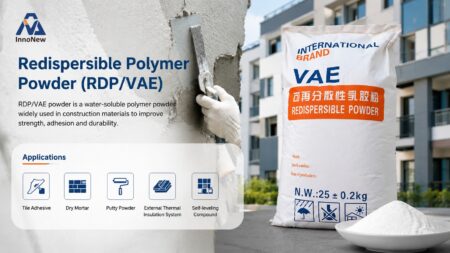
4.2 RDP for Adhesion and Flexibility Enhancement
Redispersible Polymer Powder is one of the most important modifiers in repair mortar formulation.
Functions:
- Increase bonding strength
- Improve flexibility
- Reduce cracking
- Enhance durability
- Improve resistance to deformation
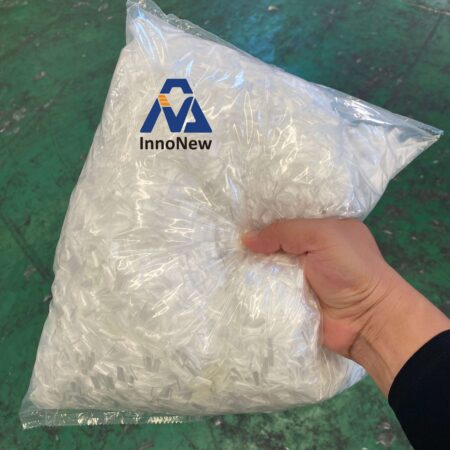
4.3 PP Fiber for Crack Control
Polypropylene fiber is widely used in repair mortar systems.
Mechanism:
During early curing:
- Fiber distributes internal stress
- Reduces micro-crack formation
- Improves toughness
Applications:
- Industrial floors
- Concrete repair
- Road repair
- Structural rehabilitation
Typical dosage:
0.6-1.0 kg/m³ depending on application requirements.
4.4 Defoamer for Density and Surface Performance
Excessive air entrainment can reduce:
- Strength
- Density
- Surface quality
Defoamer helps:
- Reduce unwanted air bubbles
- Improve mortar compactness
- Enhance final appearance
5. Performance Requirements of Professional Repair Mortar
A high-performance repair mortar system should meet the following requirements:
| Property | Typical Performance |
|---|---|
| Compressive Strength (28 days) | 40-60 MPa |
| Bond Strength | ≥1.5 MPa |
| Flexural Strength | ≥8 MPa |
| Shrinkage | Controlled |
| Water Resistance | Excellent |
| Workability | Smooth application |
| Durability | High resistance |
Actual requirements should be adjusted according to:
- Repair thickness
- Structural importance
- Environmental conditions
- Construction method
6. Middle East Case Study: Concrete Repair Mortar Application in UAE Coastal Environment
Project Background
Location:
Dubai, United Arab Emirates
Application:
Concrete parking structure rehabilitation
Environmental Conditions:
- Summer temperature: 40-50°C
- Strong solar radiation
- Coastal chloride exposure
- Rapid moisture evaporation
Existing Problems
After years of service, the concrete structure showed:
- Surface deterioration
- Local concrete spalling
- Hairline cracks
- Early chloride corrosion risk
Repair Challenges
Challenge 1: High Temperature and Rapid Drying
The hot climate accelerated water evaporation from fresh mortar.
Risk:
- Poor hydration
- Surface cracking
- Reduced strength
Solution:
Use repair mortar modified with HPMC/MHEC.
Benefits:
- Improved water retention
- Longer working time
- Better curing performance
Challenge 2: Chloride Exposure
Because of the coastal environment, the repair system required high durability.
Solution:
Polymer modified repair mortar with dense microstructure.
Benefits:
- Reduced permeability
- Improved chloride resistance
- Extended service life
Challenge 3: Crack Prevention
Solution:
PP Fiber reinforced repair mortar.
Construction practice:
- Add fiber into dry mix system
- Ensure uniform dispersion
- Apply proper curing protection
7. Recommended Construction Procedure for Repair Mortar Application
Step 1: Concrete Surface Preparation
Remove:
- Loose concrete
- Dust
- Contaminants
Create a clean and rough surface to improve mechanical bonding.
Step 2: Reinforcement Treatment
For exposed steel:
- Remove rust
- Apply corrosion protection coating
Step 3: Mixing
Recommended procedure:
- Add clean water
- Slowly add repair mortar powder
- Mix for 3-5 minutes
- Allow resting time
- Remix before application
Step 4: Application
Typical thickness:
5-50 mm
For deeper repair:
Apply multiple layers.
Avoid excessive thickness in one application.
Step 5: Curing Protection
Especially important in hot climates.
Recommended:
- Protect from direct sunlight
- Maintain moisture
- Use curing compound when necessary
8. How to Select the Right Repair Mortar Solution?
| Application | Recommended System |
|---|---|
| Building surface repair | Polymer modified repair mortar |
| Bridge rehabilitation | High strength repair mortar |
| Marine structure repair | Low permeability repair mortar |
| Industrial floor repair | Fiber reinforced mortar |
| Equipment foundation | Non-shrink repair mortar |
9. Hebei InnoNew Material Technology: Construction Chemical Additives Solution Provider
Hebei InnoNew Material Technology provides professional construction chemical additives for global dry-mix mortar manufacturers and construction material companies.
Our product solutions include:
- Redispersible Polymer Powder (RDP)
- Hydroxypropyl Methyl Cellulose (HPMC)
- Methyl Hydroxyethyl Cellulose (MHEC)
- Polypropylene Fiber
- Defoamer
These additives are widely used in:
- Repair mortar
- Tile adhesive
- Self-leveling mortar
- Wall putty
- Drymix mortar systems
We support customers in optimizing formulation performance according to:
- Climate conditions
- Raw material availability
- Application requirements
FAQ
1. What is repair mortar used for?
Repair mortar is used to restore damaged concrete structures, improve bonding performance and protect concrete against environmental deterioration.
2. What makes repair mortar different from ordinary mortar?
Repair mortar contains functional additives such as RDP, cellulose ether and fibers, providing higher adhesion, flexibility and durability.
3. Why is RDP used in repair mortar?
RDP improves bonding strength, crack resistance, flexibility and durability by forming a polymer network inside the cement matrix.
4. Can repair mortar be used in hot climates?
Yes. For Middle East applications, formulations should include water retention additives and proper curing methods to prevent rapid drying.
5. How thick can repair mortar be applied?
Application thickness depends on product design. Typical repair mortar thickness ranges from 5 mm to 50 mm.
6. How can repair mortar prevent cracking?
Cracking can be controlled through optimized formulation, polymer modification, fiber reinforcement and proper curing.
7. What additives are commonly used in repair mortar?
Common additives include RDP, HPMC/MHEC, PP Fiber, defoamer and other performance modifiers.
Conclusion
Modern concrete repair requires more than filling damaged areas. A successful repair project depends on a scientifically designed Repair Mortar Solution combining material technology, additive optimization and correct construction practices.
Polymer modified repair mortar systems provide:
- Higher bonding strength
- Better crack resistance
- Improved durability
- Longer service life
With advanced construction chemical additives and application knowledge, repair mortar manufacturers and contractors can develop reliable solutions for demanding environments including the Middle East, coastal infrastructure and high-performance concrete rehabilitation projects.