
What is HPMC for PVC Suspension Polymerization?
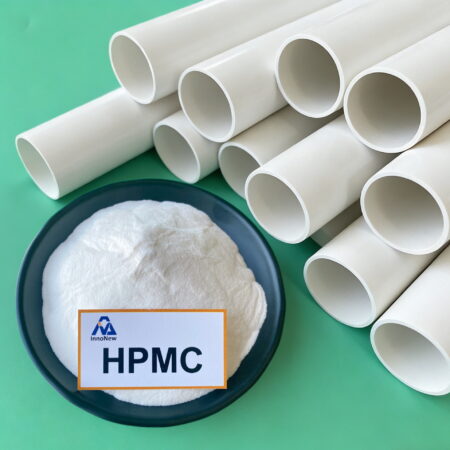
Hydroxypropyl Methylcellulose HPMC PVC Grade is a high-purity cellulose ether used as a protective colloid and stabilizer in the suspension polymerization of vinyl chloride monomer (VCM).
In the PVC production process, HPMC plays a critical role in:
- Stabilizing polymer droplets
- Controlling particle size distribution
- Preventing agglomeration
- Enhancing resin quality consistency
Compared with traditional dispersants, HPMC provides superior rheology control and thermal stability, making it ideal for high-end PVC resin production.
Key Functions in PVC Production
1. Particle Size Control
HPMC ensures uniform suspension, leading to:
- Narrow particle size distribution
- Improved downstream processing performance
2. Suspension Stability
Acts as a protective colloid to:
- Prevent coalescence
- Maintain dispersion uniformity
3. Surface Quality Enhancement
Produces:
- Smooth PVC resin particles
- Reduced fish eyes and defects
4. Thermal & Process Stability
Maintains performance under:
- High temperature polymerization
- Long reaction cycles
Technical Advantages
- High purity with low ash content
- Consistent viscosity grades
- Excellent water solubility
- Stable substitution degree (DS & MS)
- Low gel temperature for process adaptability
Recommended Specifications
| Property | Value |
|---|---|
| Appearance | White Powder |
| Methoxy Content | 19–30% |
| Hydroxypropyl Content | 4–12% |
| Viscosity | 50–2000 mPa.s |
| Moisture | ≤5% |
| pH | 6–8 |
Application Process
- Dissolve HPMC in deionized water
- Prepare aqueous phase before polymerization
- Introduce into VCM suspension system
- Control agitation and temperature
- Maintain stable polymerization environment
This ensures optimal dispersion and high-quality PVC resin formation.
Why Choose Us (Hebei InnoNew)
- Stable industrial-scale production
- Strict quality control (batch consistency)
- Custom viscosity grades available
- Competitive factory pricing
- Fast global logistics support
FAQ:
Q1: Why is HPMC used in PVC suspension polymerization?
A: It acts as a protective colloid to stabilize particles and control resin morphology.
Q2: What viscosity grade is best for PVC production?
A: Typically 100–1000 mPa.s depending on reactor conditions and desired particle size.
Q3: Can HPMC replace PVA in PVC production?
A: Yes, HPMC offers better thermal stability and improved particle uniformity in many systems.
Q4: Is your HPMC suitable for large-scale industrial reactors?
A: Yes, our product is designed for industrial PVC production with consistent batch performance.