
Hydroxyethyl Cellulose (HEC) for Textile Industry
What is HEC in Textile Processing?
InnoNew® Hydroxyethyl Cellulose (HEC) is a non-ionic, water-soluble polymer used extensively in textile applications as a rheology modifier and thickener. It is particularly valued for its high electrolyte tolerance and stable viscosity behavior, making it ideal for modern textile systems involving complex dye formulations.
Unlike traditional starch or alginate systems, HEC provides:
- More predictable rheology control
- Better process stability under variable conditions
- Lower microbial sensitivity
Key Advantages of HEC for Textile Applications
1. High Electrolyte Resistance
HEC maintains viscosity even in:
- High salt dye baths
- Reactive dye systems
- Electrolyte-rich formulations
This is critical for consistent color yield and process repeatability
2. Stable Rheology Control
- Pseudoplastic flow behavior
- Excellent shear-thinning performance
- Prevents paste breakdown during printing
3. Superior Printing Performance
- Sharp pattern definition
- Reduced bleeding
- Uniform paste distribution
4. Excellent Compatibility
Compatible with:
- Reactive dyes
- Pigment systems
- Disperse dyes
5. Process Efficiency
- Easy cold-water dissolution
- Fast hydration
- Reduced mixing time
Main Applications of HEC in Textile Industry
1. Textile Printing Thickener
HEC is widely used in:
- Rotary screen printing
- Flat screen printing
- Digital printing pre-treatment
Function:
- Controls viscosity
- Stabilizes color paste
- Enhances print clarity
2. Dyeing Auxiliary & Rheology Modifier
- Improves dye penetration control
- Reduces uneven dyeing
- Enhances reproducibility
3. Fabric Finishing
- Improves coating uniformity
- Enhances fabric smoothness
- Provides soft hand feel
4. Auxiliary Stabilizer in Chemical Formulations
- Prevents phase separation
- Improves formulation shelf-life
HEC vs PVA in Textile Applications
PVA for Textile Applications(Sizing & Film-Forming Solutions)
Fundamental Difference
- HEC (Hydroxyethyl Cellulose) → Rheology control & thickening
- PVA (Polyvinyl Alcohol) → Film-forming & fiber binding
HEC vs PVA – Technical Comparison
| Property | HEC | PVA |
|---|---|---|
| Chemical Type | Cellulose ether (non-ionic) | Synthetic polymer |
| Main Function | Thickener | Film former / binder |
| Water Solubility | Cold water soluble | Hot/cold (depends on grade) |
| Viscosity Control | Excellent | Limited |
| Film Strength | Medium | Very high |
| Electrolyte Resistance | Excellent | Poor–Moderate |
| Dye Compatibility | Excellent | Moderate |
| Application Focus | Printing, dyeing | Sizing, coating |
| Biodegradability | Good | Moderate |
Performance Differences
1. Printing Systems
- HEC: Maintains stable viscosity even with salts → consistent print quality
- PVA: Viscosity drops under electrolytes → unstable paste
Conclusion: HEC is significantly superior for textile printing systems
2. Sizing Applications
- PVA: Forms strong films → improves yarn strength
- HEC: Film weaker → not ideal as primary sizing agent
Conclusion: PVA dominates in yarn sizing
3. Dyeing Systems
- HEC: Controls migration → uniform dyeing
- PVA: Limited rheology control
Conclusion: HEC is preferred in dyeing auxiliaries
4. Process Stability
- HEC: High tolerance to pH & salts
- PVA: Sensitive to process conditions
Selection Strategy
Choose HEC if you need:
- Textile printing thickener
- Dyeing rheology control
- High electrolyte stability
Choose PVA if you need:
- Yarn sizing agent
- High-strength film formation
- Fiber binding
Specifications (Textile Grade HEC)
| Parameter | Value |
|---|---|
| Appearance | White powder |
| Viscosity | 3,000 – 100,000 mPa.s |
| pH Value | 6.0 – 8.5 |
| Moisture | ≤5% |
| Solubility | Cold water soluble |
Why Choose InnoNew HEC for Textile?
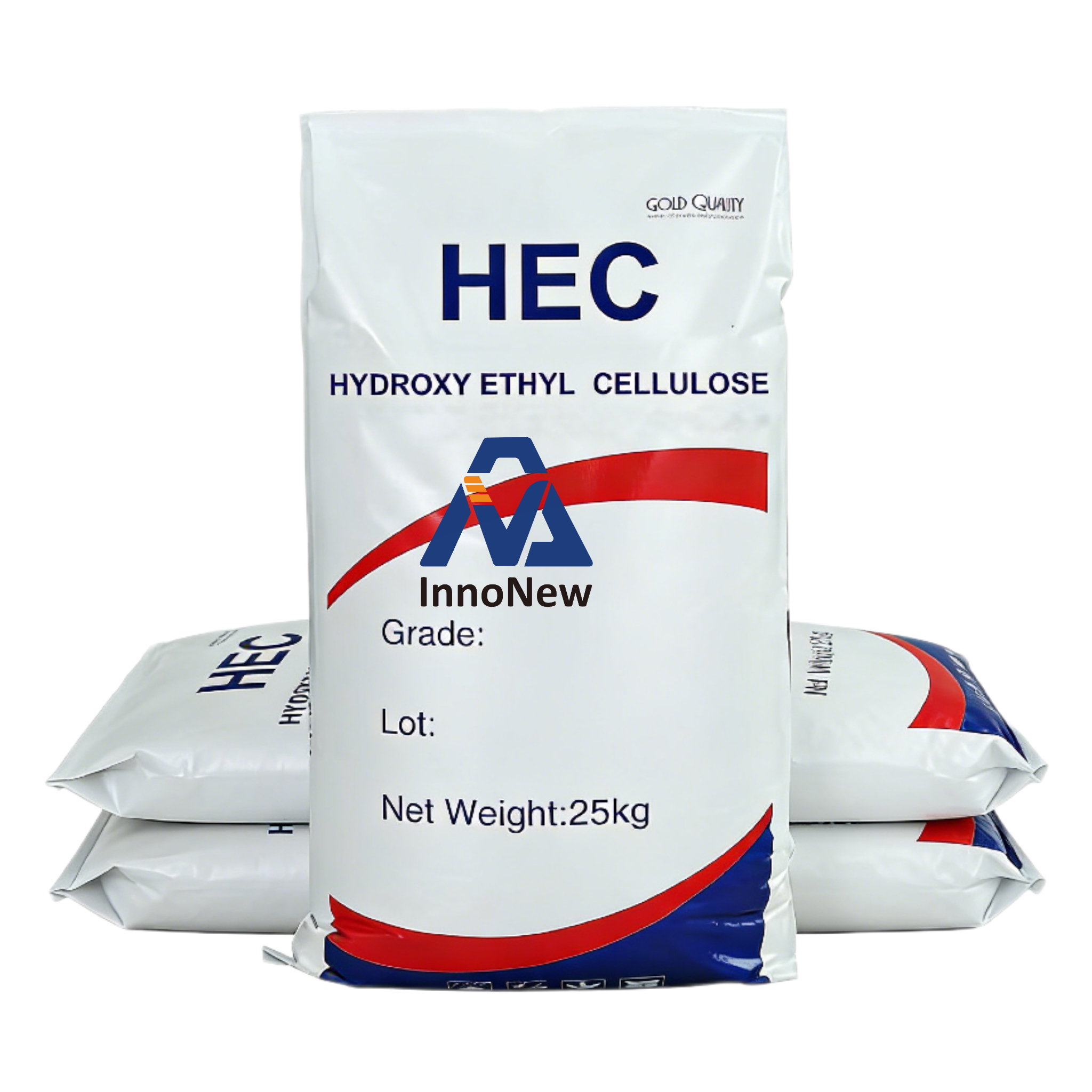
1. Optimized for Textile Systems
- Tailored viscosity for printing
- Stable performance in dye environments
2. Batch Consistency
- Strict QC control
- Reliable large-scale production
3. Customization Capability
- Viscosity adjustment
- Application-specific grades
4. Strong Export Supply Chain
- Fast delivery
- Global textile clients
FAQ – HEC for Textile
Q1: Why is HEC better than PVA in textile printing?
Because HEC maintains viscosity under high electrolyte conditions, ensuring stable printing performance.
Q2: Can HEC replace PVA in sizing?
Not completely. HEC lacks the film strength required for high-performance yarn sizing.
Q3: Is HEC compatible with reactive dyes?
Yes, it is highly compatible and widely used in reactive dye systems.
Q4: How does HEC improve print quality?
By controlling rheology and preventing dye bleeding.
Q5: Can HEC be used with other binders?
Yes, it can be combined with PVA or other polymers for hybrid systems.
Call to Action
Looking for a reliable HEC supplier for textile applications?
We provide:
- Free samples
- Technical formulation support
- Competitive factory pricing
WhatsApp: +86 17736063980
Email: chris@innonew-material.com