
DEIPA vs TIPA vs TEA: The Key Difference in Cement Grinding Aid
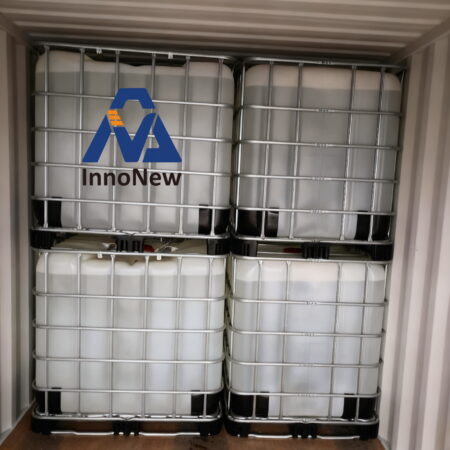
At Hebei InnoNew Material Technology Co., Ltd., we specialize in the production and export of high-performance DEIPA, TIPA, and comprehensive cement grinding aid formulations. With over a decade of experience supplying the Chinese construction industry and global markets, we have developed a deep understanding of how these additives influence cement hydration and final strength performance.
1. DEIPA (Diethanol Isopropanolamine)
DEIPA is widely used as a grinding aid and strength enhancer. It primarily improves the late strength (7-day and 28-day) of cement while maintaining good grinding efficiency. Its molecular structure promotes better hydration of C₃A and C₃S phases, resulting in denser cement paste and enhanced mechanical properties. DEIPA is also more environmentally friendly and compatible with modern low-alkali clinker systems, making it a preferred choice in sustainable cement formulations.
2. TIPA (Triisopropanolamine)
TIPA is mainly recognized for its ability to enhance late strength and reduce clinker hydration issues in blended cement systems. It is particularly effective for slag cement and fly ash cement, as it accelerates the hydration of the aluminate phase and improves particle dispersion. TIPA also provides excellent surface energy reduction, helping to minimize agglomeration during the grinding process.
3. TEA (Triethanolamine)
TEA was one of the earliest amine-based grinding aids used in the cement industry. It effectively improves early strength and reduces grinding energy consumption, but excessive use may lead to setting time problems or influence sulfate balance in cement. TEA is often blended with DEIPA or TIPA to balance early and late strength performance.
Conclusion
Choosing the right amine compound depends on production goals and raw material characteristics:
- DEIPA → Best for balanced performance, high late strength, and eco-friendly systems.
- TIPA → Ideal for slag or blended cements with focus on long-term strength.
- TEA → Suitable when early strength development is the main target.
At Hebei InnoNew Material Technology Co., Ltd., we provide customized grinding aid solutions tailored to your cement plant’s requirements. Our products are widely exported to Asia, the Middle East, Europe, and the Americas, backed by consistent quality and reliable technical support.
FAQ:
Both are alkanolamine-based cement grinding aids and strength enhancers, widely used in cement production and concrete admixtures.
DEIPA focuses more on late-stage strength improvement and grinding efficiency, while TIPA performs better in early strength enhancement and fluidity.
DEIPA improves 28‑day strength more significantly. TIPA gives higher 3‑day and 7‑day early strength.
Yes, they are highly compatible. Blending them creates a balanced formula that improves both early and late cement performance.
DEIPA generally provides better cost efficiency for most cement plants, while TIPA is favored for specialized high‑early‑strength formulations