
PP Fiber Thailand: A Technical Guide to Concrete Crack Control and Durability Enhancement
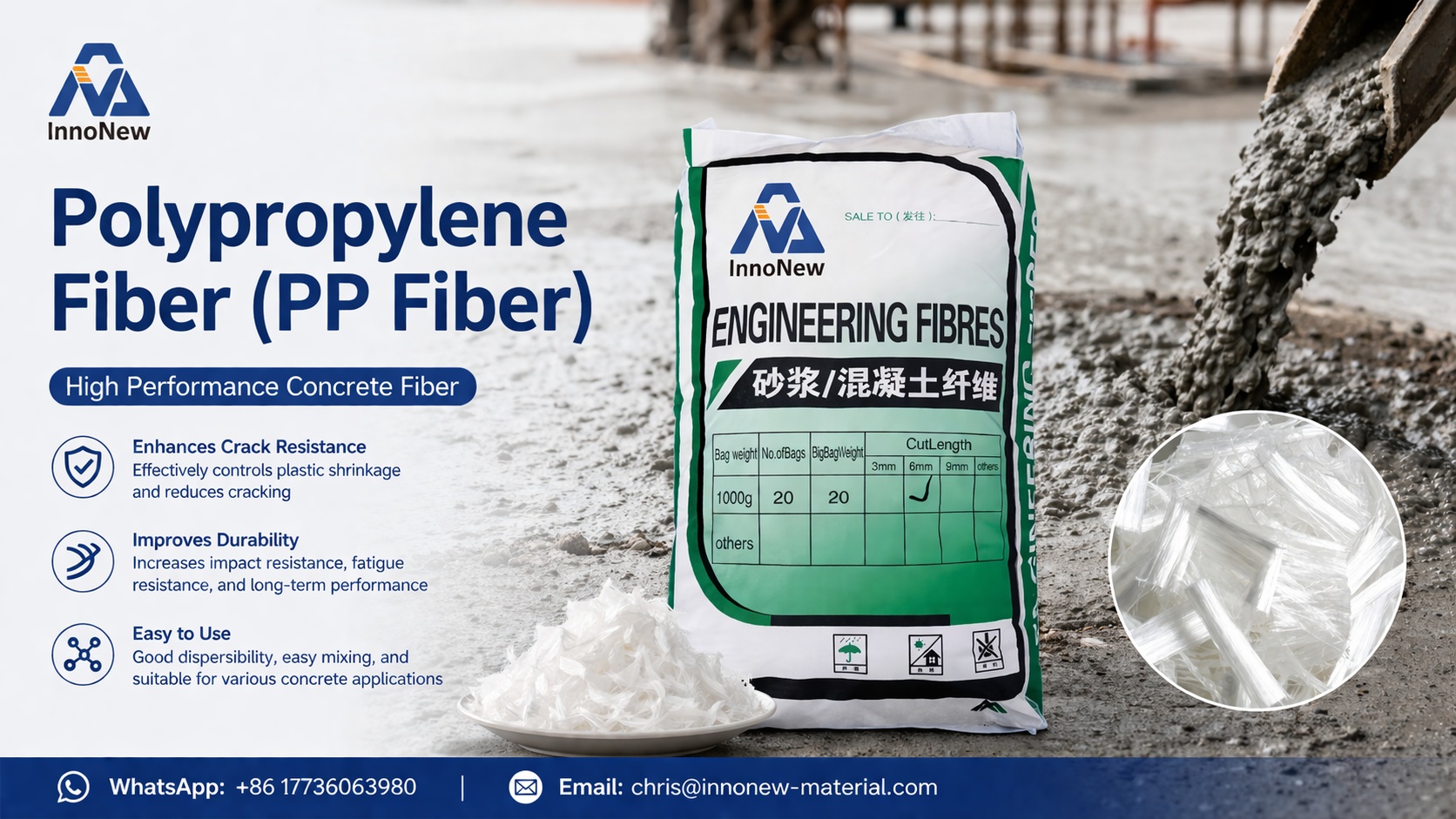
Understanding the Growing Demand for PP Fiber in Thailand
Thailand’s construction sector continues to expand across infrastructure, industrial facilities, logistics centers, residential developments, and transportation projects. As project owners increasingly focus on durability and lifecycle costs, controlling concrete cracking has become a critical engineering consideration.
One solution gaining widespread adoption is PP Fiber (Polypropylene Fiber), a synthetic reinforcement material designed to improve concrete performance during both the plastic and hardened stages.
In Thailand, engineers and contractors commonly search for:
- เส้นใย PP สำหรับคอนกรีต
- เส้นใยโพลีโพรพิลีน
- คอนกรีตเสริมเส้นใย
- วิธีป้องกันรอยร้าวคอนกรีต
- Fiber Reinforced Concrete Thailand
This article provides a technical overview of PP Fiber, its working mechanism, applications, and best practices for the Thai construction market.
What is PP Fiber?
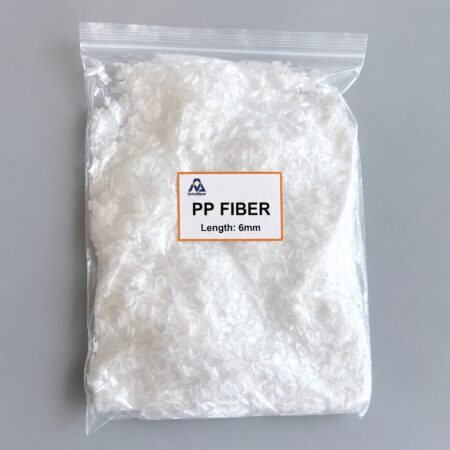
PP Fiber, or Polypropylene Fiber, is a synthetic fiber manufactured from polypropylene polymer. When dispersed throughout a concrete mix, these fibers create a three-dimensional reinforcement network that helps control micro-cracking and improve concrete integrity.
Unlike traditional steel reinforcement, PP Fiber is primarily used for:
- Plastic shrinkage crack reduction
- Early-age crack control
- Improved toughness
- Enhanced impact resistance
- Better durability performance
PP Fiber is not intended to replace structural reinforcement but rather to complement the overall performance of concrete.
Why Concrete Cracks in Thailand
Thailand’s tropical climate presents several challenges for concrete structures.
High Temperature
Elevated temperatures accelerate water evaporation, increasing the risk of plastic shrinkage cracking.
High Solar Radiation
Concrete surfaces exposed to direct sunlight can lose moisture rapidly before adequate curing takes place.
Rapid Construction Schedules
Fast-track projects often place pressure on curing practices, increasing the likelihood of early-age cracking.
Seasonal Moisture Variations
Alternating wet and dry conditions create expansion and contraction cycles that can contribute to crack development over time.
These factors explain why many Thai engineers actively seek solutions for:
การควบคุมรอยร้าวคอนกรีต (Concrete Crack Control)
How PP Fiber Works in Concrete
1. Plastic Shrinkage Crack Control
During the first few hours after concrete placement, moisture evaporates from the surface.
As the concrete begins to shrink, tensile stresses develop.
PP Fiber distributes these stresses throughout the matrix, reducing crack formation before the concrete gains sufficient strength.
2. Crack Bridging Effect
When microscopic cracks begin to form, fibers crossing the crack path act as bridges.
This mechanism:
- Restricts crack growth
- Reduces crack width
- Improves overall crack distribution
Engineers often refer to this as the Crack Bridging Mechanism.
3. Improved Toughness
Concrete is naturally strong in compression but relatively weak in tension.
PP Fiber enhances post-crack behavior by increasing toughness and energy absorption capacity.
Benefits include:
- Better impact resistance
- Reduced surface damage
- Improved service life
Technical Benefits of PP Fiber
| Property | Benefit |
|---|---|
| Low Density | Easy transportation and handling |
| Non-Corrosive | No rust risk |
| Chemical Resistance | Suitable for aggressive environments |
| Uniform Dispersion | Consistent reinforcement throughout concrete |
| Alkali Resistance | Compatible with cementitious systems |
| Low Water Absorption | Stable performance in humid climates |
Typical Applications in Thailand
Industrial Floors (พื้นโรงงานอุตสาหกรรม)
Industrial floors experience:
- Forklift traffic
- Dynamic loading
- Abrasion
PP Fiber helps reduce shrinkage cracks and improves floor durability.
Warehouses and Logistics Centers
Thailand’s logistics sector continues to grow due to e-commerce and regional trade.
Fiber-reinforced concrete can provide:
- Better slab performance
- Reduced maintenance costs
- Improved crack management
Roads and Pavements
Applications include:
- Municipal roads
- Access roads
- Pavements
- Concrete overlays
PP Fiber contributes to improved surface integrity and crack control.
Precast Concrete Products
Common precast applications include:
- Pipes
- Drainage channels
- Concrete panels
- Utility structures
The addition of PP Fiber can enhance durability and reduce handling damage.
Infrastructure Projects
Thailand continues to invest heavily in:
- Highways
- Rail systems
- Airports
- Industrial zones
Durability requirements in these projects make fiber reinforcement increasingly relevant.
Recommended Dosage Guidelines
The optimum dosage depends on project requirements and mix design.
General recommendations:
| Application | Typical Dosage |
|---|---|
| Crack Control | 0.6–0.9 kg/m³ |
| Industrial Floors | 0.9–1.5 kg/m³ |
| Heavy-Duty Applications | 1.5–3.0 kg/m³ |
Actual dosage should always be confirmed through laboratory testing and project specifications.
Best Practices for Mixing PP Fiber
To achieve uniform distribution:
Step 1
Add fibers gradually during batching.
Step 2
Maintain sufficient mixing time.
Step 3
Avoid dumping large quantities at one time.
Step 4
Verify workability before placement.
Proper mixing is critical to maximizing fiber performance.
Common Concrete Challenges in Thailand Construction Projects
(ความท้าทายของงานคอนกรีตในประเทศไทย)
Concrete performance can be influenced by numerous factors throughout a project’s lifecycle.
In Thailand, common challenges include:
High Ambient Temperatures
Rapid evaporation can accelerate plastic shrinkage.
Large Industrial Slabs
Long slab sections increase crack risk due to restrained movement.
Fast Construction Schedules
Short construction windows may reduce curing effectiveness.
Heavy Traffic Loads
Industrial facilities require higher durability and crack management performance.
By addressing these challenges during the design stage, project teams can improve long-term concrete performance and reduce maintenance costs.
Sustainability and Modern Construction
As Thailand moves toward sustainable construction practices, PP Fiber offers several environmental advantages.
Benefits include:
- Extended service life
- Reduced repair frequency
- Lower maintenance requirements
- Improved resource efficiency
These advantages align with modern infrastructure sustainability goals.
Conclusion
PP Fiber has become an important component of modern concrete technology in Thailand. By helping control plastic shrinkage cracking, improving toughness, and enhancing durability, it offers practical benefits across industrial, commercial, and infrastructure projects.
For engineers, contractors, and project owners seeking long-term concrete performance, PP Fiber represents a proven solution for improving concrete quality under Thailand’s challenging climatic conditions.
Frequently Asked Questions (FAQ)
What is PP Fiber used for in concrete?
PP Fiber is primarily used to reduce plastic shrinkage cracking, improve toughness, and enhance concrete durability.
PP Fiber สามารถแทนเหล็กเสริมได้หรือไม่?
ไม่ได้
PP Fiber มีหน้าที่หลักในการควบคุมรอยร้าวและเพิ่มความเหนียวของคอนกรีต ไม่ได้ออกแบบมาเพื่อทดแทนเหล็กเสริมโครงสร้าง
Is PP Fiber suitable for industrial flooring?
Yes. PP Fiber is widely used in industrial floors, warehouses, and logistics centers to improve crack resistance and long-term durability.
ปริมาณการใช้งาน PP Fiber เท่าไรจึงเหมาะสม?
โดยทั่วไปอยู่ระหว่าง 0.6–1.5 กิโลกรัมต่อลูกบาศก์เมตร ขึ้นอยู่กับประเภทงานและข้อกำหนดทางวิศวกรรม
Does PP Fiber affect concrete workability?
When properly mixed and dosed, PP Fiber has minimal impact on workability.
เส้นใยโพลีโพรพิลีนเหมาะกับสภาพอากาศประเทศไทยหรือไม่?
เหมาะอย่างยิ่ง เนื่องจากมีความทนทานต่อความชื้น ไม่เป็นสนิม และช่วยลดความเสี่ยงของรอยร้าวที่เกิดจากอุณหภูมิสูงและการสูญเสียน้ำอย่างรวดเร็ว
Can PP Fiber improve concrete durability?
Yes. By reducing crack formation and limiting crack propagation, PP Fiber contributes to longer service life and lower maintenance requirements.