
How Concrete Mold Release Agent Improves Surface Quality and Reduces Labor Cost
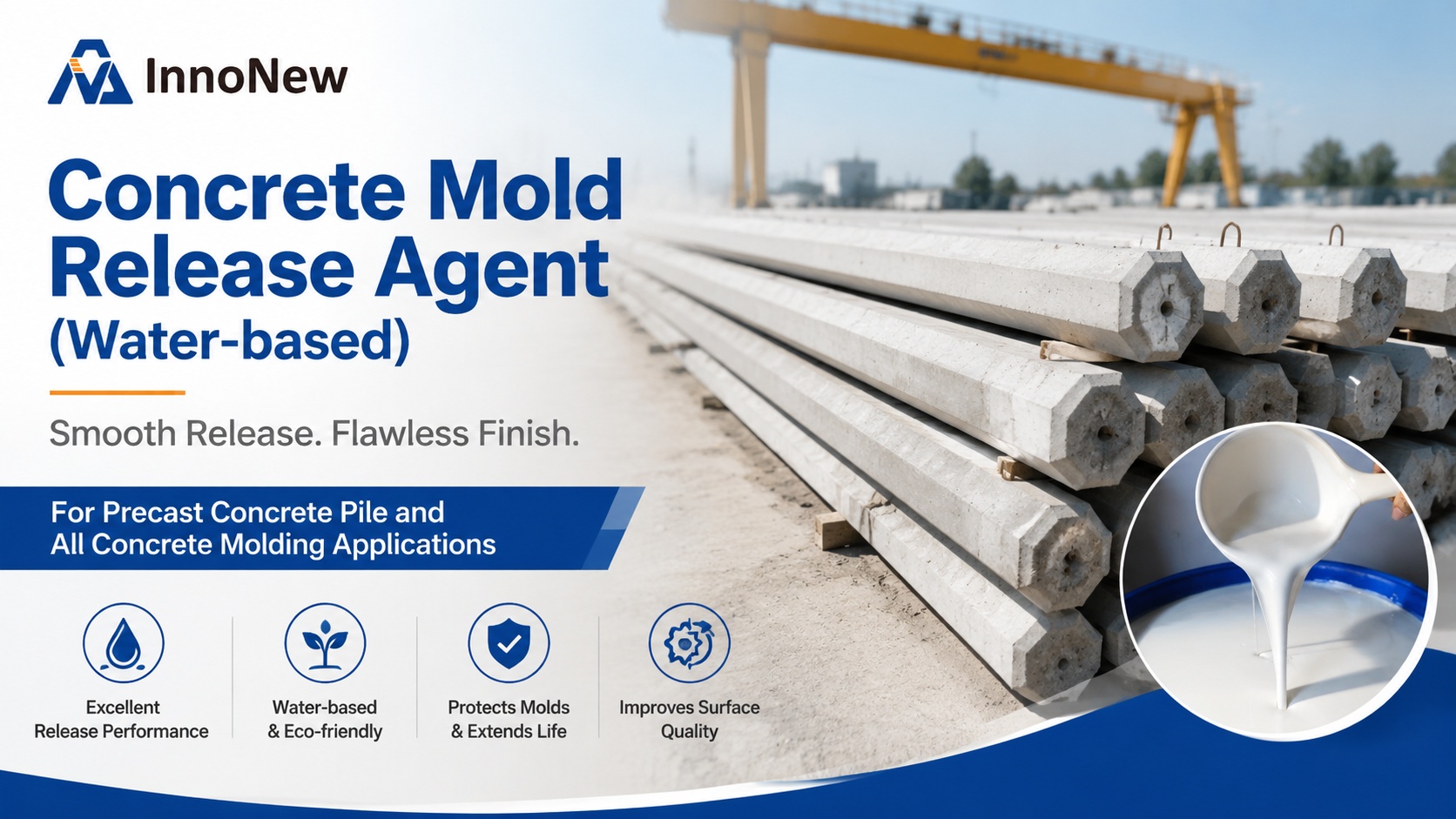
Introduction
In precast concrete production and construction formwork systems, surface quality and labor efficiency are two of the most critical cost drivers.
Without an effective concrete mold release agent, manufacturers often face:
- Surface defects (sticking, honeycombing, tearing)
- High mold cleaning labor cost
- Longer demolding cycle time
- Reduced mold lifespan
- Inconsistent product quality
Modern water-based concrete mold release agents solve these issues by forming a stable separation interface between concrete and mold surfaces, ensuring clean release and higher productivity.
What is Concrete Mold Release Agent?
A concrete mold release agent (also called formwork release agent or demolding agent) is a chemical interface material applied to mold surfaces before casting concrete.
Its main function is to create a micro-scale separation film that prevents cement paste adhesion.
This directly impacts:
- Surface smoothness of concrete
- Mold reuse cycles
- Production speed in precast factories
- Labor intensity during cleaning and stripping
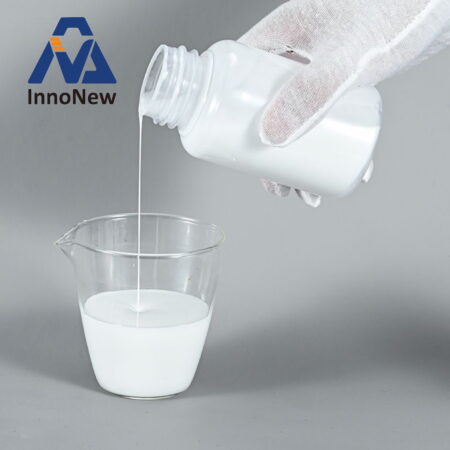
How It Improves Surface Quality
Surface quality improvement is achieved through four engineering mechanisms:
1. Separation Film Technology
A uniform molecular layer is formed on steel, wood, or plastic molds, preventing direct cement contact.
2. Surface Energy Reduction
The agent reduces interfacial bonding strength between hydrated cement particles and mold surface.
3. Hydration Control at Interface
It prevents early-stage cement hydration bonding that causes surface tearing or sticking.
4. Controlled Release Behavior
Ensures smooth demolding when concrete reaches initial set strength without damaging edges or texture.
How It Reduces Labor Cost
Labor cost reduction is mainly achieved through:
1. Reduced Mold Cleaning Time
Less concrete residue → less manual scraping → lower labor input.
2. Faster Demolding Cycle
Shorter stripping time increases daily production output.
3. Lower Rework Rate
Fewer surface defects reduce repair and patching labor.
4. Improved Automation Compatibility
Water-based release agents are compatible with spray systems, reducing manual labor dependency.
Application Case Study: Thailand Precast Factory
A precast concrete factory in Thailand (Bangkok industrial zone) producing wall panels and PHC components faced:
Before Optimization:
- High mold cleaning labor cost
- Uneven surface finish on steel molds
- Frequent sticking problems in humid climate
- 2–3 minutes additional cleaning per mold cycle
After Switching to Water-Based Concrete Mold Release Agent:
After adopting a water-based release system:
- Mold cleaning time reduced by ~40–60%
- Surface defects significantly decreased
- Demolding process became stable under high humidity conditions
- Labor allocation shifted from cleaning → production control
Key Insight:
In Southeast Asia’s hot and humid environment, water-based systems perform more consistently than oil-based release agents, especially in precast mass production.
Application Scope
Concrete mold release agents are widely used in:
- Precast concrete factories
- PHC pile production lines
- Concrete pipe manufacturing
- Wall panels and slab systems
- Bridge and infrastructure precast components
- Ready-mix formwork systems
- Industrial block production
Why Water-Based Mold Release Agent is Replacing Oil-Based Systems
Modern construction is shifting toward water-based systems due to:
- Lower VOC emissions
- Cleaner concrete surface finish
- No oil contamination or staining
- Better compatibility with automated spraying
- Environmental compliance requirements
- Improved worker safety
This transition is especially strong in Asia-Pacific precast industries.
Technical Advantages Summary
- Stable and uniform release film
- Improved concrete surface aesthetics
- Reduced labor-intensive cleaning
- Extended mold service life
- Suitable for high-frequency precast production
- Compatible with steel and aluminum formwork systems
Why Choose Us
Hebei InnoNew Material Technology Co., Ltd. is a professional supplier of construction chemical systems, including:
- Polycarboxylate Superplasticizer (PCE)
- Cellulose Ether (HPMC, MHEC, HEC)
- Redispersible Polymer Powder (RDP/VAE)
- Concrete surface and formwork chemical solutions
We provide:
- Stable industrial-grade formulations
- Technical application support for precast factories
- Global export supply capability
- System-level concrete performance optimization
FAQ
1. What does concrete mold release agent do?
It prevents concrete from sticking to molds by forming a separation film between concrete and formwork surfaces.
2. How does it improve surface quality?
It reduces surface defects such as tearing, honeycombing, and adhesion marks during demolding.
3. Can it reduce labor cost?
Yes. It reduces cleaning time, demolding effort, and repair work, significantly lowering labor input.
4. Is water-based release agent better than oil-based?
Yes. It provides cleaner surfaces, better environmental performance, and is more suitable for modern precast automation.
5. Where is it commonly used?
It is widely used in precast factories, construction formwork systems, and infrastructure concrete production.
Conclusion
Concrete mold release agent is no longer just a consumable—it is a critical process optimization material in modern precast production.
By improving surface quality and reducing labor cost simultaneously, it directly enhances production efficiency and profitability.
If you are looking for a stable water-based concrete mold release solution, contact us for technical support, samples, and pricing.
Hebei InnoNew Material Technology Co., Ltd.