
Polycarboxylate Superplasticizer PCE Powder vs Liquid
This guide provides a comprehensive comparison of polycarboxylate superplasticizer (PCE) powder vs liquid, focusing on transport efficiency, cost structure, storage stability, and concrete performance. It is designed for importers, distributors, and concrete producers in Thailand, Vietnam, and Southeast Asia, helping optimize procurement decisions and formulation strategies.
Why Compare PCE Powder vs Liquid?
In modern concrete technology, Polycarboxylate Superplasticizer (PCE) is the core high-range water reducer. However, choosing between PCE powder vs liquid directly impacts:
- Total procurement cost
- Transportation efficiency
- Storage stability
- Concrete performance consistency
For fast-growing markets like Thailand and Vietnam, this decision is even more critical due to climate, logistics cost, and supply chain constraints.
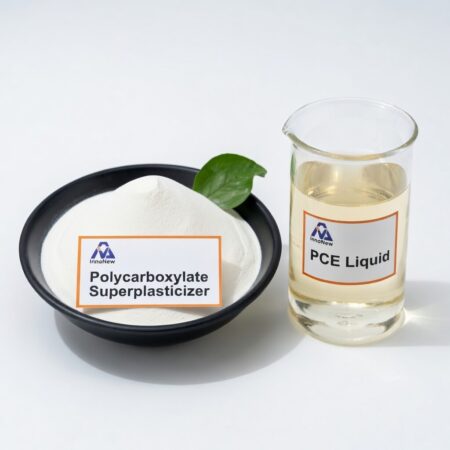
What is PCE Powder vs Liquid?
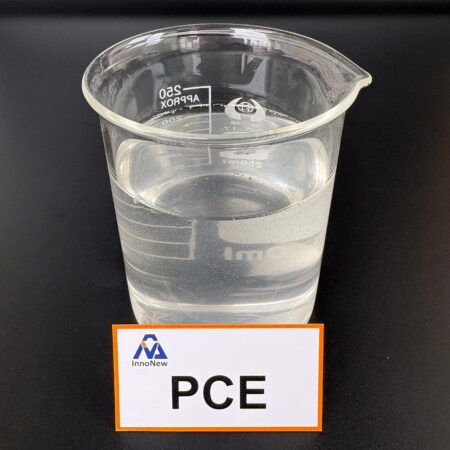
PCE Liquid
- Water-based solution (typically 40–50% solid content)
- Ready-to-use in batching plants
- Common in local supply chains
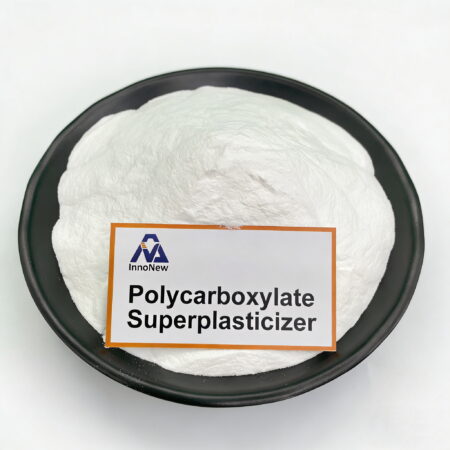
PCE Powder
- Spray-dried powder (≥ 95% solid content)
- Redispersible in water
- Designed for export and dry mix systems
Core Comparison: PCE Powder vs Liquid
| Parameter | PCE Powder | PCE Liquid |
|---|---|---|
| Solid Content | ≥95% | 40–50% |
| Transport Cost | ✅ Low | ❌ High |
| Storage Stability | ✅ Long-term | ❌ Limited |
| Shelf Life | 12–24 months | 6–12 months |
| Application | Dry mix / export | Ready-mix concrete |
| Climate Sensitivity | Low | High (heat sensitive) |
Export Advantage: Thailand & Vietnam Market
PCE Powder Export Advantage
Lower Shipping Cost
- Powder form reduces shipping volume by 50–70%
- No water content → more efficient container loading
No Leakage Risk
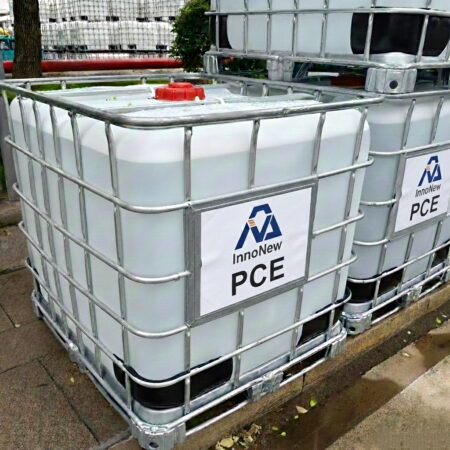
- Unlike liquid IBC tanks, powder avoids leakage and contamination
Easier Customs Handling
- Powder classified as dry chemical → simpler logistics
Southeast Asia Case
Case: Vietnam Distributor
Before:
- Imported liquid PCE
- High freight cost + storage issues
After Switching to PCE Powder:
- Shipping cost reduced by ~40%
- Storage loss eliminated
- Flexible on-site dilution
Cost Comparison: Powder vs Liquid
Hidden Cost of Liquid PCE
- Transporting water = wasted freight
- Storage tanks required
- Risk of degradation
Real Cost Advantage of Powder
- Higher concentration → lower dosage per ton
- Lower logistics cost per solid content
- Reduced warehouse management cost
👉 Conclusion:
For export markets like Thailand & Vietnam, PCE powder vs liquid shows clear cost superiority.
Application & Usage Guide
How to Use PCE Powder
- Dissolve powder in water (recommended 30–40% solution)
- Stir until fully dispersed
- Use as standard liquid PCE
Application Fields
- Ready-mix concrete
- Precast concrete
- Dry mix mortar
- High-performance concrete
Performance Comparison in Concrete
✔ PCE Powder
- Comparable water reduction to liquid
- Better adaptability for customized formulations
✔ PCE Liquid
- Convenient but less flexible
- Performance affected by storage conditions
Product System Integration (Advanced Formulation Synergy of PCE + HPMC + RDP + PVA)
In modern construction chemical systems, Polycarboxylate Superplasticizer (PCE) is rarely used in isolation. High-performance concrete and dry mix mortar require a multi-additive synergy system, where each component plays a specific rheological and structural role.
A well-designed PCE-based additive system significantly improves:
- Workability & flow control
- Water retention & open time
- Adhesion & bonding strength
- Flexibility & crack resistance
- Cohesion & anti-segregation performance
PCE + HPMC: Rheology & Water Control System
Functional Mechanism
- PCE (Polycarboxylate Superplasticizer)
→ Disperses cement particles through electrostatic repulsion and steric hindrance
→ Reduces water demand while maintaining flowability - HPMC (Hydroxypropyl Methyl Cellulose)
→ Forms a hydration-retarding film
→ Improves water retention and viscosity
Synergy Effect
- Prevents rapid slump loss caused by PCE
- Stabilizes workability over time
- Enhances pumpability and application smoothness
Typical Application
- Ready-mix concrete
- Self-leveling mortar
- Tile adhesive
👉 Technical Insight:
Without HPMC, PCE systems often suffer from segregation and bleeding, especially in high water-reduction formulations.
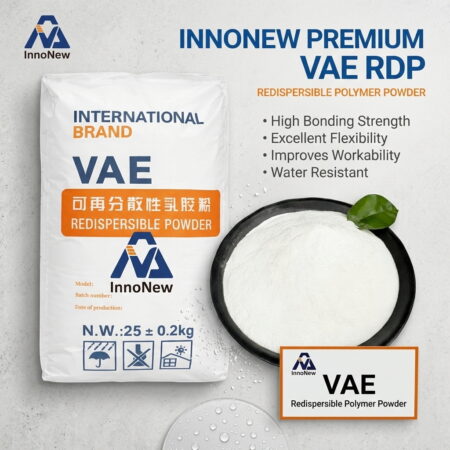
PCE + RDP: Strength & Flexibility Enhancement System
Functional Mechanism
- PCE
→ Optimizes cement hydration efficiency
→ Improves compressive strength - RDP (Redispersible Polymer Powder)
→ Forms a flexible polymer film after hydration
→ Bridges micro-cracks and improves adhesion
Synergy Effect
- Balances rigidity (cement) and flexibility (polymer)
- Improves bonding to difficult substrates
- Reduces shrinkage cracking
Typical Application
- Tile adhesive (C1 / C2 grade)
- Wall putty
- Repair mortar
👉 Key Advantage:
In Southeast Asia (Thailand, Vietnam), where temperature and humidity are high, RDP significantly enhances durability and reduces failure rates.
PCE + PVA: Cohesion & Surface Performance System
Functional Mechanism
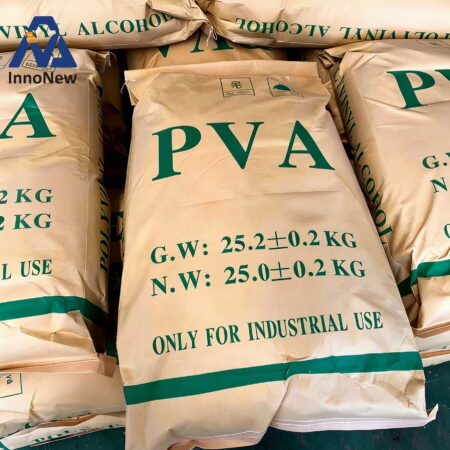
- PVA (Polyvinyl Alcohol)
→ Secondary film-forming polymer
→ Increases internal cohesion and surface hardness - Works as a binder bridge between cement and filler particles
Synergy Effect
- Improves anti-segregation performance
- Enhances smooth finishing (especially for wall putty)
- Reduces dusting and powdering
Typical Application
- Wall putty
- Skim coat
- Dry mix mortar
👉 Formulation Tip:
PVA is often used in low to medium-end formulations as a cost-effective alternative or supplement to RDP.
Integrated System: Full Additive Solution Design
Complete System Structure
| Function | Additive | Role |
|---|---|---|
| Water reduction | PCE | Flowability & strength |
| Water retention | HPMC | Workability & open time |
| Flexibility | RDP | Crack resistance & adhesion |
| Cohesion | PVA | Surface quality & stability |
Practical Formulation Logic
✔ High-End Formulation (Export / Premium Market)
- PCE + HPMC + RDP
👉 Focus: performance, durability, crack resistance
✔ Cost-Optimized Formulation
- PCE + HPMC + PVA
👉 Focus: cost control + acceptable performance
✔ Balanced Solution (Most Recommended)
- PCE + HPMC + RDP + small amount PVA
👉 Best balance of cost + performance + stability
Market-Oriented System Design (Thailand & Vietnam)
Climate Challenges
- High temperature → fast water evaporation
- High humidity → curing instability
Optimized Solution
- Increase HPMC dosage → better water retention
- Use RDP → prevent cracking under thermal stress
- Use PCE powder → flexible on-site adjustment
👉 Result:
Improved construction performance and reduced defect rate in tropical environments.
WHY CHOOSE US
We deliver export-optimized PCE solutions, not just materials.
✔ Export Expertise (Thailand & Vietnam Focus)
- Proven supply chain for Southeast Asia
- Optimized packaging for long-distance shipping
✔ Stable Polymer Technology
- Consistent molecular structure
- Reliable water reduction performance
✔ Cost Optimization Capability
- Help clients reduce total cost (not just product price)
✔ Technical Support
- On-site formulation guidance
- Custom PCE solutions for different cement systems
✔ Scalable Supply
- Bulk production capacity
- Fast delivery & stable lead time
FAQ
Q1: What is the difference between PCE powder and liquid?
Powder has higher solid content and better transport efficiency, while liquid is ready-to-use but costly to ship.
Q2: Is PCE powder better than liquid?
For export markets, PCE powder is more cost-effective and stable.
Q3: How to use PCE powder?
Dissolve in water to create liquid solution before use.
Q4: Why choose powder superplasticizer?
Lower cost, longer shelf life, and better logistics efficiency.
Conclusion
Choosing between polycarboxylate superplasticizer powder vs liquid is not just a technical decision — it is a strategic procurement choice.
For markets like Thailand and Vietnam, PCE powder offers superior advantages in cost, logistics, and flexibility, making it the preferred solution for importers and manufacturers.
CONTACT US
Looking for a reliable PCE powder supplier for Southeast Asia?
👉 We provide:
- Free technical consultation
- Customized PCE solutions
- Competitive bulk pricing
Contact us now to optimize your concrete admixture cost.
Email: chris@innonew-material.com | WhatsApp: +86 17736063980