
PVA 2488 vs PVA 2688: What’s the Difference and Which One Should You Choose?
Introduction to PVA Grades
Polyvinyl Alcohol (PVA), also known as PVOH, is a water-soluble polymer widely used in adhesives, films, coatings, and construction materials. Among the most commercially significant grades, PVA 2488 and PVA 2688 are frequently compared due to their similar hydrolysis levels but different performance profiles.
Understanding the difference between these two grades is critical for procurement engineers, formulators, and manufacturers seeking optimal cost-performance balance.
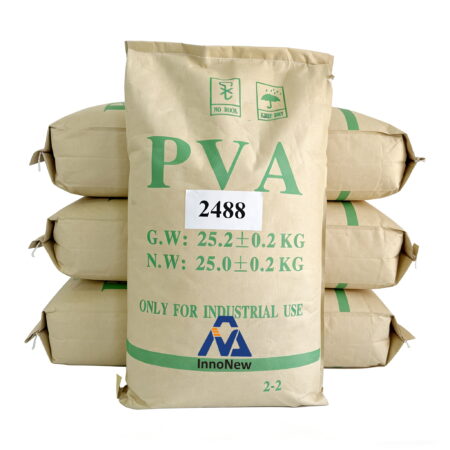
What is PVA 2488?
Key Characteristics of PVA 2488
PVA 2488 is a partially hydrolyzed grade with:
- Degree of polymerization: ~2400
- Degree of hydrolysis: ~88%
- Moderate viscosity
- Excellent solubility in cold water
Performance Advantages
- Faster dissolution → ideal for high-efficiency production
- Good film flexibility
- Balanced adhesion and workability
Typical Applications
- Water-soluble films
- Adhesives (paper, packaging)
- Textile sizing
- Emulsion polymerization stabilizer
Learn more about our Polyvinyl Alcohol PVA 2488, Please visit PVA 2488 Product Page
What is PVA 2688?
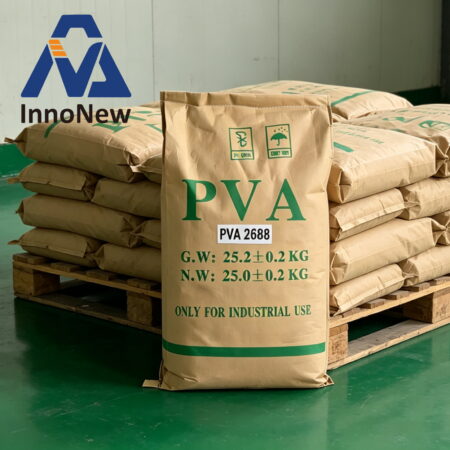
Key Characteristics of PVA 2688
PVA 2688 has a higher polymerization degree:
- Degree of polymerization: ~2600
- Degree of hydrolysis: ~88%
- Higher viscosity compared to 2488
- Stronger intermolecular bonding
Performance Advantages
- Higher tensile strength
- Better film-forming properties
- Improved chemical resistance
Typical Applications
- High-strength films
- Construction additives (mortars, putty)
- Coatings and binders
- Industrial adhesives
Learn more about our PVA 2488, please visit our PVA 2688 product page.
PVA 2488 vs PVA 2688: Detailed Comparison
1. Viscosity & Processability
- PVA 2488: Lower viscosity → easier mixing, faster processing
- PVA 2688: Higher viscosity → better thickening and structural strength
👉 Insight: If your production line prioritizes efficiency, 2488 is preferred.
2. Film Strength & Flexibility
- PVA 2488: More flexible films
- PVA 2688: Stronger but slightly less flexible
👉 Insight: For load-bearing or durable coatings, 2688 performs better.
3. Solubility & Dissolution Speed
- PVA 2488: Faster dissolution
- PVA 2688: Slower dissolution due to higher molecular weight
👉 Insight: Cold-water solubility advantage clearly favors 2488.
4. Application Suitability
| Application | Recommended Grade |
| Water-soluble film | PVA 2488 |
| Adhesives | Both |
| Construction mortar | PVA 2488 |
| Textile sizing | PVA 2488 |
| Fertilizer | PVA 2488 |
| High-strength coating | PVA 2688 |
| PVC Suspension Polymerization | PVA 2688 |
| High-Solid Emulsion Polymerization | PVA 2688 |
| High Strength (Viscosity) adhesives | PVA 2688 |
How to Choose Between PVA 2488 and PVA 2688
Choose PVA 2488 if you need:
- Fast dissolution
- Better process efficiency
- Flexible films
- Lower energy consumption
Choose PVA 2688 if you need:
- Higher mechanical strength
- Better durability
- Improved thickening effect
- Structural reinforcement
Industry Insight: Cost vs Performance Optimization
From a procurement perspective, selecting between PVA 2488 and 2688 is not just about technical parameters—it’s about application-driven ROI.
- 2488 → reduces production time and energy cost
- 2688 → enhances final product performance and lifespan
👉 Leading manufacturers often use blended systems (2488 + 2688) to optimize both performance and cost.
FAQ:
Is PVA 2488 cheaper than PVA 2688?
Generally, yes. Lower polymerization means lower production cost, making it more economical.
Can PVA 2488 replace PVA 2688?
In low-strength applications, yes. But for structural or high-performance needs, substitution is not recommended.
Which PVA grade is best for water-soluble film?
PVA 2488 is preferred due to faster dissolution and flexibility.
Which grade is better for construction materials?
PVA 2688 is more suitable due to higher bonding strength and durability.
Conclusion
PVA 2488 and PVA 2688 serve different industrial purposes despite having similar hydrolysis levels. The choice depends on your priorities:
- Efficiency & flexibility → PVA 2488
- Strength & durability → PVA 2688
For most industrial formulations, a tailored combination of both grades delivers optimal performance.
Call to Action:
Request RDP Sample
Get Factory Price
Technical Consultation
WhatsApp: +86 17736063980
Email: chris@innonew-material.com