
PVA Release Film vs Wax Release Agent: Which is Better for Artificial Marble?
In artificial marble manufacturing, choosing the right mould release system is a critical decision that directly impacts:
- Surface quality and gloss
- Production efficiency
- Defect rate
- Overall manufacturing cost
For decades, wax-based release agents have been widely used due to their low initial cost and simple application. However, with increasing demand for high-gloss, defect-free artificial marble, manufacturers are now shifting toward PVA water soluble release film.
This article provides a comprehensive comparison between PVA release film and wax release agents, helping you determine which solution is best for modern artificial marble production.
🔷 Overview of Two Release Systems
🔹 Wax Release Agent
Wax release agents are typically applied as:
- Liquid wax
- Paste wax
- Spray coating
They form a thin layer on the mould surface to reduce adhesion.
🔹 PVA Water Soluble Release Film
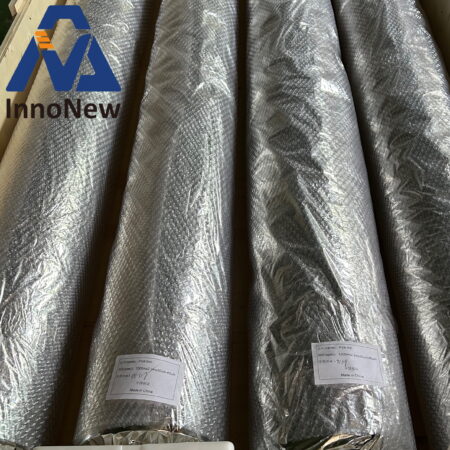
PVA release film is a pre-formed water soluble film placed directly inside the mould before casting.
👉 It acts as a physical separation barrier, eliminating direct contact between mould and material.
🔷 Key Comparison: Performance Analysis
1. Surface Gloss & Finish
Surface quality is the most critical factor for artificial marble.
Wax Release Agent:
- Uneven coating thickness
- Residue contamination
- Surface haze or dullness
PVA Release Film:
- Uniform interface layer
- No contamination
- Mirror-like gloss
✅ Winner: PVA Release Film
2. Demoulding Performance
Wax:
- Inconsistent release
- Risk of sticking in complex moulds
PVA Film:
- Complete separation
- Smooth demoulding every cycle
👉 Especially effective for high-viscosity or reactive resin systems
✅ Winner: PVA Release Film
3. Residue & Cleaning
Wax:
- Leaves oil or wax residue
- Requires mould cleaning
- Increases labor cost
PVA Film:
- Fully dissolves in water
- No residue
- No cleaning required
👉 This significantly reduces downtime
✅ Winner: PVA Release Film
4. Production Efficiency
Wax:
- Requires repeated application
- Operator-dependent quality
PVA Film:
- Consistent placement
- Suitable for automation
- Faster cycle time
✅ Winner: PVA Release Film
5. Cost Analysis (Real vs Apparent Cost)
At first glance, wax appears cheaper.
However, hidden costs include:
- Labor for application
- Cleaning time
- Defect losses
- Rework and polishing
PVA film:
- Higher material cost
- BUT lower total production cost
👉 True ROI is significantly higher
6. Environmental Impact
Wax:
- VOC emissions
- Waste contamination
PVA Film:
- Biodegradable
- Eco-friendly
- Compliant with global regulations
✅ Winner: PVA Release Film
🔷 Technical Comparison Table
| Parameter | PVA Release Film | Wax Release Agent |
|---|---|---|
| Surface Gloss | ⭐⭐⭐⭐⭐ | ⭐⭐⭐ |
| Demoulding | ⭐⭐⭐⭐⭐ | ⭐⭐⭐ |
| Residue | None | Medium |
| Cleaning | Not required | Required |
| Consistency | High | Operator-dependent |
| Environmental | Eco-friendly | Limited |
🔷 Why Modern Factories Are Switching to PVA Film
More artificial marble manufacturers are upgrading to water soluble release film due to:
- Demand for high-gloss premium products
- Need for stable production quality
- Increasing labor cost
- Environmental regulations
👉 The transition is especially strong in:
- Middle East
- Southeast Asia
- High-end export factories
🔷 Process Integration (Factory-Level Optimization)
To fully utilize PVA release film, manufacturers should integrate it into a complete system:
🔹 Step 1: Mould Preparation
Ensure clean and polished mould
🔹 Step 2: Apply Film
Use high-quality PVA water soluble release film evenly
🔹 Step 3: Material Optimization
Use:
- PCE Polycarboxylate Superplasticizer → improve flowability
- HPMC → stabilize mixture
🔹 Step 4: Controlled Curing & Demoulding
Achieve consistent results with minimal defects
🔷 When Should You Still Use Wax?
Although PVA film is superior, wax may still be used in:
- Low-end products
- Small-scale manual production
- Non-critical surface applications
However, for high-quality artificial marble, wax is no longer competitive.
🔷 Final Verdict
If your goal is:
✔ High-gloss surface
✔ Stable production
✔ Lower defect rate
✔ Reduced labor cost
👉 Then PVA water soluble release film is the best choice
🔷 Conclusion
The comparison between PVA release film vs wax release agent clearly shows a shift in industry standards.
While wax may remain in low-end applications, modern artificial marble production requires a more advanced solution.
👉 PVA release film delivers superior performance across all critical parameters, making it the preferred solution for forward-thinking manufacturers.
CTA – Upgrade Your Production Today
Still using wax release agents?
👉 It’s time to switch to a more efficient and profitable solution.
Get Free Sample of PVA Water Soluble Release Film
✔ Improve surface gloss
✔ Eliminate sticking
✔ Reduce production cost
📩 Email: chris@innonew-material.com
📱 WhatsApp: +86 17736063980