
Top 5 Benefits of Using Triisopropanolamine in Cement Production
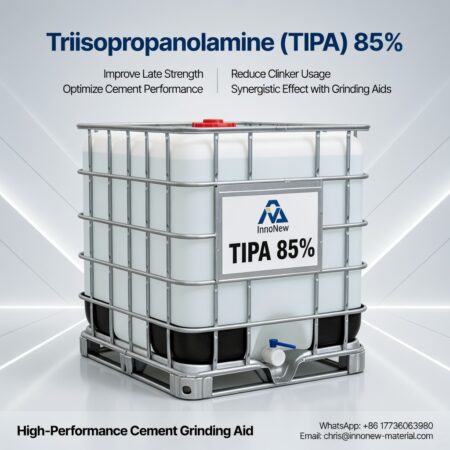
Triisopropanolamine (TIPA) isn’t just a cement grinding aid—it’s a versatile alkanolamine that many producers are turning to because it quietly solves multiple pain points at once. Its bulkier molecular structure (with three isopropanol groups) gives it unique dispersing properties and selective ion-complexing abilities, particularly with iron (Fe³⁺), which helps in blended systems rich in fly ash, slag, or limestone.
Drawing from recent 2025–2026 studies and real plant experiences, here are the Top 5 benefits of using TIPA in modern cement production. I’ll keep it straightforward, data-backed, and focused on what actually matters on the ground.
1. Meaningful Energy Savings and Higher Mill Throughput
TIPA CementGrinding cement is one of the most energy-intensive steps in your process. TIPA works by adsorbing onto newly fractured particle surfaces, reducing surface energy and preventing agglomeration. This allows the mill to work more efficiently.
Recent optimizations show that TIPA-based aids (often in 75% TIPA + 25% TEA blends) can reduce grinding energy by 10–18% while increasing mill output by 12–20% at low dosages (0.01–0.05% by cement weight). One 2025 study using Taguchi design confirmed that a 75/25 TIPA-TEA mix delivered the best grinding efficiency, refined particle size distribution (PSD), and improved powder flowability—leading to lower CO₂ emissions per ton and noticeable electricity cost savings.
In practical terms: For a mid-sized plant, this can translate to hundreds of thousands in annual energy savings, longer equipment life, and the ability to push higher volumes without major capital upgrades—especially valuable when electricity prices fluctuate.
2. Strong Late-Age Strength Development, Especially in Blended Cements
If you’re increasing SCM content to lower your clinker factor (a key decarbonization lever), early strength can suffer—but TIPA often shines in the later stages.
TIPA Cement Grinding Aid promotes sustained hydration of slower phases like C₄AF (ferrite) and SCMs by forming soluble complexes that enhance ion dissolution, particularly Fe³⁺. In cement-fly ash or limestone calcined clay systems, 0.06–0.1% TIPA has been shown to boost 28-day compressive strength by 10–18% (and even higher at 60 days), with one study reporting up to 45% improvement in blended pastes compared to controls—outperforming TEA, which tends to plateau or decline in late strength.
This benefit feels especially reassuring when you’re trying to meet C40–C60 concrete specs while using more fly ash or slag. It lets you safely raise SCM levels (often 10–15% more clinker reduction) without sacrificing durability or long-term performance.
3. Better Particle Size Distribution and Improved Flow Properties
Triisopropanolamine TIPA helps create a narrower, more optimized PSD—reducing coarse particles (>45 μm) while increasing the proportion of strength-contributing mid-range particles.
The result? Lower pack-set, reduced dusting, smoother silo discharge, and better overall handling. In modified formulations, Triisopropanolamine TIPA has delivered viscosity reductions of 21–86% and improved flow retention, making downstream concrete production easier.
Plant teams often notice fewer blockages and complaints from ready-mix customers about consistency. Plus, this refined PSD frequently improves compatibility with Polycarboxylate superplasticizers (PCE), sometimes allowing 10–15% lower PCE dosages—a direct win for your total admixture budget.
4. Enhanced Concrete Workability and Mix Optimization
TIPA doesn’t stop at the mill—it carries benefits into fresh concrete.
TIPA Concrete Admixture supports better slump retention and reduced water demand, enabling lower cement content in mixes (e.g., 30–45 kg/m³ savings in typical C30 concrete) while still hitting target strengths. Its wide dosage window (0.001–0.2%) and low risk of flash set or excessive retardation make it forgiving across seasons and varying raw materials.
Many producers appreciate how it simplifies formulation: one additive contributes to grinding efficiency, strength, and rheology—reducing complexity in your supply chain and helping control overall costs.
5. Real Support for Low-Carbon and Sustainable Goals
With “double carbon” targets and green building standards tightening, TIPA aligns well with industry shifts.
Lower grinding energy directly cuts Scope 2 emissions. Higher SCM utilization reduces clinker-related CO₂. Denser microstructures from improved hydration can further optimize cement content in concrete. TIPA’s low-toxicity profile and performance in blended systems make it compatible with sustainability certifications.
Plant data and modeling suggest 8–15% potential reductions in carbon intensity per ton when TIPA is part of a broader low-clinker strategy—helping you stay ahead of regulations while maintaining profitability.
Quick TIPA vs TEA Comparison
| Aspect | TIPA (Triisopropanolamine) | TEA (Triethanolamine) | Practical Takeaway |
|---|---|---|---|
| Grinding Energy Savings | 10–18% (excellent dispersion) | 8–12% | TIPA often edges out in efficiency |
| Late-Age Strength (28d+) | +10–25% (strong in SCM blends) | 0–5% or possible drop | TIPA preferred for blended cements |
| Fe³⁺ Complexation | Exceptional (enhances ferrite hydration) | Moderate | Key for fly ash/slag systems |
| PSD & Flowability | Narrower distribution, superior rheology | Good | Better handling & PCE synergy |
| Optimal Use Case | Late strength, high-SCM, sustainability | Early strength focus | Blends often win (75/25 TIPA-TEA) |
Practical Procurement and Usage Tips from Experience
- Purity Matters — Aim for high-purity industrial-grade TIPA (≥85–98%, low moisture <0.5%) with full COA and MSDS.
- Starting Dosage — For grinding: 0.02–0.05%. In SCM-heavy systems, test up to 0.08%. Many find 75% TIPA + 25% TEA balances early handling with long-term gains.
- Testing Mindset — Run small mill trials with your specific clinker and SCMs. Monitor PSD, strength curve, and rheology—optimization pays off quickly.
- Supplier Checklist — Look for partners who offer technical support, trial assistance, and carbon footprint data. Consistent supply and quick response matter when scaling up.
If you’re dealing with variable raw materials, high SCM targets, or energy pressures, TIPA is worth a closer look. It’s not a magic bullet, but in the right formulation and with proper testing, it often delivers quiet, compounding improvements that add up to real competitive advantage.
Ready to Explore TIPA for Your Operation?
Whether you’re optimizing an existing line or planning for lower-carbon blends, feel free to share your cement type, current SCM ratio, or specific challenges. Many teams start with lab samples and a quick plant audit—leading to measurable gains in energy, strength, and sustainability within months.
FAQ:
Q: Will TIPA affect setting time noticeably? A: At recommended low dosages, effects are usually balanced and more stable than TEA alone, with minimal risk of issues.
Q: Is it suitable for high-fly-ash or slag cements? A: Yes—its ability to support ferrite and SCM hydration makes it particularly helpful in pozzolanic or latent hydraulic systems.
Q: How does the ROI look? A: Most producers see payback through combined energy savings, higher throughput, strength gains (allowing more SCM), and reduced admixture needs—often within the first year.