What Is PVA 2488? How It Improves Bond Strength & Workability
What’s PVA 2488?
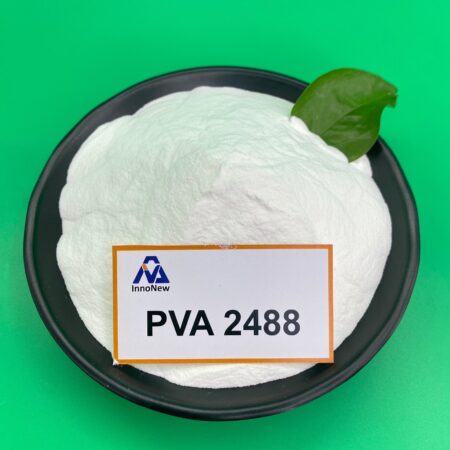
Polyvinyl Alcohol PVA 2488 is a partially hydrolyzed grade of PVA with a hydrolysis degree of about 87–89% and a viscosity of 45–55 mPa·s (measured in a 4% aqueous solution at 20°C). It usually appears as a white powder or granular solid that easily dissolves in warm or cold water, forming a clear and stable solution.
PVA 2488 is known for its excellent balance between flexibility and strength, making it ideal for a wide range of industrial applications.
Compared with other grades of PVA, PVA 2488 powder has better water solubility, stronger adhesion, and higher compatibility with other materials like cement, gypsum, and polymer dispersions.
Key PVA 2488 Function
Outstanding Film-Forming Ability
PVA 2488 creates strong, transparent, and flexible films that are resistant to oil, grease, and organic solvents. This property makes it a perfect ingredient for coatings, adhesives, and polymer blends.
Excellent Adhesion and Binding Strength
It offers remarkable bonding performance to porous surfaces such as paper, wood, and textiles, as well as to inorganic materials like cement and ceramics. That’s why PVA 2488 is often used as a binder in building materials and coating formulations.
Water Solubility and Chemical Stability
PVA 2488 is soluble in water without generating toxic residues. The solution remains stable even under varying pH conditions, which makes it highly versatile for different production environments.
Emulsion Stabilization
PVA 2488 functions as an effective protective colloid and stabilizer in emulsion polymerization. It helps control particle size, prevents coagulation, and enhances the uniformity of emulsions such as vinyl acetate or acrylate emulsions.
Environmental Friendliness
Being biodegradable and non-toxic, Polyvinyl Alcohol PVA 2488 is an eco-friendly choice compared to many synthetic polymers. It aligns perfectly with modern industry’s demand for sustainable and green materials.
PVA 2488 Powder Application
Construction and Building Materials
In the construction field, PVA 2488 is widely used as a water-soluble binder and film-forming agent in cement additives, tile adhesives, wall putty, and dry-mix mortars. It enhances the adhesion between cement and substrates, improves water retention, and increases surface strength.
When used with Redispersible polymer powders (RDP), it helps improve the flexibility and crack resistance of mortar, providing a smoother and more durable finish.
Adhesives and Glues
Thanks to its superior bonding properties, PVA 2488 powder is a key raw material in paper adhesives, wood glues, and packaging glues. Its strong film formation and non-toxic nature make it ideal for environmentally friendly adhesive products.
Textile Industry
PVA 2488 serves as a sizing agent and warp dressing material. It provides excellent strength to yarns, reduces breakage during weaving, and ensures smooth production. Moreover, since it’s water-soluble, it can be easily removed after the weaving process, maintaining fabric softness and brightness.
Emulsion Polymerization
PVA 2488 acts as a protective colloid in producing vinyl acetate, acrylate, and styrene emulsions. It helps stabilize the polymer particles during polymerization and enhances the mechanical properties of the final emulsion.
Water Soluble Film
As a film former, Polyvinyl Alcohol PVA 2488 improves surface smoothness and printing performance in paper coatings. It is also used to manufacture water-soluble films and biodegradable packaging, meeting the growing global demand for sustainable solutions.
How PVA 2488 Improves Bond Strength & Workability
FAQ
A: PVA 2488 is a partially hydrolyzed polyvinyl alcohol with high viscosity and good water solubility. It is widely used in dry mix mortar, tile adhesive, wall putty and cement-based materials as a bonding and thickening additive.
A: It forms a flexible polymer film between cement hydration products and aggregates, increasing interfacial adhesion to substrates like concrete, ceramic tiles and walls, effectively reducing peeling and hollowing.
A: It improves water retention, lubricates the mix, reduces segregation and bleeding, makes mortar easier to trowel and construct, and extends open time without rapid drying.
A: It is highly suitable for most dry mix mortars including tile adhesive, wall putty, plaster and repair mortar. It is not recommended for high‑temperature or special chemical‑resistant scenarios without formulation adjustment.
A: In general dry mix mortar, the dosage is 0.3%–1.5% by weight of cement. Higher dosage improves adhesion and flexibility but may slightly affect setting time.