Concrete Mold Release Agent

High-Performance Concrete Mold Release Agent for Smooth Surfaces & Easy Demolding

In modern precast concrete operations, selecting a high-performance concrete mold release agent is essential for achieving smooth concrete surfaces, easy demolding, and efficient production. From water-based to oil-based formulations, these release agents provide anti-adhesion properties, mold protection, and eco-friendly solutions, ensuring both quality and worker safety. Why Concrete Mold Release Agents Are Essential Hebei InnoNew […]

High-Performance Concrete Mold Release Agent for Smooth Surfaces & Easy Demolding Read More »
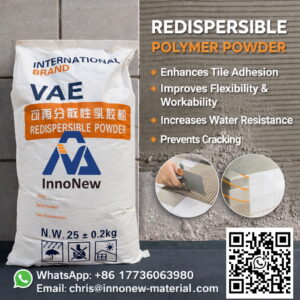
Redispersible Latex Powder (RDP)

Redispersible Polymer Powder (RDP): Properties, Applications and Benefits in Tile Adhesive

InnoNew Material’s Redispersible Latex Powder plays a critical role in improving performance and durability in Modern Construction Chemical Materials . One of the most widely used polymer additives in the building industry is Redispersible Polymer Powder (RDP). This functional material is essential in dry mix mortars, tile adhesives, self-leveling compounds, and wall putty formulations. Redispersible

Redispersible Polymer Powder (RDP): Properties, Applications and Benefits in Tile Adhesive Read More »

Polyvinyl Alcohol

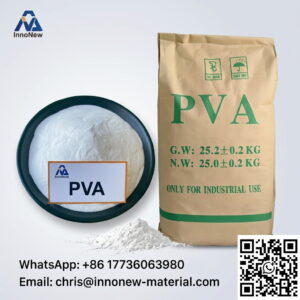
Polyvinyl Alcohol (PVA): A Complete Guide to Properties, Uses and Benefits

Polyvinyl Alcohol (PVA) is a water-soluble synthetic polymer widely used in industries such as construction, adhesives, textiles, paper processing, packaging, and coatings. Due to its excellent film-forming ability, strong adhesion, emulsifying properties, and chemical stability, PVA has become an important raw material in modern manufacturing. Industrial grades such as PVA 2488 and PVA 2688 are

Polyvinyl Alcohol (PVA): A Complete Guide to Properties, Uses and Benefits Read More »

Diethanol Isopropanolamine DEIPA 85%

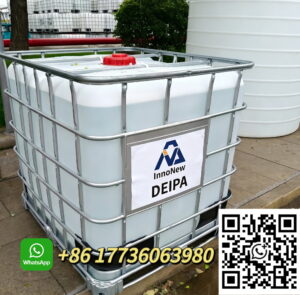
DEIPA (Diethanol Isopropanolamine) in Cement Grinding Aid: Functions, Benefits and Industrial Applications

In modern cement production, improving grinding efficiency and cement performance is essential for reducing energy consumption and increasing productivity. One of the most widely used chemical additives in the cement industry is DEIPA (Diethanol Isopropanolamine). DEIPA is a highly effective organic compound commonly used in cement grinding aids and performance-enhancing additives. It plays a crucial

DEIPA (Diethanol Isopropanolamine) in Cement Grinding Aid: Functions, Benefits and Industrial Applications Read More »

PVA 2488

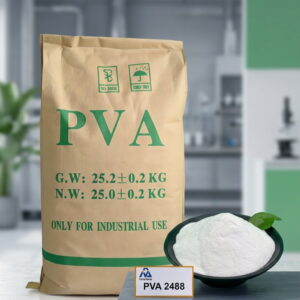
Polyvinyl Alcohol PVA 2488: Properties, Applications and Industrial Uses

Polyvinyl Alcohol (PVA) is one of the most widely used water-soluble polymers in modern manufacturing. Among its various grades, PVA 2488 stands out as a preferred choice for many industrial applications due to its well-balanced performance in film formation, adhesion, and chemical stability. As a partially hydrolyzed grade of polyvinyl alcohol, PVA 2488 is produced through the

Polyvinyl Alcohol PVA 2488: Properties, Applications and Industrial Uses Read More »

PCE Superplasticizer Powder

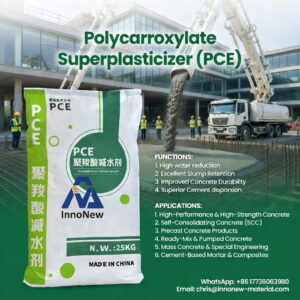
What’s PCE Superplasticizer? The Advanced Concrete Admixture Transforming Modern Construction

In today’s construction industry, achieving stronger, more durable, and highly workable concrete is essential. One of the most important innovations that makes this possible is PCE Superplasticizer, a high-performance concrete admixture widely used in modern building projects. But what’s PCE Superplasticizer, and why has it become the preferred choice for concrete manufacturers and engineers around

What’s PCE Superplasticizer? The Advanced Concrete Admixture Transforming Modern Construction Read More »

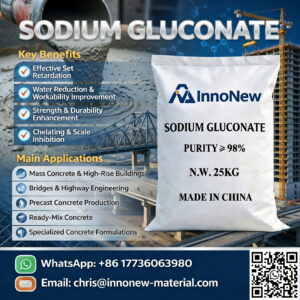
Concrete Admixture Sodium Gluconate

Sodium Gluconate for Concrete: A Complete Guide to Concrete Retarder Admixtures

In modern construction projects, concrete performance is no longer determined solely by cement, sand, and aggregates. Concrete admixtures have become essential components for improving workability, strength, and durability. Among the various construction chemicals available today, Sodium Gluconate Concrete Admixture is widely recognized as a highly effective concrete retarder and water-reducing additive. Due to its excellent

Sodium Gluconate for Concrete: A Complete Guide to Concrete Retarder Admixtures Read More »

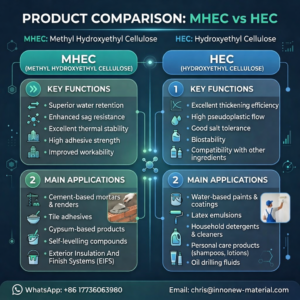
MHEC vs HEC

MHEC vs HEC: Choosing the Right Cellulose Ether for Construction and Coating Applications

In modern construction chemicals, cellulose ether additives play a crucial role in improving the performance of building materials. Among the most widely used cellulose ethers are Methyl Hydroxyethyl Cellulose (MHEC) and Hydroxyethyl Cellulose (HEC). Both products are derived from natural cellulose and widely used as thickeners, rheology modifiers, and water retention agents in various industrial

MHEC vs HEC: Choosing the Right Cellulose Ether for Construction and Coating Applications Read More »

High Gel Temperature MHEC for Tile Adhesive & Wall Putty | MHEC Manufacturer

MHEC vs HPMC for Tile Adhesive: Which Cellulose Ether Performs Better?

In modern dry mix mortar formulations, cellulose ether plays a critical role in improving workability, water retention, and adhesion performance. Among the most widely used cellulose ethers in construction materials are Methyl Hydroxyethyl Cellulose (MHEC) and Hydroxypropyl Methyl Cellulose (HPMC). Both materials are commonly used in tile adhesive, wall putty, cement mortar, and self-leveling compounds.

MHEC vs HPMC for Tile Adhesive: Which Cellulose Ether Performs Better? Read More »

Why is HPMC Added to Grouting Materials?

As a professional hpmc manufacturer and hpmc supplier, Hebei InnoNew Material Technology Co., Ltd. provides high-quality hpmc powder designed specifically for construction applications such as hpmc for dry mix grout, hpmc for drymix mortar, and HPMC for Cementitious Grouting Materials. This article explains why Cellulose Ether HPMC is widely used in grouting materials and how

Why is HPMC Added to Grouting Materials? Read More »

Scroll to Top