This article analyzes ready-mix concrete as a dynamic, time-dependent engineering system where performance continuously evolves from batching to placement. It focuses on three critical challenges in modern concrete production: slump loss, pumpability instability, and workability degradation.
Slump loss is explained as a result of cement hydration acceleration, particle flocculation, and superplasticizer adsorption depletion, all of which reduce concrete fluidity over time. Pumpability issues are linked to rheological instability, where increases in yield stress and plastic viscosity lead to higher pumping resistance and potential blockage. Workability loss follows a staged decay process driven by the imbalance between dispersion forces and hydration reactions.
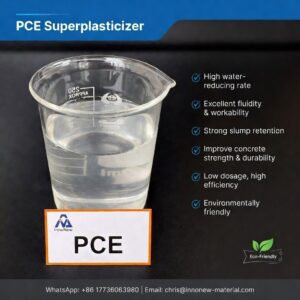
The article further compares traditional superplasticizers with Polycarboxylate Ether (PCE) liquid systems, highlighting PCE’s dual-action mechanism of electrostatic repulsion and steric hindrance, which significantly improves dispersion stability, slump retention, and pumpability performance.
Finally, it demonstrates how PCE liquid superplasticizer functions as a molecular-level solution that enhances concrete flow behavior, reduces water demand, improves strength development, and ensures stable performance in demanding construction environments such as high-rise pumping, hot climates, and long-distance transport.