How HEMC Improves Tile Adhesive Performance
In modern construction, tile adhesive performance directly affects bonding strength, durability, and application efficiency. One of the most critical additives used today is Hydroxyethyl Methyl Cellulose (HEMC), also known as MHEC powder, a high-performance Cellulose ether.
Whether you are sourcing from a reliable HEMC supplier or working with a professional HEMC manufacturer, understanding how HEMC powder functions in tile adhesive systems is essential for optimizing formulations and achieving superior results.
Key Functions of HEMC in Tile Adhesive
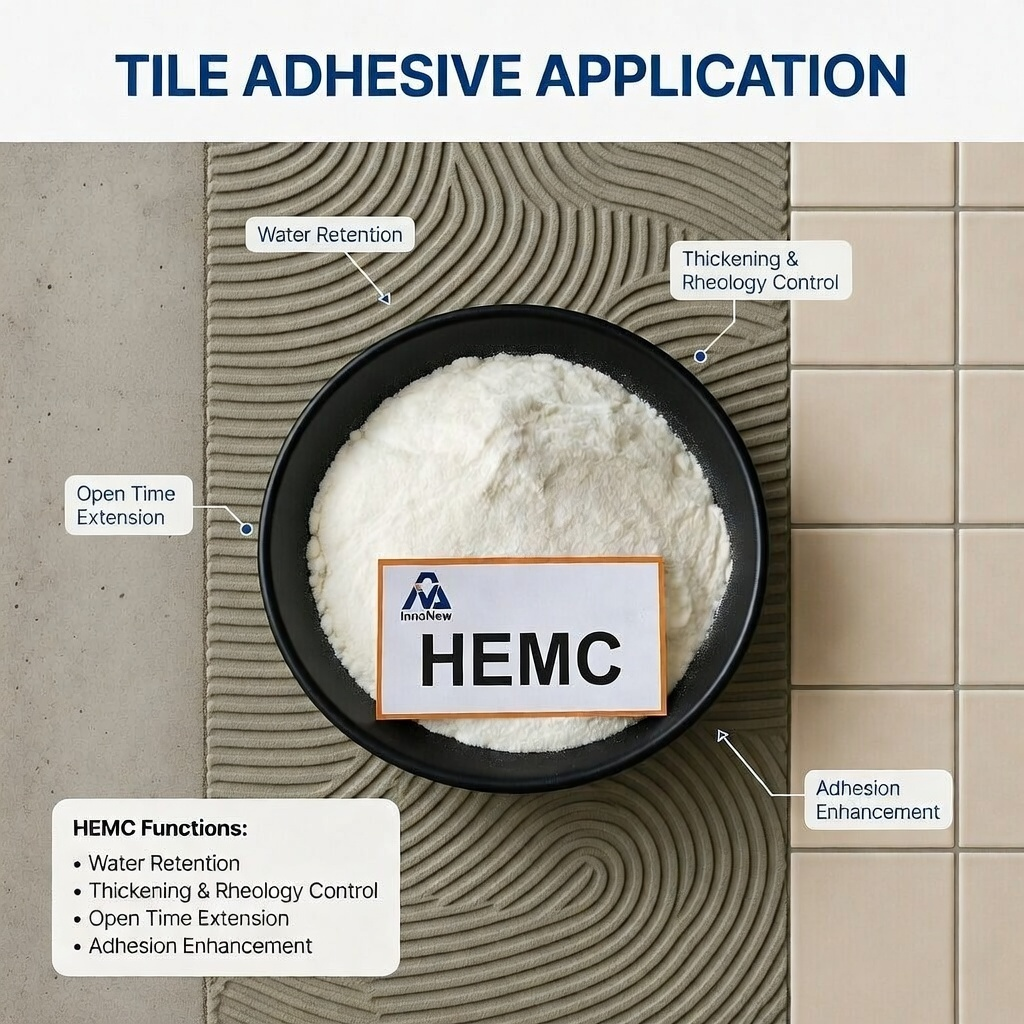
1. Superior Water Retention
One of the most important roles of Hydroxyethyl Methyl Cellulose is water retention.
- Prevents rapid water loss
- Ensures proper cement hydration
- Improves final bonding strength
Without high-quality hemc powder, tile adhesives may dry too quickly, leading to weak adhesion and installation failure.
2. Improved Workability and Open Time
HEMC significantly enhances application performance:
- Smooth spreading
- Extended open time
- Better adjustability during installation
This makes mhec powder essential in professional tile adhesive formulations, especially in hot or dry climates.
3. Enhanced Anti-Sagging Performance
Vertical tile applications require strong anti-slip properties. High-viscosity hemc powder provides:
- Excellent sag resistance
- Uniform thickness control
- Improved application stability
This is why construction-grade cellulose ether is critical in wall tile adhesives.
4. Rheology Control and Consistency
As a rheology modifier, hydroxyethyl methyl cellulose ensures:
- Stable viscosity
- Consistent performance across batches
- Better compatibility with cement and fillers
Choosing a reliable HEMC manufacturer guarantees stable rheological behavior.
Why Choosing the Right Supplier Matters
The performance of tile adhesive depends not only on formulation but also on the quality of raw materials.
A professional hemc supplier or mhec factory should provide:
- Consistent viscosity control
- Stable substitution degree
- Reliable batch-to-batch performance
- Technical support for formulation optimization
At Hebei InnoNew Material Technology Co., Ltd., we specialize in high-quality HEMC powder and HPMC powder, delivering stable performance for global construction applications.
HEMC vs Tylose HEMC: Cost-Effective Alternatives
Many buyers are familiar with tylose HEMC and tylose MHEC, but modern manufacturers now offer competitive alternatives with:
- Equivalent performance
- Better cost efficiency
- Faster delivery
Switching to a trusted hemc manufacturer can significantly reduce production costs without compromising quality.
Recommended HEMC Specifications for Tile Adhesive
For optimal performance:
- Viscosity: 100,000 – 200,000 cps
- Application: Tile adhesive, mortar
- Type: High viscosity HEMC powder
Selecting the correct grade from a reliable hemc supplier ensures maximum efficiency.
Applications Beyond Tile Adhesive
In addition to tile adhesive, hydroxyethyl methyl cellulose is widely used in:
- Dry mix mortar
- Wall putty
- Self-leveling compounds
- Paint and coatings
- Detergent formulations
This versatility makes cellulose ether an essential material in multiple industries.
FAQ:
What is Hydroxyethyl Methyl Cellulose HEMC used for?
Hydroxyethyl Methyl Cellulose HEMC Powder is used as a thickener, water retention agent, and rheology modifier in construction materials and coatings.
What is the difference between HEMC and MHEC powder?
There is no essential difference—HEMC and MHEC powder refer to the same cellulose ether, with different naming conventions.
How to choose a reliable HEMC supplier?
Choose a supplier with stable quality, consistent viscosity, and strong technical support, such as Hebei InnoNew Material Technology Co., Ltd.
Is HEMC better than Tylose HEMC?
Modern HEMC products from leading manufacturers can match the performance of tylose hemc while offering better pricing.