
RDP for Tile Adhesive: Enhance Bond Strength, Flexibility and Workability
Redispersible Polymer Powder (RDP) is a key functional additive in modern tile adhesive formulations. As construction standards continue to evolve, RDP for tile adhesive plays a critical role in improving bonding performance, flexibility, and durability in cement-based systems.
At Hebei InnoNew Material Technology Co., Ltd., we provide high-performance redispersible polymer powder specifically engineered for tile adhesive applications, ensuring superior workability and long-term reliability.
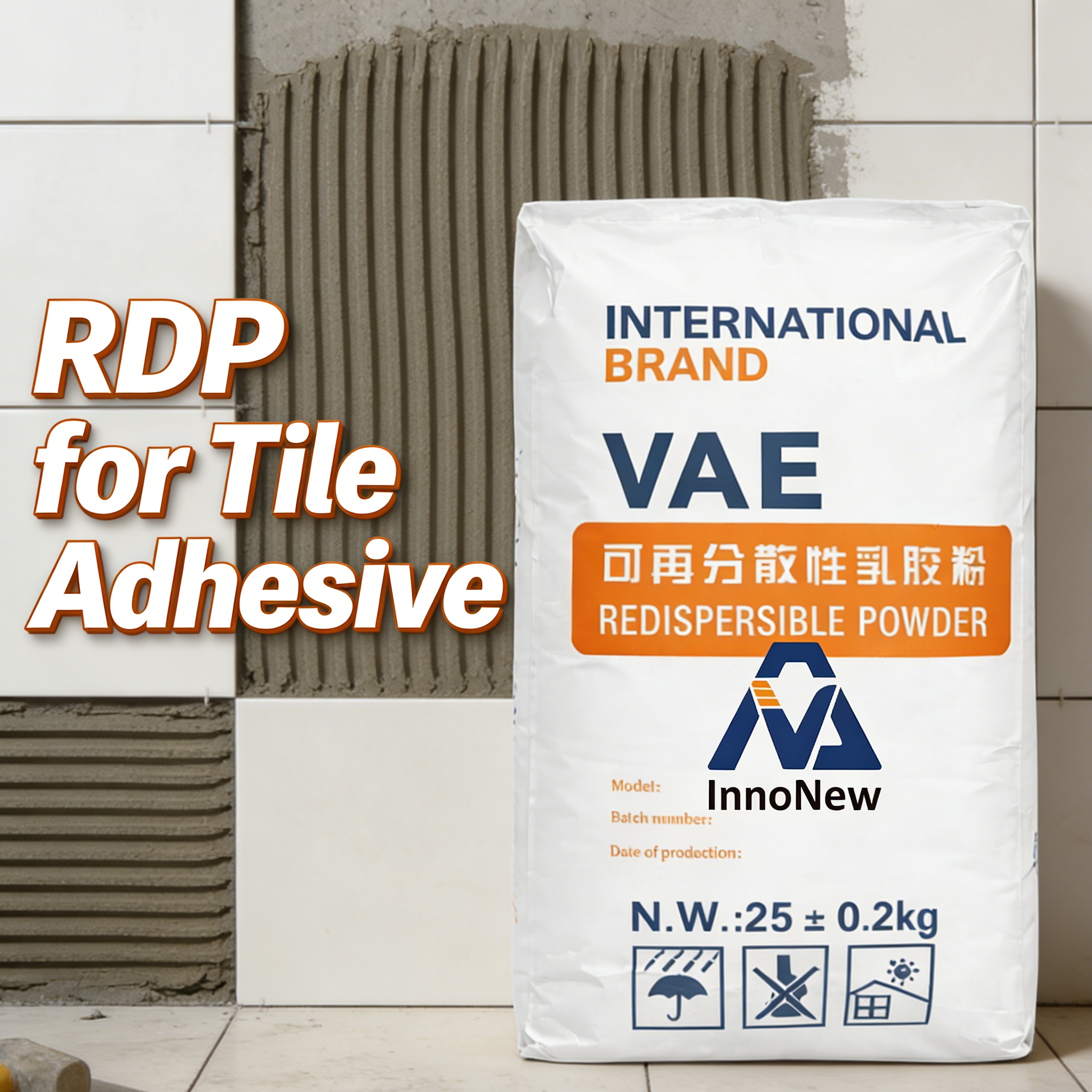
What is RDP for Tile Adhesive?
RDP (Redispersible Polymer Powder) is a spray-dried polymer that redistributes in water to form a stable latex dispersion. When used in tile adhesive, it significantly enhances mechanical and application properties.
Core functions of RDP in Tile Adhesives:
Improve adhesion to substrates and tiles
Enhance flexibility and crack resistance
Increase water retention
Improve open time and adjustability
Boost overall durability
To boost bonding strength and water resistance in tile adhesive, choosing a high-quality Redispersible polymer powder (RDP) is critical. You can explore our full product specifications and application data here: Redispersible polymer powder for tile adhesive.
Key Benefits of RDP in Tile Adhesive
Superior Bond Strength
RDP improves adhesion between tile and substrate, ensuring long-term bonding performance even under stress conditions.
Enhanced Flexibility
With the addition of redispersible polymer powder, tile adhesive becomes more flexible, reducing cracking risks due to thermal expansion or substrate movement.
Improved Workability
RDP ensures smooth application, better spreadability, and ease of use for construction workers.
Water Retention Optimization
Better water retention leads to improved cement hydration, ensuring consistent curing and performance.
Extended Open Time
RDP allows longer adjustment time, improving installation efficiency and reducing material waste.
RDP vs No RDP in Tile Adhesive: Performance Comparison
| Performance Parameter | With RDP | Without RDP |
|---|---|---|
| Bond Strength | High adhesion to tiles and substrates | Low adhesion, risk of tile detachment |
| Flexibility | Excellent flexibility, crack-resistant | Brittle, prone to cracking |
| Workability | Smooth, easy to apply | Poor consistency, difficult application |
| Water Retention | Optimized hydration and curing | Rapid water loss, weak curing |
| Open Time | Extended open time for adjustments | Short open time, fast drying |
| Durability | Long-lasting performance | Reduced lifespan |
Typical Applications
RDP for tile adhesive is widely used in:
Ceramic tile adhesive
Porcelain tile adhesive
Large-format tile installation
Exterior wall tiling systems
Flexible tile adhesive formulations
Recommended Dosage
Typical dosage of RDP in tile adhesive formulation:
Actual dosage depends on:
- Required flexibility level
- Substrate type
- Environmental conditions
Why Choose InnoNew RDP?
At Hebei InnoNew Material Technology Co., Ltd., our RDP products offer:
Consistent particle size distribution
Excellent redispersibility
Stable performance in dry mix mortar
Compatibility with cement, HPMC, and other additives
Reliable supply for global construction markets
FAQ Section
1. What is the role of RDP in tile adhesive?
RDP improves bonding strength, flexibility, and water retention, making tile adhesive more durable and easy to apply
2. How much RDP is used in tile adhesive?
Typically between 1% and 5% depending on formulation requirements and performance targets.
3. Can RDP improve flexibility in tile adhesive?
Yes, RDP significantly enhances flexibility and reduces cracking caused by substrate movement.
4. Is RDP compatible with HPMC?
Yes, RDP works synergistically with HPMC to improve workability and water retention.
5. Why is RDP important for large tiles?
Large tiles require higher bonding strength and flexibility, which RDP effectively provides.
6. What type of RDP is best for tile adhesive?
Vinyl acetate-ethylene (VAE) based RDP is commonly used due to its excellent performance in cement systems.
If you’re formulating or sourcing RDP for tile adhesive production, feel free to check our dedicated product page for technical datasheets and pricing: RDP for tile adhesive.