PVA vs Starch for Textile Yarn Sizing
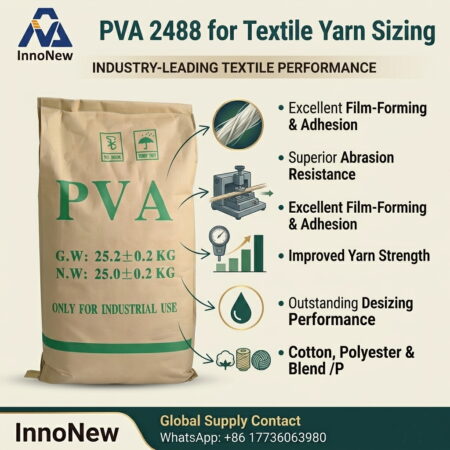
In textile manufacturing, yarn sizing is the critical preparatory step that boosts warp yarn strength, reduces hairiness, cuts loom breakage rates, and ensures stable high-speed weaving. Two of the most widely used sizing agents globally are PVA (polyvinyl alcohol) and starch. Choosing between PVA vs starch for textile yarn sizing directly impacts production efficiency, fabric quality, cost, and environmental compliance.
Choosing the right sizing agent directly impacts weaving efficiency and fabric quality. The debate between PVA vs starch for textile yarn sizing is critical for textile mills aiming to optimize performance and reduce yarn breakage.
This article provides a detailed comparison between traditional starch and modern PVA 2488 for textile yarn sizing, helping you make the best decision.
What is Textile Yarn Sizing & Why It Matters
Textile yarn sizing is the process of applying a thin protective film (size paste) to warp yarns before weaving. The sizing layer reinforces fiber cohesion, reduces friction damage during loom operation, minimizes yarn breakage, and improves weaving efficiency. Without reliable sizing, yarn hairiness, warp breaks, and fabric defects skyrocket, dragging down output and raising production costs.
The ideal sizing agent delivers strong adhesion, uniform film formation, good flexibility, easy desizing, and cost efficiency. For decades, starch and PVA have dominated the market as the two mainstream options, each with unique strengths and limitations for textile yarn sizing.
PVA vs Starch: Key Differenc
Starch for Textile Yarn Sizing
Starch is a natural polysaccharide sizing material, typically derived from corn, potato, tapioca, or wheat. It is a renewable, low-cost traditional sizing agent widely used for natural fiber yarns. Modified starch (oxidized starch, cationic starch, cross-linked starch) is also formulated to boost performance for blended yarn applications.
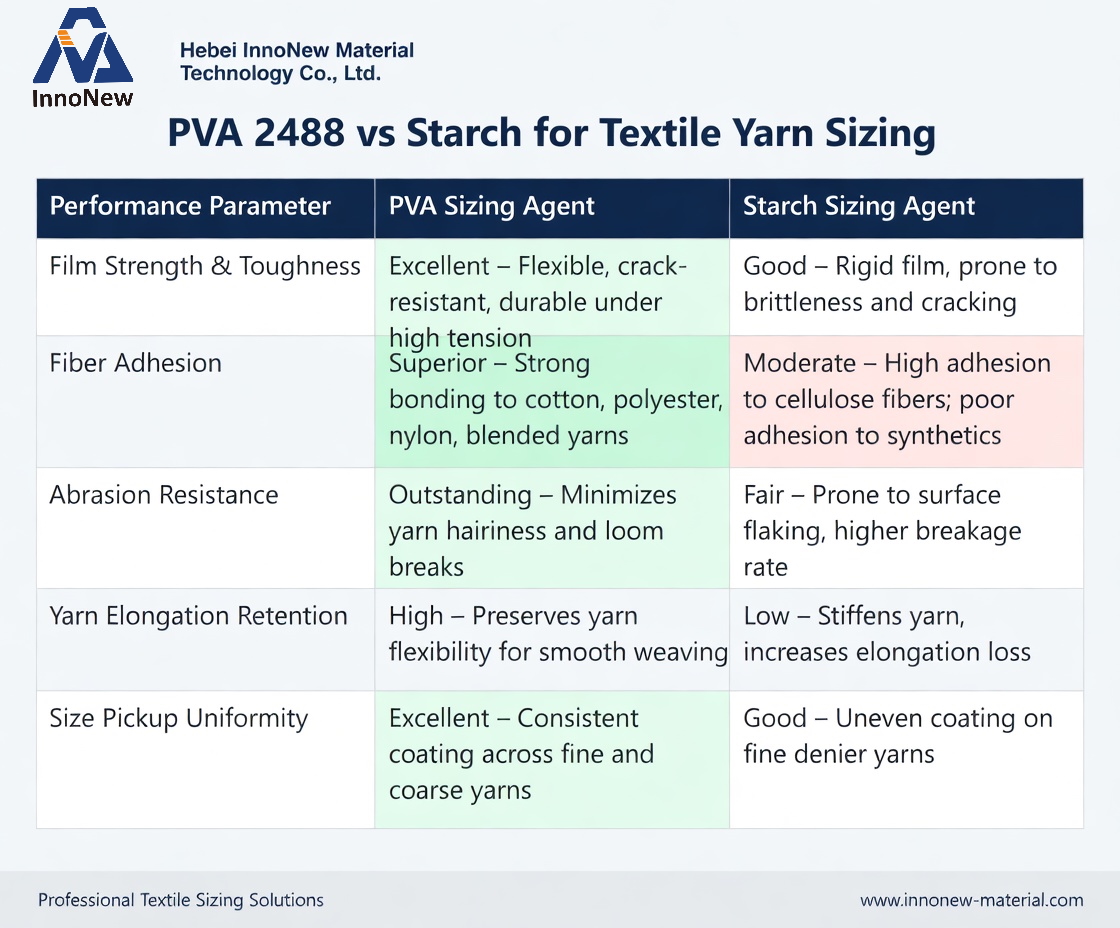
As a biodegradable, eco-friendly textile size, starch is easy to source and compatible with most natural cellulose fibers. It forms a rigid film that boosts yarn strength but has limited adhesion to synthetic fibers like polyester and nylon.
PVA for Textile Yarn Sizing
PVA (polyvinyl alcohol) is a synthetic polymer sizing agent engineered for high-performance textile weaving. It offers exceptional film toughness, strong adhesion to both natural and synthetic fibers, and excellent abrasion resistance. PVA sizing creates a flexible, durable coating that drastically reduces warp breaks during high-speed weaving.
PVA textile size is available in multiple grades (varying molecular weight and hydrolysis degree) to match different yarn types and weaving speeds. It is the top choice for fine yarns, blended yarns, and high-efficiency industrial looms.
Core Overview: PVA Sizing agent vs Starch Sizing Agent
Why PVA 2488 Outperforms Starch
1. Stronger Film Formation
PVA 2488 for textile yarn sizing forms a flexible yet strong protective film, reducing yarn damage.
2. Better Abrasion Resistance
Unlike starch, polyvinyl alcohol for textile sizing significantly reduces friction during weaving.
3. Easy Desizing Process
PVA dissolves easily in water, improving downstream processing efficiency.
When to Use Starch
- Low-cost production
- Low-speed weaving
However, for high-performance weaving, PVA 2488 supplier solutions are preferred.
Conclusion
For modern textile mills, PVA 2488 for textile yarn sizing is the superior choice over starch in terms of durability, efficiency, and fabric quality.
👉 Contact us today to get high-quality PVA 2488 for textile applications.
FAQ
Q1: Is PVA better than starch for yarn sizing?
A: Yes, PVA 2488 for textile yarn sizing provides better strength and abrasion resistance.
Q2: Is PVA more expensive than starch?
A: Yes, but it improves efficiency and reduces overall cost.