How to Improve Artificial Marble Surface Gloss | PVA Release Film Solution for High-Gloss Marble
In artificial marble manufacturing, surface gloss is not just a visual parameter—it is a direct indicator of product quality, process stability, and market competitiveness. High-gloss artificial marble commands significantly higher prices, especially in premium applications such as countertops, decorative panels, and architectural surfaces.
However, many manufacturers still face persistent issues such as:
- Low or inconsistent gloss levels
- Surface haze or dullness
- Micro-defects and uneven reflection
- Post-polishing inefficiency
Even when using high-grade raw materials like unsaturated polyester resin or acrylic systems, the final surface quality often falls short due to process-level limitations.
This comprehensive guide explains how to improve artificial marble surface gloss from a factory perspective, focusing on mould condition, release system, formulation optimization, and process control, with a particular emphasis on PVA water soluble release film as a breakthrough solution.
🔷What Defines Surface Gloss in Artificial Marble?
Surface gloss is primarily determined by the light reflectivity of the finished surface, which depends on microscopic smoothness and uniformity.
Key influencing parameters:
- Surface roughness (Ra value)
- Mould replication accuracy
- Resin curing behavior
- Presence of contaminants or residues
👉 Any disruption at the interface between mould and material will directly reduce gloss performance.
🔷 Key Factors Affecting Artificial Marble Gloss
1. Mould Surface Quality (Critical Factor)
The mould acts as the “mirror template” for artificial marble. Any imperfection is transferred to the final product.
Common issues:
- Micro scratches on mould surface
- Residual release agent buildup
- Dust or contamination
Optimization:
- Use high-polish moulds (mirror grade)
- Regular mould cleaning and maintenance
- Avoid abrasive cleaning tools
2. Release System (Most Overlooked Factor)
The release system directly affects the interface smoothness between mould and marble.
Problems with traditional release agents:
- Uneven coating thickness
- Oil migration into surface layer
- Residue causing haze or dullness
These issues lead to:
❌ Gloss inconsistency
❌ Surface defects
❌ Increased polishing cost
3. Material Formulation Stability
Even with a perfect mould, unstable formulations can reduce gloss.
Key risks:
- Poor resin flowability
- Filler segregation
- Air entrapment
Solution:
Use optimized additives such as:
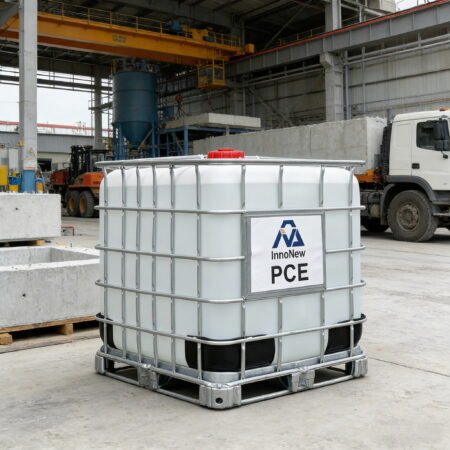
- PCE (improves flowability)
- HPMC (stabilizes system and prevents segregation)
4. Curing Process Control
Improper curing leads to:
- Surface shrinkage
- Micro-cracking
- Gloss loss
Best practices:
- Controlled temperature ramp
- Uniform curing environment
- Avoid rapid exothermic reactions
🔷 Why PVA Water Soluble Release Film Improves Surface Gloss
Among all factors, the release system has the highest impact-to-cost ratio. This is where PVA water soluble release film for artificial marble provides a transformative advantage.
Mechanism of Action
Unlike liquid release agents, PVA release film creates a physical separation layer between mould and material.
This layer:
- Prevents direct contact
- Eliminates chemical interaction
- Maintains surface integrity
🔷 Key Advantages
Ultra-Smooth Interface Formation
The water soluble release film ensures a perfectly uniform contact surface, resulting in high reflectivity and mirror-like gloss.
Zero Residue Technology
Unlike oil or wax systems, PVA film leaves no residue, eliminating:
- Surface contamination
- Gloss reduction
- Post-cleaning requirements
Consistent Batch Performance
Each production cycle maintains:
✔ Stable gloss level
✔ Reduced variability
✔ Predictable quality
Reduced Polishing Requirement
With improved surface finish:
👉 Less grinding and polishing needed
👉 Lower labor cost
👉 Faster production cycles
🔷 Process Optimization: Step-by-Step Guide
To fully maximize gloss performance, implement the following process:
Step 1: Mould Preparation
- Clean mould thoroughly
- Ensure mirror-level polish
- Remove all residues
Step 2: Apply PVA Release Film
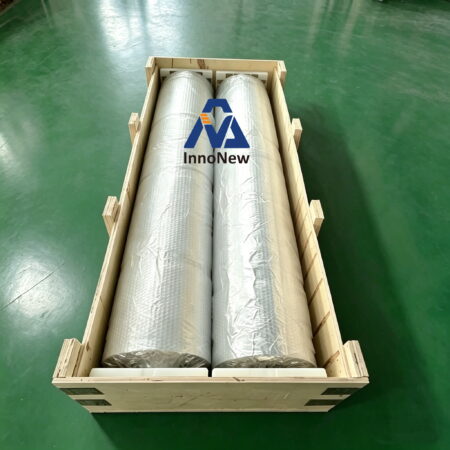
- Place PVA water soluble release film evenly
- Avoid wrinkles or folds
- Ensure full surface coverage
Step 3: Material Casting
- Use optimized resin formulation
- Ensure proper viscosity and flow
Step 4: Degassing
- Apply vibration or vacuum
- Remove trapped air bubbles
Step 5: Controlled Curing
- Maintain stable temperature
- Avoid thermal shock
Step 6: Demoulding
- Remove mould smoothly
- No sticking or tearing
Step 7: Water Cleaning
- Wash surface → film dissolves completely
- No secondary cleaning needed
🔷 Comparative Analysis: Film vs Traditional Release Agents
| Parameter | PVA Release Film | Wax / Oil Release |
|---|---|---|
| Surface Gloss | ⭐⭐⭐⭐⭐ | ⭐⭐⭐ |
| Residue | None | Moderate |
| Consistency | High | Variable |
| Cleaning Cost | Low | High |
| Environmental Impact | Eco-friendly | Pollution risk |
🔷 Advanced Optimization Strategies
For manufacturers targeting premium artificial marble, consider:
✔ Multi-layer mould system
Improves surface replication accuracy
✔ Controlled humidity environment
Prevents micro surface defects
✔ Automated film placement
Ensures consistency in large-scale production
🔷 Integrated Solution System
To achieve maximum performance, combine:
- Water Soluble Release Film → Surface quality & gloss
- PCE Superplasticizer → Flowability & compaction
- HPMC / Cellulose Ether → Stability & uniformity
👉 This creates a fully optimized artificial marble production system
🔷 Conclusion
Improving artificial marble surface gloss is not dependent on a single factor—it requires a systematic optimization approach.
However, among all variables, the release system offers the fastest and most cost-effective improvement.
👉 Upgrading to PVA water soluble release film enables:
- Higher gloss levels
- Better surface consistency
- Lower production cost
- Reduced defect rate
It is not just a replacement for traditional release agents—it is a critical upgrade for high-end manufacturing.
CTA – Get Competitive Advantage Now
If you want to produce high-gloss, premium artificial marble, now is the time to upgrade your process.
👉 Get Free Sample of PVA Water Soluble Release Film
👉 Factory Direct Supply | Custom Specifications Available
📩 Email: chris@innonew-material.com
📱 WhatsApp: +86 17736063980