
How HEC Improves Drilling Fluid Performance
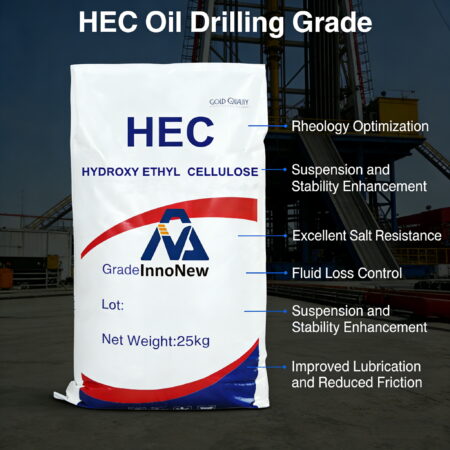
In modern oilfield operations, drilling fluid performance plays a critical role in determining drilling efficiency, wellbore stability, and overall operational cost. One of the most effective additives used in water-based drilling systems today is HEC for oil drilling. As a high-performance cellulose ether, HEC significantly enhances drilling fluid viscosity, stability, and fluid loss control.
At Hebei InnoNew Material Technology Co., Ltd., we provide premium hydroxyethyl cellulose drilling fluid solutions designed to deliver reliable performance in complex and demanding drilling environments.
What is HEC in Drilling Fluids?
Hydroxyethyl Cellulose (HEC) is a non-ionic, water-soluble polymer widely used as a drilling fluid additive. It functions primarily as a rheology modifier and drilling fluid thickener, making it essential for optimizing fluid performance in oil drilling applications.
HEC is especially suitable for water-based drilling fluid systems due to its excellent compatibility, stability, and resistance to high salinity conditions.
How HEC Improves Drilling Fluid Performance
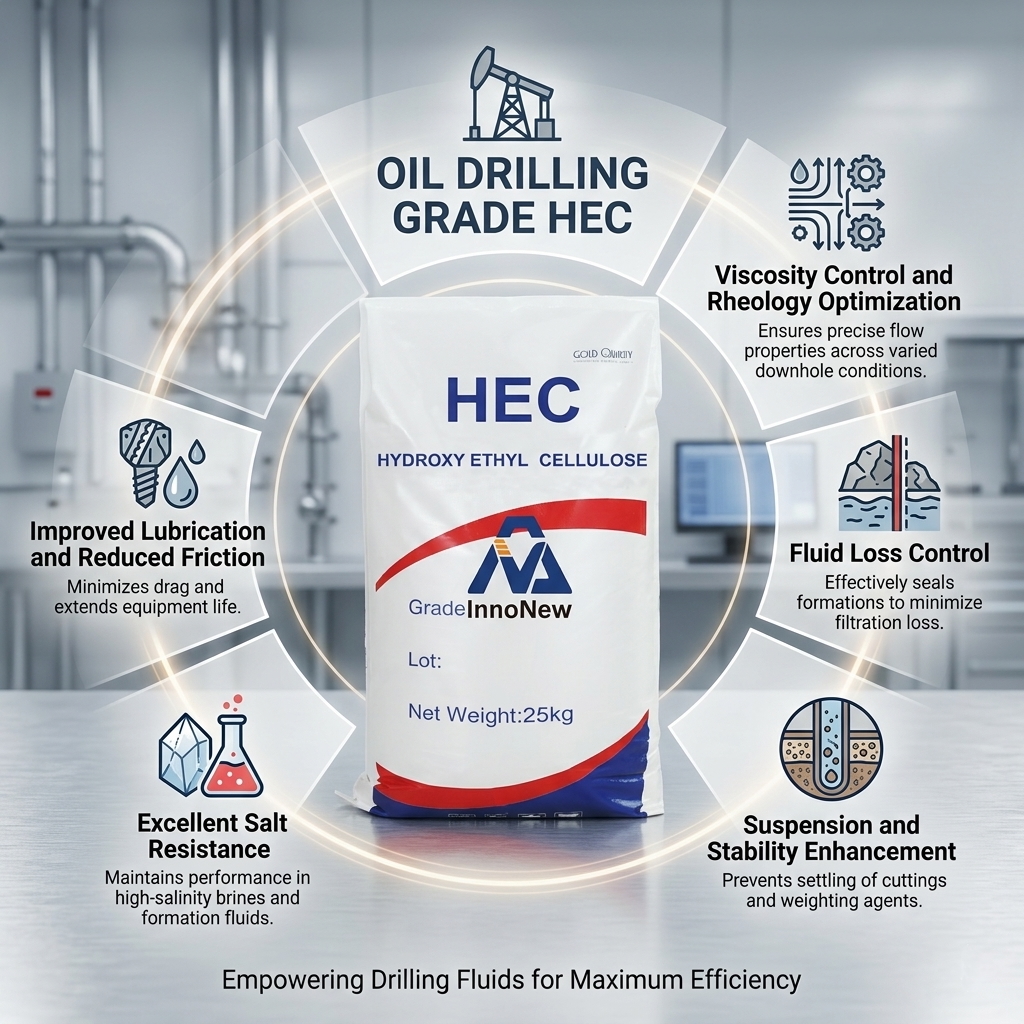
1. Viscosity Control and Rheology Optimization
One of the primary benefits of HEC for oil drilling is its ability to control viscosity effectively. Proper viscosity ensures efficient transportation of drill cuttings and maintains a clean wellbore.
HEC provides stable rheological behavior, allowing drilling fluids to maintain performance under varying temperature and pressure conditions. This makes it a reliable drilling fluid thickener in both standard and complex drilling operations.
2. Fluid Loss Control
Fluid loss control is essential in drilling operations to prevent excessive penetration of drilling fluids into the formation. HEC helps form a thin and low-permeability filter cake on the wellbore wall.
This reduces fluid invasion, protects the formation, and improves overall drilling efficiency. Compared to other additives, hydroxyethyl cellulose drilling fluid systems provide balanced performance between viscosity and filtration control.
3. Suspension and Stability Enhancement
Another key advantage of HEC drilling fluid additive is its ability to improve suspension properties. It ensures that drill cuttings and weighting materials remain evenly distributed throughout the fluid.
This prevents sedimentation and enhances overall fluid stability, which is critical for maintaining consistent drilling performance and reducing operational risks.
4. Excellent Salt Resistance
In many oilfield applications, drilling fluids are exposed to high salinity environments. HEC demonstrates excellent resistance to salts and electrolytes, maintaining its performance even in harsh conditions.
This makes HEC for oil drilling an ideal choice for challenging formations where other polymers may fail.
5. Improved Lubrication and Reduced Friction
HEC also contributes to improved lubrication properties of drilling fluids. By reducing friction between the drill string and the wellbore, it enables smoother drilling operations and reduces equipment wear.
This leads to improved efficiency and lower maintenance costs in long-term drilling projects.
👉 Learn more about InnoNew® Hydroxyethyl Cellulose HEC for Oil Drilling.
Recommended Dosage of HEC in Drilling Fluids
The optimal dosage of HEC drilling fluid additive depends on specific drilling conditions and formulation requirements. In most applications, the recommended dosage ranges from 0.2% to 0.6%.
Lower dosages are typically used for viscosity adjustment, while higher concentrations may be applied when enhanced fluid loss control and suspension stability are required.
HEC vs PAC in Drilling Fluids
Both HEC and PAC (Polyanionic Cellulose) are commonly used in drilling fluid systems. However, they serve different roles.
HEC is mainly used for viscosity control and rheology optimization, while PAC is more effective for aggressive fluid loss control. In many advanced formulations, HEC and PAC are used together to achieve optimal drilling fluid performance.
Applications of HEC in Oil Drilling
HEC is widely applied in various oilfield operations, including:
- Water-based drilling fluids
- Completion fluids
- Workover fluids
- Horizontal drilling systems
- Shale and complex formations
Its versatility makes it a key component in modern drilling fluid formulations.
Why High-Quality HEC Matters
The performance of HEC for oil drilling depends heavily on product quality and consistency. High-quality HEC offers:
- Stable viscosity control
- Fast hydration and easy dispersion
- Strong salt resistance
- Reliable batch-to-batch performance
Choosing a trusted supplier ensures consistent results and improved drilling efficiency.
Conclusion
Understanding how HEC improves drilling fluid performance is essential for optimizing oilfield operations. From viscosity control and fluid loss reduction to enhanced stability and salt resistance, HEC plays a vital role in modern drilling systems.
By selecting the right hydroxyethyl cellulose drilling fluid additive and optimizing its dosage, manufacturers and operators can significantly improve drilling efficiency, reduce operational risks, and achieve better overall performance.
👉 Contact us for technical support
FAQ:
1. What is HEC’s core role in oil drilling fluids?
HEC Oil Drilling Grade modifies rheology, boosts viscosity, suspends cuttings, and controls fluid loss.
2. Is HEC compatible with high-salt drilling fluids?
Yes, it maintains stable performance in brine-based systems
3. What temperature range suits HEC in drilling?
HEC performs steadily in medium-to-high temperature well environments.
4. Why choose HEC over other thickeners for drilling?
InnoNew® Oilfield Grade HEC is Non-ionic, shear-stable, low formation damage, and compatible with most additives.