
Hydroxypropyl Starch Ether (HPS) for Dry-Mix Mortar
What is HPS in Dry-Mix Mortar?
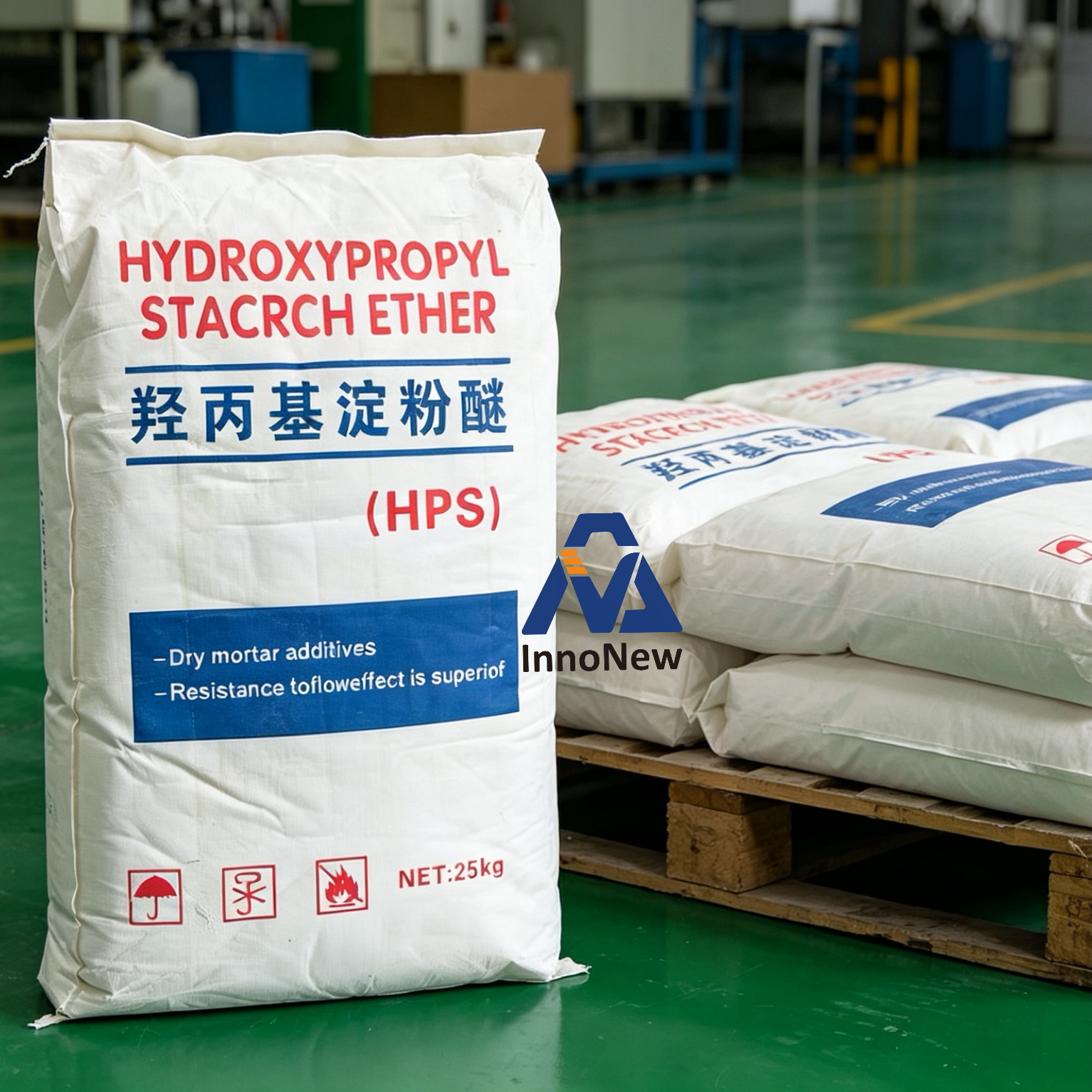
Hydroxypropyl Starch Ether (HPS) is a modified starch-based additive widely used in dry-mix mortar formulations to enhance rheology control, anti-sagging performance, and application efficiency.
Compared with cellulose ethers, Modified Starch Ether HPS provides excellent thickening and structural stability, making it a critical functional additive in modern construction materials.
In dry-mix mortar systems, HPS is often used in synergy with:
- HPMC (Hydroxypropyl Methyl Cellulose) → water retention & open time
- RDP (Redispersible Polymer Powder) → adhesion & flexibility
👉 This combination creates a balanced mortar system with superior performance.
Key Benefits of HPS in Dry-Mix Mortar
1. Excellent Anti-Sagging Performance
- Prevents mortar slipping on vertical surfaces
- Essential for tile adhesive and plastering applications
- Improves build-up thickness
2. Enhanced Workability
- Smooth and creamy consistency
- Easy troweling and spreading
- Better application efficiency on site
3. Improved Rheology Control
- Provides stable viscosity under shear
- Prevents segregation and bleeding
4. Compatibility with Cement Systems
- Works effectively in cement-based formulations
- Stable across different environmental conditions
5. Cost Optimization
- Partial replacement of high-cost cellulose ethers
- Improves overall formulation economics
Typical Applications in Dry-Mix Mortar
HPS is widely used in:
- Tile Adhesive Mortar
👉 See detailed application: HPS for Tile Adhesive - Wall Putty & Skim Coat
- Plastering Mortar
- Self-Leveling Mortar
- EIFS / ETICS Systems
Formulation Synergy
To achieve optimal performance, HPS is typically used together with:
HPS + HPMC
- HPMC ensures water retention and open time
- HPS improves anti-sag and structure
✔ Result: Balanced workability + stability
HPS + RDP
- RDP enhances adhesion and flexibility
- HPS stabilizes mortar structure
✔ Result: Strong bonding + easy application
👉 Recommended system:
- HPMC: 0.2–0.5%
- HPS: 0.02–0.1%
- RDP: 1–5%
Technical Advantages vs Traditional Additives
| Property | HPS | HPMC Only |
|---|---|---|
| Anti-Sagging | ★★★★★ | ★★★ |
| Workability | ★★★★★ | ★★★★ |
| Cost Efficiency | ★★★★★ | ★★ |
| Rheology Stability | ★★★★★ | ★★★ |
✔ Conclusion: HPS is a critical rheology modifier, not a replacement but a performance enhancer
Recommended Dosage
- General range: 0.02% – 0.1%
- Adjust based on:
- Cement content
- Sand gradation
- Application type
Why Choose Our HPS?
- Stable viscosity performance
- Consistent batch quality
- Excellent compatibility with HPMC & RDP
- Optimized for global dry-mix mortar formulations
FAQ
1. What does HPS do in dry-mix mortar?
HPS mainly improves anti-sagging, workability, and rheology stability.
2. Can HPS replace HPMC?
No. HPS complements HPMC but does not replace its water retention function.
3. Is HPS suitable for tile adhesive?
Yes. It significantly improves anti-slip and application performance.
4. What is the ideal dosage of HPS?
Typically 0.02%–0.1%, depending on formulation.
5. Can HPS be used with RDP?
Yes. It works synergistically to improve both structure and adhesion.
Call to Action (Conversion-Oriented)
Looking to optimize your dry-mix mortar formulation?
Contact us for:
- Free formulation advice
- Sample testing support
- Customized additive solutions
📩 Email: chris@innonew-material.com
📱 WhatsApp: +86 17736063980