
MHEC for Wall Putty & Interior/Exterior Plasters | Superior Workability & Water Retention
Introduction
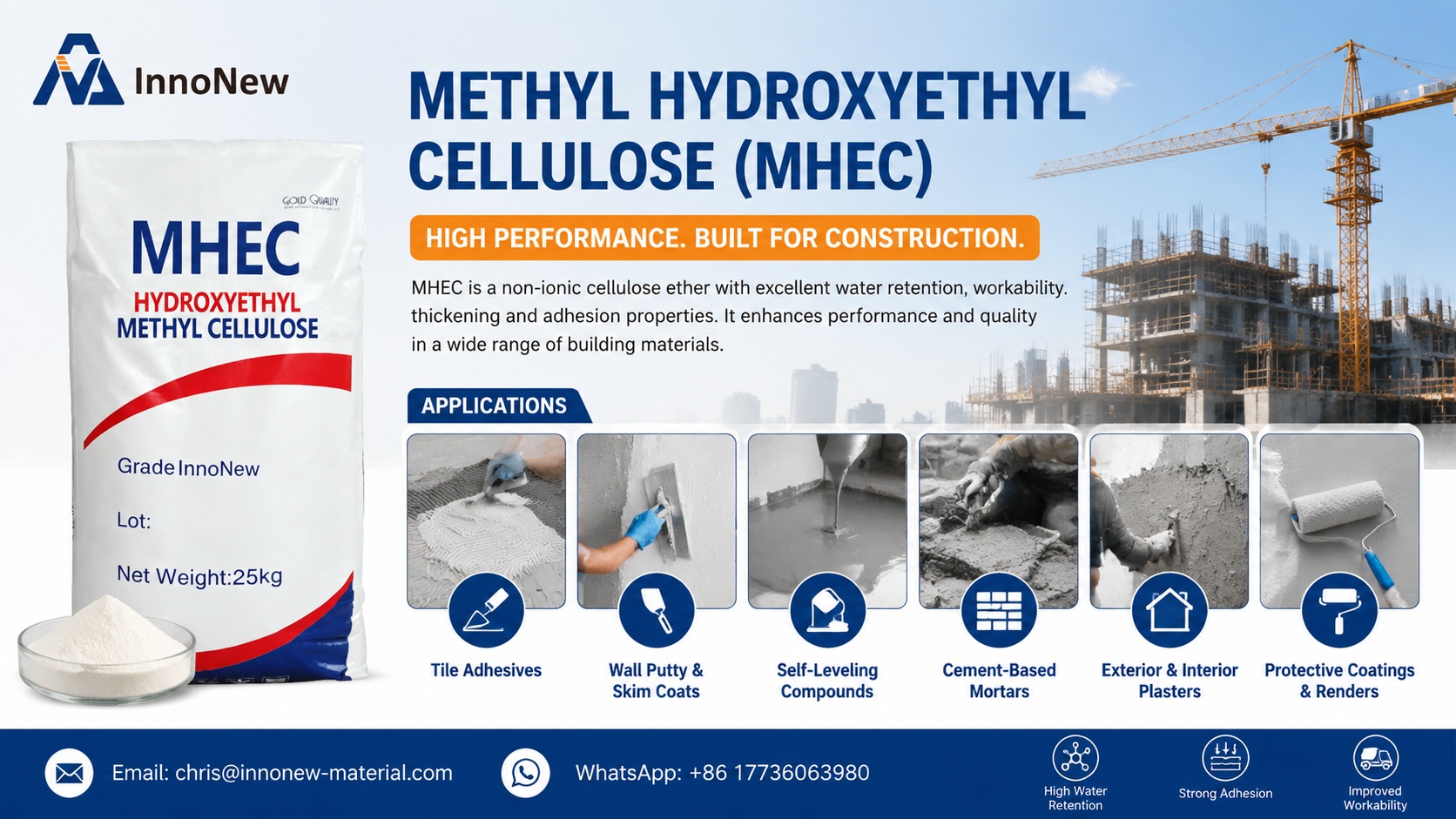
MHEC (Methyl Hydroxyethyl Cellulose) is an advanced cellulose ether widely used in modern construction applications. Specifically formulated for wall putty and interior/exterior plasters, MHEC offers enhanced workability, water retention, and adhesion, making it a superior choice over standard HEC (Hydroxyethyl Cellulose) for demanding construction environments.
In tropical and high-temperature regions, wall putty often faces rapid water evaporation, cracking, and poor adhesion. Traditional HEC increases viscosity but has limited water retention, resulting in higher application difficulty and potential surface defects. MHEC’s molecular modification addresses these challenges effectively.
Key Advantages of MHEC in Wall Putty & Plasters
- Superior Workability
MHEC improves the consistency and spreadability of wall putty and plaster, allowing easier application and smoother finishing. Compared with HEC, MHEC formulations show lower slump loss over time, especially in high-temperature and humid conditions. - Excellent Water Retention
Proper water retention is crucial for cement-based plasters to ensure hydration and prevent shrinkage cracks. MHEC retains water more effectively than HEC, particularly under tropical climates or dry environments, ensuring longer open time for plastering work. - Enhanced Adhesion and Durability
MHEC increases adhesion to various substrates including concrete, cement board, and brick surfaces. Its methylation provides better bonding performance than standard HEC, resulting in crack-resistant and durable plaster surfaces. - Temperature Adaptability
MHEC gels at higher temperatures compared to HEC, which prevents early drying and ensures consistent performance across different regions. Ideal for interior and exterior applications in challenging climates. - Compatibility with Other Additives
Fully compatible with other construction additives such as HPMC for improved rheology and RDP for adhesion enhancement in dry-mix mortars.
MHEC vs HEC: Key Differentiation
| Feature | MHEC | HEC |
|---|---|---|
| Water Retention | High | Moderate |
| Workability | Superior | Good |
| Temperature Resistance | High | Medium |
| Adhesion | Strong | Moderate |
| Open Time | Longer | Shorter |
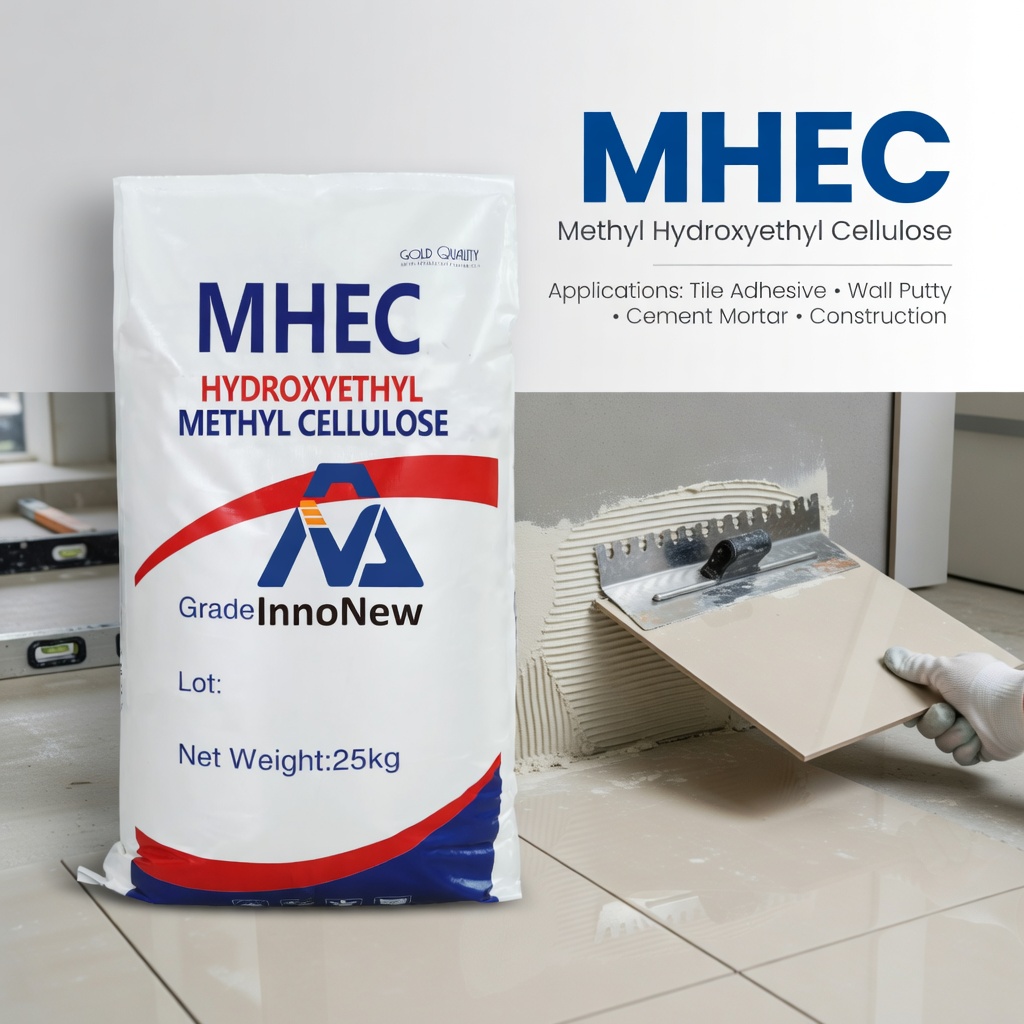
Tip: Using MHEC instead of HEC in wall putty ensures smoother application and reduces surface cracking under extreme temperatures.
Application Scenarios
- Wall Putty: Provides smooth surface finishing, prevents cracking, and ensures long-term durability.
- Interior Plaster: Enhances workability for troweling, reduces water evaporation, and ensures adhesion to gypsum or cement-based substrates.
- Exterior Plaster: Improves weather resistance, maintains water retention under direct sunlight, and ensures crack-free finishes.
FAQ
Q1: What is MHEC and why is it used in wall putty?
A1: Methyl Hydroxyethyl Cellulose (MHEC) is a cellulose ether that enhances the workability, water retention, and adhesion of wall putty. It allows smoother application and prevents cracking, outperforming HEC in harsh climates.
Q2: Can MHEC be used for both interior and exterior plasters?
A2: Yes. MHEC is suitable for both interior and exterior plasters due to its high temperature resistance and excellent water retention properties.
Q3: How does MHEC compare to HEC in plaster applications?
A3: Compared to HEC, MHEC provides longer open time, better water retention, higher temperature adaptability, and stronger adhesion, making it ideal for high-performance wall putty and plaster.
Q4: Is MHEC compatible with other additives?
A4: Absolutely. MHEC is fully compatible with HPMC for improved rheology and RDP for enhanced adhesion and flexibility in dry-mix mortars.
Q5: What types of substrates can MHEC-based plasters be applied to?
A5: MHEC can be used on concrete, brick, cement boards, and gypsum substrates, offering excellent adhesion and crack resistance.