
PCE for Self Compacting Concrete | High-Performance Polycarboxylate Ether Superplasticizer
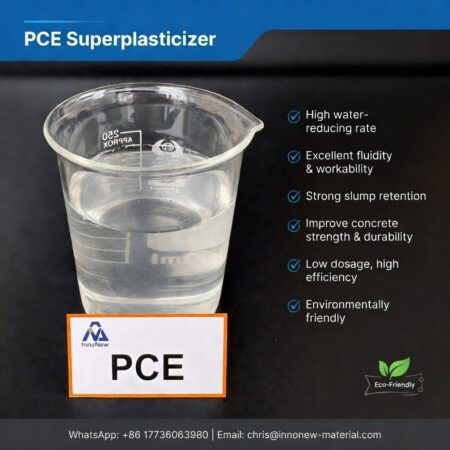
Self-Compacting Concrete (SCC) represents a revolutionary advancement in modern construction, enabling concrete to flow and consolidate under its own weight without mechanical vibration. This eliminates noise, reduces labor costs, and ensures superior surface finish even in heavily reinforced or complex structural elements. At the heart of high-quality SCC production lies a specialized PCE for Self Compacting Concrete — a third-generation Polycarboxylate Ether Superplasticizer engineered for exceptional dispersion, high flowability, and stability.
Our SCC dedicated PCE Superplasticizer provides outstanding water reduction (typically 25-40%), prolonged slump retention, and minimal segregation, making it the preferred choice for precast, ready-mix, and on-site high-performance concrete applications.
What is PCE for Self Compacting Concrete?
Polycarboxylate Ether (PCE) Superplasticizer is a high-range water-reducing admixture characterized by its unique comb-shaped molecular structure. The backbone provides electrostatic repulsion while the polyethylene oxide side chains deliver steric hindrance, effectively dispersing cement particles and releasing entrapped water.
Unlike traditional naphthalene or melamine-based superplasticizers, PCE for SCC offers:
- Higher water reduction at lower dosages (0.1–0.4% by weight of cementitious materials)
- Better compatibility with various cement types and supplementary cementitious materials (SCMs) such as fly ash, slag, and silica fume
- Superior control over rheology for self-leveling and self-consolidating behavior
This makes PCE Superplasticizer the essential admixture for achieving the required slump flow (typically 500–800 mm) and passing ability (J-Ring, L-Box) in SCC mixes while maintaining stability.
Key Advantages of SCC Dedicated PCE Superplasticizer
- High Water Reduction & Strength Enhancement: Achieves up to 40% water reduction, enabling lower water-to-cement ratios that translate into higher compressive strength, improved durability, and reduced permeability.
- Excellent Flowability and Passing Ability: Allows concrete to flow through dense reinforcement and intricate formwork without vibration, reducing placement time and labor.
- Superior Slump Retention: Maintains workability for extended periods (2–6+ hours depending on formulation), ideal for long-haul transport and large pours.
- Segregation and Bleeding Resistance: Provides balanced viscosity and cohesion, preventing separation of aggregates even at high flow rates.
- Enhanced Surface Finish: Produces high-quality fair-faced concrete with minimal defects.
- Eco-Friendly and Cost-Efficient: Low dosage requirement reduces cement consumption and overall carbon footprint while improving construction efficiency.
Technical Specifications & Recommended Dosage
Typical properties of our PCE for SCC include:
- Appearance: Light yellow to amber liquid (40–50% solid content) or white powder (≥95% solid content)
- pH: 6–8
- Water reduction rate: 25–40%
- Recommended dosage: 0.15–0.35% by weight of cementitious materials (adjust based on trial mixes, cement type, and ambient conditions)
For optimal SCC performance, combine with proper mix design: optimized aggregate grading, appropriate paste volume, and optional viscosity-modifying agents (VMA) in highly flowable mixes.
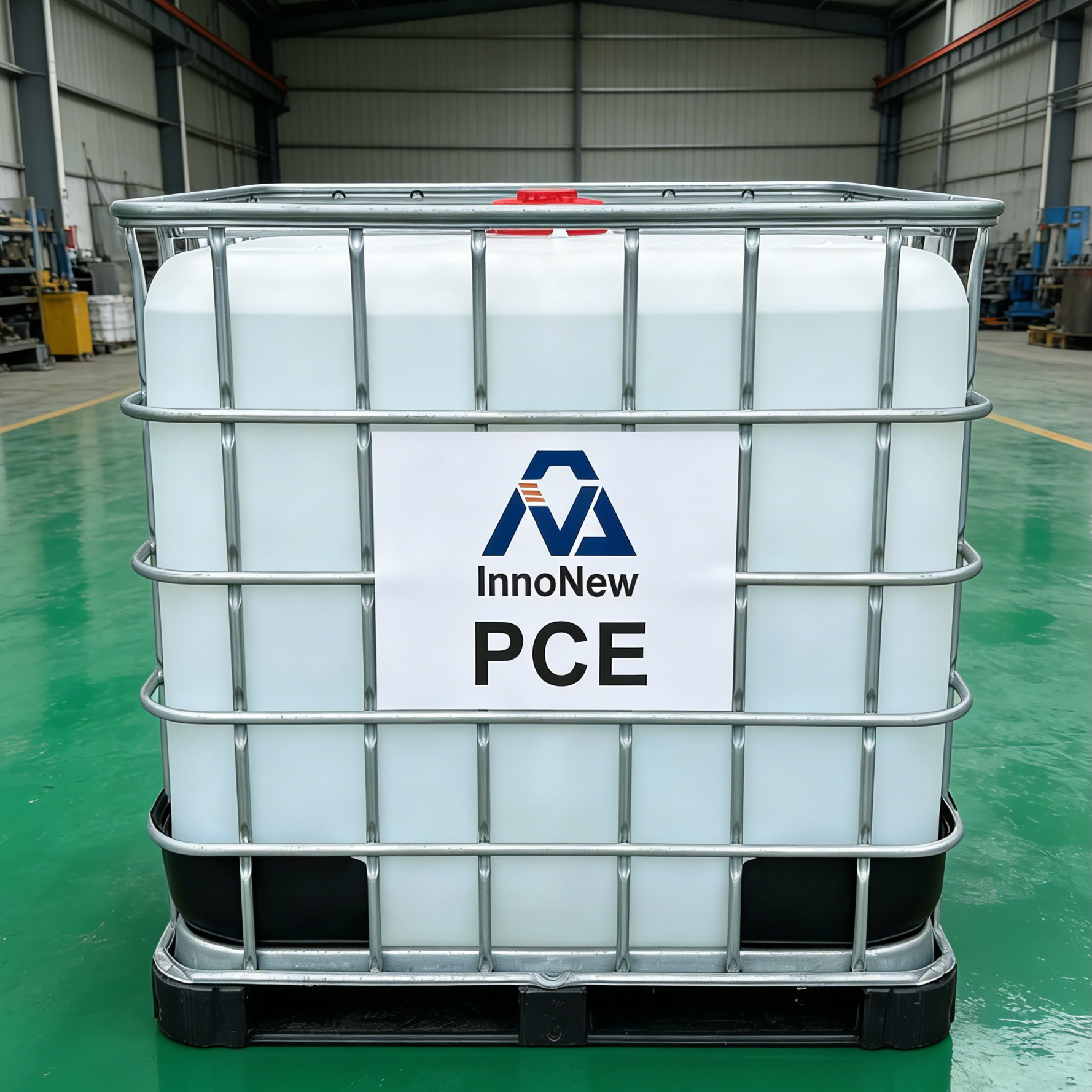
PCE Superplasticizer Powder offers advantages in storage, transportation, and dry-mix applications, while PCE Liquid provides easier on-site dosing and faster dispersion in ready-mix plants. Both forms deliver equivalent high performance when correctly reconstituted or applied.
Applications in Self Compacting Concrete Production
SCC dedicated PCE excels in:
- Precast and prestressed concrete elements (faster demolding, superior finish)
- High-rise buildings and bridges with congested reinforcement
- Tunnel linings, heavily reinforced foundations, and architectural concrete
- Pumped concrete over long distances
- Fair-faced and self-leveling concrete requiring aesthetic surfaces
In production, incorporate Polycarboxylate Superplasticizer PCE during the mixing stage after initial water and aggregates. Conduct field trials to fine-tune dosage for specific cementitious materials and temperature conditions. Key SCC tests include slump flow, T500/T20 time, VSI (Visual Stability Index), J-Ring, and L-Box.
Complementary Concrete Admixtures for Optimized SCC Performance
For best results, integrate our PCE superplasticizer with other high-quality admixtures:
- Sodium Gluconate as a set retarder to extend workability in hot climates or long-haul deliveries.
- Additional Concrete Admixture solutions for air entrainment, waterproofing, or shrinkage reduction.
- Our full range of PCE Superplasticizer variants (water-reducing, slump-retaining, and specialized grades).
Why Choose Our PCE for Self Compacting Concrete?
We deliver consistent batch-to-batch quality, excellent cement adaptability, and full technical support including mix design assistance, compatibility testing, and on-site troubleshooting. Our SCC dedicated PCE meets international standards and has proven performance in demanding projects worldwide.
Ready to optimize your self-compacting concrete production? Contact our technical team for samples, dosage recommendations, or custom formulations tailored to your specific materials and requirements.
FAQ
What is the main difference between standard PCE and SCC dedicated PCE? SCC dedicated formulations emphasize higher steric hindrance and balanced viscosity for superior flow and stability without segregation.
What is the typical dosage for PCE in SCC? 0.15–0.35% by cement weight. Always perform trial mixes to determine the optimum for your specific materials.
Can PCE Powder be used interchangeably with PCE Liquid in SCC? Yes, provided the active solid content is accounted for. PCE Powder is preferred for long-term storage and dry blends, while Liquid offers convenience in wet-mix plants.
How does PCE improve durability in self-compacting concrete? By significantly lowering the water-cement ratio and reducing porosity, PCE enhances compressive strength, impermeability, and resistance to chemical attack and freeze-thaw cycles.
Is additional retardation needed when using PCE for SCC? In many cases, Sodium Gluconate or built-in slump-retaining PCE grades provide sufficient workability extension. Consult our team for project-specific advice.