
PVA for Tile Adhesive – High Adhesion & Excellent Flexibility
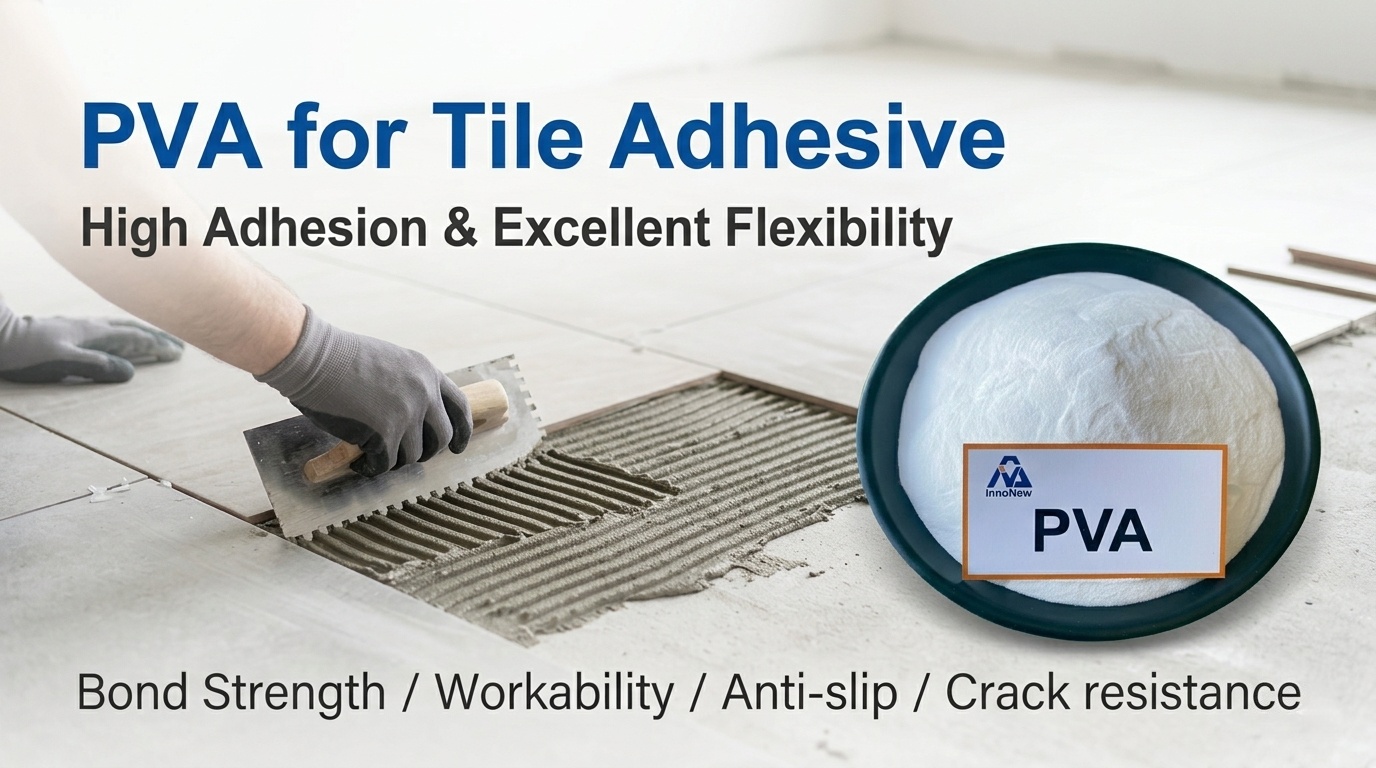
In modern construction, achieving strong bonding and durability is critical for tile installation. Polyvinyl Alcohol (PVA) is widely used in tile adhesive formulations to improve adhesion, flexibility, and workability.
As a professional manufacturer, we supply high-quality PVA powder for tile adhesive, helping manufacturers produce stable, high-performance cement-based adhesives.
Why Use PVA in Tile Adhesive?
- ✅ Enhances Bond Strength – Improves adhesion to tiles and substrates
- ✅ Improves Flexibility – Reduces cracking and improves durability
- ✅ Better Workability – Smooth application and easy spreading
- ✅ Water Retention – Prevents premature drying
- ✅ Cost Optimization – Improves formulation efficiency
How PVA Works in Tile Adhesive
PVA acts as a film-forming polymer in cement-based systems:
- Forms a flexible polymer film after hydration
- Enhances cohesion within mortar matrix
- Improves bonding between tile and substrate
- Increases tensile strength and crack resistance
👉 This makes PVA an essential additive in modern tile adhesive formulations.
Applications of PVA in Tile Adhesive
- Ceramic tile adhesive
- Porcelain tile adhesive
- Wall tile adhesive
- Floor tile adhesive
- Thin-set mortar systems
Recommended PVA Grades for Tile Adhesive
Key Specifications:
- Degree of Hydrolysis: 87% – 89%
- Viscosity: 20 – 55 mPa.s
- Good solubility in cold and hot water
Recommended Dosage in Tile Adhesive
- Typical dosage: 0.5% – 2.0% of dry mix
- Adjust based on formulation and performance requirements
👉 Proper dosage ensures optimal bonding and flexibility.
PVA vs RDP in Tile Adhesive
| Property | PVA | RDP |
|---|---|---|
| Cost | Lower | Medium |
| Flexibility | Medium | High |
| Water retention | Good | Excellent |
| Application | Standard adhesive | High-end systems |
👉 Best solution: Combine PVA + RDP for balanced performance & cost.
How to Use PVA in Tile Adhesive
- Dry mix: Blend PVA powder with cement, sand and other additives uniformly in advance.
- Wet mix: Dissolve PVA in 60–80℃ warm water first, then mix with mortar.
Key Benefits of Using Our PVA
- Stable viscosity and quality
- Excellent film-forming ability
- Compatible with cement systems
- Suitable for various tile adhesive formulations
Why Choose InnoNew Material?
- Factory direct PVA supplier
- Consistent product quality
- Bulk supply with competitive pricing
- Technical support for formulations
- Export experience to global markets
FAQ (Frequently Asked Questions)
What is the function of PVA in tile adhesive?
PVA improves adhesion, flexibility, and workability in cement-based tile adhesives.
Which PVA grade is best for tile adhesive?
PVA 2488 is commonly recommended due to its balance of strength and performance.
Can PVA replace RDP?
PVA can partially replace RDP in cost-sensitive formulations but is often used together for best results.
How much PVA should be used?
Typical dosage is 0.5%–2%, depending on formulation requirements.
Is PVA suitable for all tile adhesives?
Yes, PVA is suitable for most standard cement-based tile adhesive systems.
Get High-Quality PVA for Tile Adhesive
Looking for a reliable PVA supplier for tile adhesive?
👉 Contact us now for:
- Free samples
- Technical support
- Bulk pricing
WhatsApp: +86 17736063980
Email: chris@innonew-material.com