
Redispersible Polymer Powder (RDP) for Waterproofing Mortar
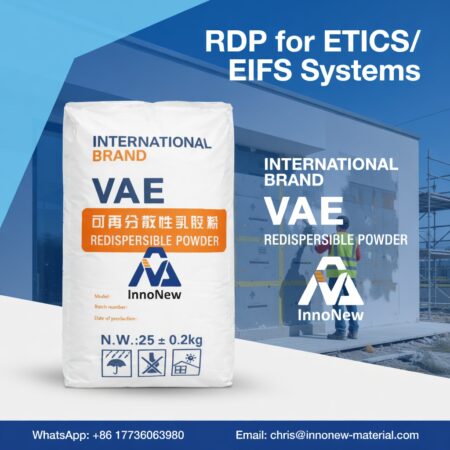
In modern construction systems, waterproofing mortar plays a critical role in protecting structures from water penetration, carbonation, and long-term durability issues. However, traditional cement-based waterproof mortars often suffer from brittleness, cracking, and poor adhesion.
Redispersible Polymer Powder (RDP) is a key functional additive that transforms standard waterproof mortar into a flexible, crack-resistant, and highly adhesive system, making it essential for high-performance waterproofing applications.
What is RDP and Why It Matters in Waterproofing Mortar?
Redispersible Polymer Powder (RDP) is a spray-dried polymer emulsion that redistributes into a film when mixed with water. In waterproof mortar systems, RDP acts as a polymeric binder, significantly enhancing the microstructure of cement-based materials.
Core Mechanism:
- Forms flexible polymer film
- Bridges micro-cracks
- Improves bonding between substrate and mortar
- Reduces water permeability
Key Benefits of RDP in Waterproofing Mortar
1. Superior Flexibility & Crack Resistance
RDP improves mortar elasticity, allowing it to accommodate substrate movement and thermal expansion.
➡️ Result: Reduced cracking, longer waterproof lifespan
2. Enhanced Adhesion Strength
RDP significantly improves bonding to:
- Concrete
- Cement screeds
- Masonry surfaces
➡️ Especially critical for vertical waterproofing applications
3. Improved Waterproof Performance
Polymer film formation reduces capillary water absorption and enhances impermeability.
➡️ Ideal for:
- Bathrooms
- Basements
- Water tanks
- Roof waterproofing
4. Increased Durability & Aging Resistance
RDP enhances:
- Freeze-thaw resistance
- Alkali resistance
- UV stability (in exterior systems)
5. Workability Optimization
RDP improves:
- Smooth application
- Reduced sagging
- Better trowelability
Recommended RDP Dosage in Waterproofing Mortar
| Application Type | RDP Dosage (%) |
|---|---|
| Rigid Waterproof Mortar | 1.5 – 3% |
| Flexible Waterproof Mortar | 3 – 6% |
| Polymer Cement Coating | 5 – 8% |
Final dosage depends on:
- Cement type
- Sand grading
- Required flexibility level
Typical Waterproof Mortar Formulation (Reference)
- Cement: 30–40%
- Sand: 50–65%
- RDP: 2–6%
- Additives: 0.5–1%
👉 Combining RDP with cellulose ether significantly improves system performance.
Synergistic Additives for Waterproofing Mortar
To maximize waterproofing performance, RDP is typically used together with the following materials:
👉 Hydroxypropyl Methyl Cellulose (HPMC)
- Improves water retention
- Enhances workability
- Prevents cracking during curing
Explore our HPMC product details: Construction Grade HPMC for Mortar
👉 Polycarboxylate Superplasticizer (PCE)
- Reduces water demand
- Increases density of mortar
- Improves strength and impermeability
Learn more about our PCE Superplasticizer Powder
👉 Hydroxypropyl Starch Ether (HPS)
- Improves anti-sagging performance
- Enhances application stability
Learn more about our Modified Starch Ether HPS for mortar
✅ System Advantage:
RDP + HPMC + PCE = High-performance waterproof mortar system
Applications of RDP Waterproofing Mortar
- Interior & exterior wall waterproofing
- Basement waterproof systems
- Bathroom & kitchen waterproof coatings
- Roof waterproofing mortar
- Swimming pools & water tanks
Why Choose Our RDP for Waterproof Mortar?
- Stable polymer performance
- Excellent redispersibility
- Consistent particle size distribution
- Strong compatibility with cement systems
- Factory-direct supply with competitive pricing
Packaging & Supply
- 25kg kraft paper bags
- OEM & customized grades available
- Fast delivery & global export support
Get Technical Support & Free Sample
Looking to optimize your waterproof mortar formulation?
👉 Contact us for:
- Free samples
- Formulation guidance
- Technical consultation