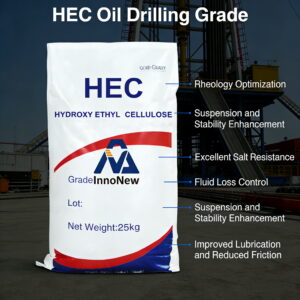
HEC for oil drilling fluid viscosity and fluid loss control

How HEC Enhances Drilling Fluid Efficiency and Stability

How HEC Enhances Drilling Fluid Efficiency and Stability In oilfield drilling operations, the performance of drilling fluids directly influences operational safety, drilling speed, and cost efficiency. As drilling conditions become more complex, the demand for high-performance additives continues to increase. Among these, HEC for oil drilling has emerged as a reliable and efficient solution for […]

How HEC Enhances Drilling Fluid Efficiency and Stability Read More »
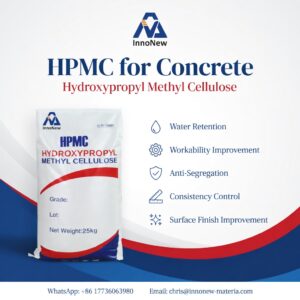
HPMC for concrete improving workability and water retention

How HPMC Improves Concrete Workability (Complete Technical Guide)

How HPMC Improves Concrete Workability In modern construction, achieving optimal concrete workability is essential for ensuring efficient placement, uniform structure, and long-term durability. One of the most effective additives used today is HPMC for concrete, a versatile cellulose ether that significantly enhances fresh mix performance. At Hebei InnoNew Material Technology Co., Ltd., we provide high-quality HPMC

How HPMC Improves Concrete Workability (Complete Technical Guide) Read More »

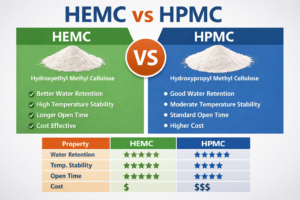
HEMC VS HPMC | Cellulose Ether Difference

HEMC vs HPMC: Which Cellulose Ether is Better for Mortar and Tile Adhesive?

HEMC vs HPMC: Whick Cellulose Ether is Better for Mortar and Tile Adhesive? In construction chemical formulations, selecting the right Cellulose ether is critical to achieving optimal performance. Two of the most widely used materials are hydroxyethyl methyl cellulose (HEMC) and HPMC. For manufacturers sourcing from a reliable HEMC supplier or evaluating options from a

HEMC vs HPMC: Which Cellulose Ether is Better for Mortar and Tile Adhesive? Read More »

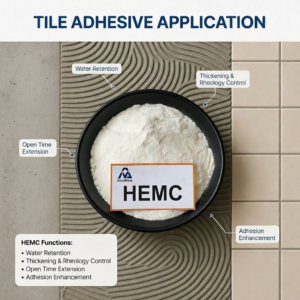
Specially formulated HEMC powder for tile adhesive, improving construction efficiency, reducing cracking and ensuring long-lasting adhesion for floor and wall tiling applications.

How Hydroxyethyl Methyl Cellulose (HEMC) Improves Tile Adhesive Performance

How HEMC Improves Tile Adhesive Performance In modern construction, tile adhesive performance directly affects bonding strength, durability, and application efficiency. One of the most critical additives used today is Hydroxyethyl Methyl Cellulose (HEMC), also known as MHEC powder, a high-performance Cellulose ether. Whether you are sourcing from a reliable HEMC supplier or working with a

How Hydroxyethyl Methyl Cellulose (HEMC) Improves Tile Adhesive Performance Read More »

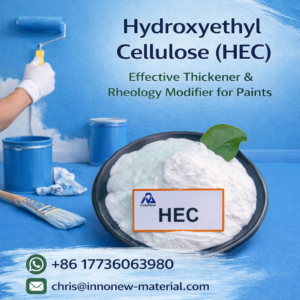
Hydroxyethyl Cellulose HEC for Paint & Coating

How HEC Improves Paint Viscosity and Coating Performance

In modern coating formulations, achieving optimal rheology, stability, and application performance is critical. Hydroxyethyl Cellulose (HEC) has become a key additive in water-based paints due to its excellent thickening, water retention, and film-forming support properties. For manufacturers seeking consistent quality and improved coating efficiency, HEC for paint plays a decisive role in controlling viscosity and

How HEC Improves Paint Viscosity and Coating Performance Read More »

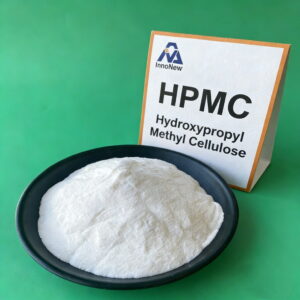
HPMC (Hydroxypropyl Methyl Cellulose) powder

HPMC cải thiện hiệu suất keo dán gạch như thế nào trong khí hậu Việt Nam

Trong khí hậu nhiệt đới của Việt Nam, các dự án xây dựng gặp thách thức do độ ẩm cao và chất lượng xi măng không đồng đều. Điều này làm cho hiệu suất keo dán gạch trở nên rất quan trọng. Hydroxypropyl Methyl Cellulose (HPMC) là phụ gia không thể thiếu cho các nhà

HPMC cải thiện hiệu suất keo dán gạch như thế nào trong khí hậu Việt Nam Read More »

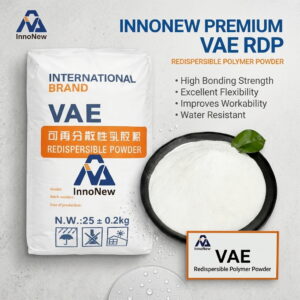
Premium VAE RDP ensures excellent flexibility and water resistance in tile adhesives

How Redispersible Polymer Powder RDP Enhances Tile Adhesive Performance: Mechanism and Benefits

    In modern construction, tile adhesive performance is critical for ensuring long-term durability, strong bonding, and resistance to environmental stress. One of the most effective additives used in high-performance formulations is Redispersible Polymer Powder (RDP). As a leading manufacturer in this field, Hebei InnoNew Material Technology Co., Ltd. provides stable and customizable VAE powder

How Redispersible Polymer Powder RDP Enhances Tile Adhesive Performance: Mechanism and Benefits Read More »

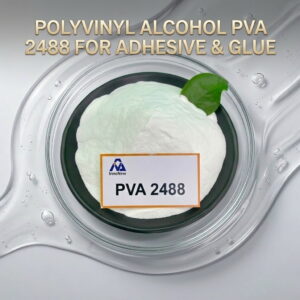
Polyvinyl Alcohol PVA 2488 for adhesive

Why PVA 2488 is Essential for Adhesives and Glue Formulations

In modern adhesive and glue formulations, selecting the right polymer is critical. Among various options, PVA 2488 stands out due to its excellent film-forming ability, strong adhesion, and water solubility. It has become a core material in water-based adhesive systems across multiple industries. What is PVA 2488 in Adhesive Applications? PVA 2488 (Polyvinyl Alcohol 2488)

Why PVA 2488 is Essential for Adhesives and Glue Formulations Read More »

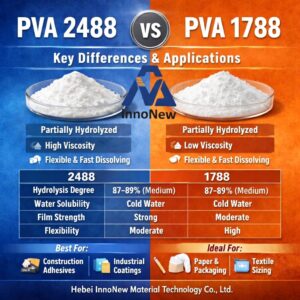
PVA 1788 vs PVA 2488 comparison: viscosity, solubility, polymerization degree and application difference

PVA 2488 vs PVA 1788: Key Differences, Performance Comparison, and How to Choose the Right Grade for Your Application

Polyvinyl Alcohol PVA 1788 vs PVA 2488 In the global polymer market, selecting the correct grade of Polyvinyl Alcohol (PVA) is critical for achieving optimal performance in industrial applications. Among the most commonly used grades, PVA 2488 and PVA 1788 are frequently compared due to their similar chemical structure but distinct functional properties. As a

PVA 2488 vs PVA 1788: Key Differences, Performance Comparison, and How to Choose the Right Grade for Your Application Read More »

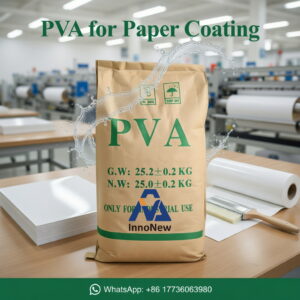
PVA Powder for Paper Coating

Why Polyvinyl Alcohol (PVA Powder) is Essential for Paper Coating: Performance Advantages and PVA 1788 & 2488 Guide

Polyvinyl Alcohol (PVA) for paper coating has become a cornerstone material in the coated paper industry. As a high-performance water-soluble polymer, Polyvinyl Alcohol PVA is widely used as a binder to enhance coating structure, surface smoothness, and printing performance in paper industry. Among the various grades available, PVA 1788 and PVA 2488 are the most

Why Polyvinyl Alcohol (PVA Powder) is Essential for Paper Coating: Performance Advantages and PVA 1788 & 2488 Guide Read More »

Scroll to Top