
Polycarboxylate Ether (PCE) for Saudi Arabia and the Middle East: The Complete Guide to High-Performance Concrete Admixtures for Ready-Mix, Precast and Spun Pile Applications
Introduction
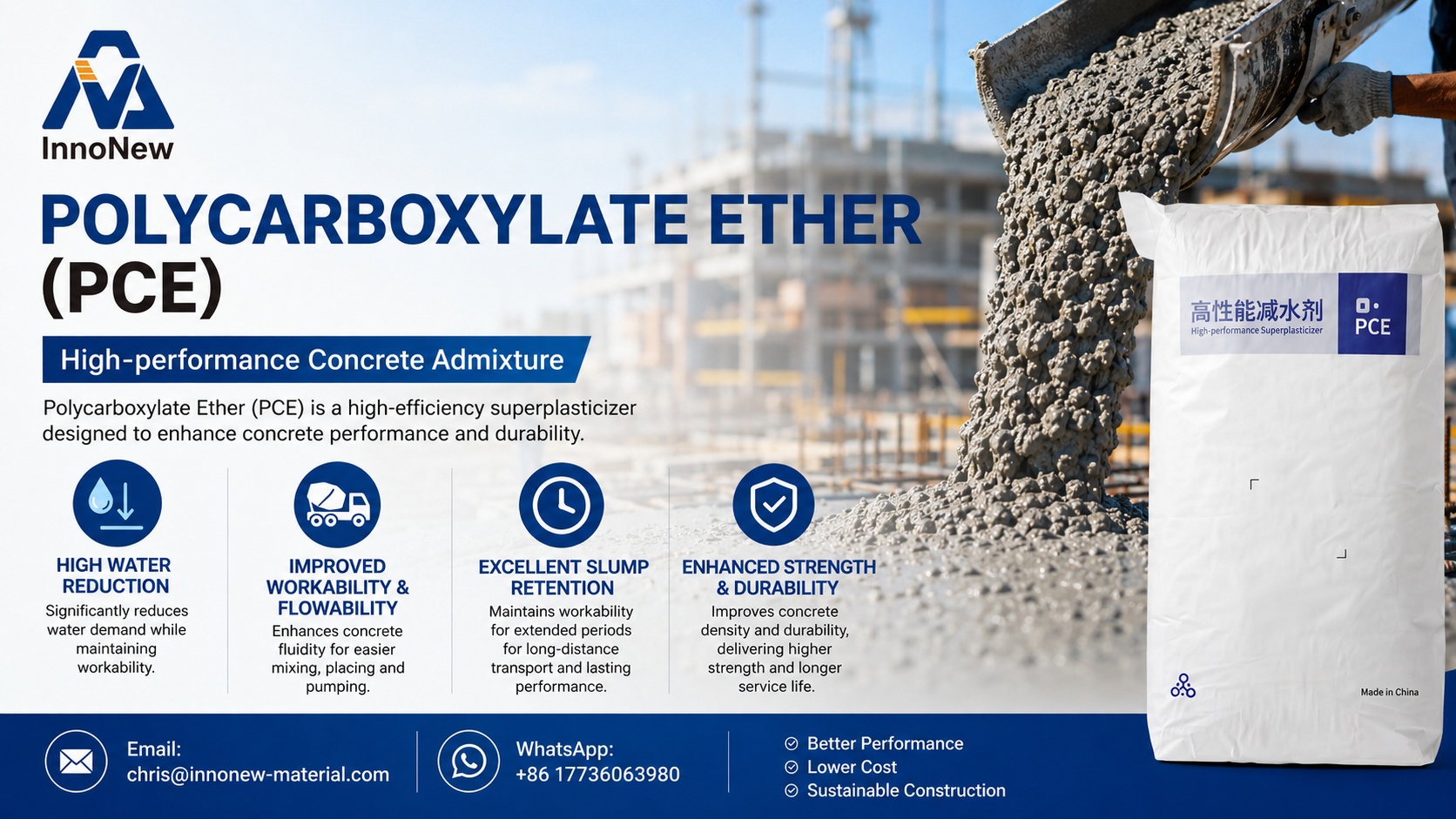
The Middle East is experiencing one of the world’s largest construction booms. Saudi Arabia alone is investing hundreds of billions of dollars into infrastructure, industrial development, transportation networks, tourism destinations, and smart cities under its Vision 2030 strategy.
Mega-projects such as the expansion of Riyadh, large-scale coastal developments, industrial zones, transportation corridors, and next-generation urban infrastructure are creating unprecedented demand for high-performance concrete technologies.
However, concrete production in Saudi Arabia differs significantly from Europe, North America, and East Asia.
Extreme temperatures, low humidity, long transportation distances, desert environments, and aggressive sulfate and chloride exposure create unique engineering challenges.
In these conditions, conventional concrete admixtures often fail to provide sufficient workability retention, water reduction efficiency, and durability performance.
This is where Polycarboxylate Ether (PCE) technology has become the dominant solution for modern concrete production across Saudi Arabia, UAE, Qatar, Kuwait, Oman, Bahrain, and the wider Gulf Cooperation Council (GCC) region.
This guide explores not only PCE technology but also the complete concrete admixture ecosystem required for successful construction projects throughout the Middle East.
Understanding the Saudi Arabian Concrete Environment
Why Concrete Performance Matters More in Saudi Arabia
Concrete in Saudi Arabia operates under some of the harshest environmental conditions on Earth.
Unlike temperate climates, Middle Eastern concrete must withstand:
- Ambient temperatures exceeding 50°C
- Extremely low relative humidity
- High evaporation rates
- Long transportation times
- Sulfate-rich soils
- Chloride-rich coastal environments
- Continuous thermal cycling
As a result, concrete admixture selection becomes a critical engineering decision rather than a simple procurement choice.
Challenge 1: High Ambient Temperature
During summer months, concrete temperatures can easily exceed:
- Riyadh: 45–50°C
- Dammam: 45°C+
- Jeddah: 40–45°C
- Eastern Province industrial areas: 50°C+
High temperatures accelerate cement hydration, causing:
- Rapid slump loss
- Early stiffening
- Increased water demand
- Pumping difficulties
- Reduced placing time
Traditional admixtures often lose effectiveness under these conditions.
Advanced PCE formulations are specifically engineered to maintain workability and dispersion performance even under extreme heat exposure.
Challenge 2: Low Humidity and Plastic Shrinkage
Many regions experience relative humidity levels below 20%.
This causes:
- Rapid surface water evaporation
- Plastic shrinkage cracking
- Reduced finishing time
- Surface defects
High-efficiency water reduction through PCE technology helps mitigate these risks by lowering total water content while maintaining workability.
Challenge 3: Long Transportation Distances
Many ready-mix plants serve projects located 30–100 kilometers away.
Concrete may remain in transit for:
- 60 minutes
- 90 minutes
- 120 minutes
Without proper slump retention technology, concrete can become unworkable before reaching the jobsite.
Modern retention-type PCE formulations are therefore essential across the GCC market.
Evolution of Concrete Admixtures in the Middle East
First Generation: Lignosulfonates
Advantages:
- Low cost
- Simple production
Limitations:
- Limited water reduction
- Poor strength enhancement
Second Generation: Naphthalene-Based Superplasticizers
For many years, Sulfonated Naphthalene Formaldehyde (SNF) dominated the Middle East market.
Benefits:
- Higher water reduction
- Improved workability
Challenges:
- Significant slump loss
- Poor retention
- Reduced performance under high temperatures
Third Generation: Polycarboxylate Ether (PCE)
Today, PCE technology is considered the global standard for high-performance concrete.
Performance Comparison
| Property | SNF | PCE |
|---|---|---|
| Water Reduction | 15–20% | 25–40% |
| Slump Retention | Fair | Excellent |
| Pumpability | Moderate | Outstanding |
| Early Strength | Medium | High |
| High Temperature Adaptation | Limited | Excellent |
| Durability Enhancement | Medium | High |
The transition toward PCE technology is one of the most significant developments in modern concrete science.
What Is Polycarboxylate Ether (PCE)?
Polycarboxylate Ether is a comb-shaped polymer superplasticizer designed to disperse cement particles through steric hindrance rather than solely electrostatic repulsion.
This unique molecular architecture provides:
- Superior cement dispersion
- Lower water demand
- Better slump retention
- Higher compressive strength
- Improved durability
By optimizing molecular structure, manufacturers can tailor PCE formulations for specific applications including ready-mix, precast, self-compacting concrete, spun pile production, and ultra-high-performance concrete (UHPC).
PCE Powder vs PCE Liquid: Which Is Better for the Middle East?
One of the most common questions among importers and concrete producers is whether to use liquid or powder PCE.
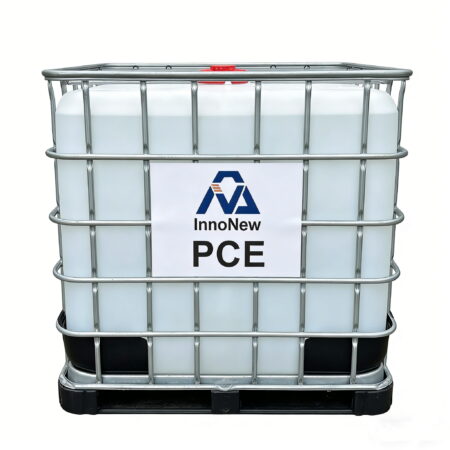
PCE Liquid
Advantages
- Direct dosing
- Easy integration into batching systems
- Suitable for large-scale ready-mix plants
Limitations
- Higher transportation cost
- Storage challenges
- Risk of freezing or degradation during transport
PCE Powder
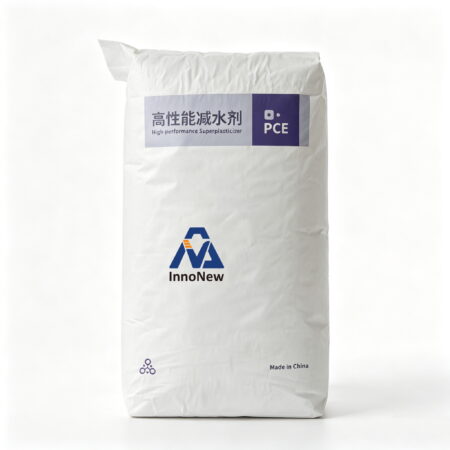
Advantages
- High active content
- Lower freight cost
- Easier storage
- Longer shelf life
- Better export economics
Preferred Applications
- Dry mix mortar plants
- Regional distributors
- Importers
- Remote project locations
For Middle Eastern importers, PCE powder often provides significant logistics advantages due to lower shipping volume and reduced transportation costs.
The Complete Concrete Admixture System for Middle Eastern Construction
PCE is only one component of a modern concrete technology strategy.
The most successful projects utilize a complete admixture system.
Retarding Admixtures
Essential for:
- Hot weather concreting
- Long transportation times
- Mass concrete pours
Benefits:
- Extended setting time
- Reduced thermal cracking
- Improved finishing window
Accelerating Admixtures
Commonly used in:
- Precast factories
- Pipe manufacturing
- PHC pile production
Benefits:
- Faster strength development
- Increased mold turnover
- Higher productivity
Viscosity Modifying Admixtures (VMA)
Critical for:
- Self-compacting concrete (SCC)
- High-flow concrete
- Pumped concrete
Benefits:
- Reduced segregation
- Improved stability
Shrinkage Reducing Admixtures
Used in:
- Large floor slabs
- Industrial facilities
- Infrastructure projects
Benefits:
- Lower cracking risk
- Improved durability
Corrosion Inhibitors
Especially important for:
- Coastal projects
- Marine structures
- Desalination facilities
Benefits:
- Extended service life
- Reduced maintenance costs
PCE Solutions for Ready-Mix Concrete Plants
Ready-mix producers in Saudi Arabia face unique challenges.
Key priorities include:
- Slump retention
- Pumpability
- Consistent quality
- High-volume production
An advanced retention-type PCE can maintain workability for two to three hours without significant performance loss.
This reduces:
- Jobsite rejection
- Water addition
- Quality inconsistency
For large-scale ready-mix operations, customized PCE formulations often provide measurable improvements in productivity and profitability.
PCE Solutions for Precast Concrete Manufacturers
Precast plants focus on:
- Early strength
- Fast demolding
- High surface quality
- Production efficiency
Early-strength PCE formulations help achieve:
- Faster mold turnover
- Reduced curing time
- Increased daily output
This is particularly valuable for producers supplying infrastructure and housing projects throughout Saudi Arabia and neighboring GCC countries.
PCE Solutions for Spun Pile and PHC Pile Production
Spun pile manufacturing represents one of the most specialized concrete applications.
Production goals include:
- High early strength
- Reduced steam curing time
- Improved mold utilization
- Consistent pile quality
Optimized PCE systems can:
- Lower water-cement ratio
- Improve centrifugal compaction
- Increase green strength
- Accelerate production cycles
For PHC and PC pile factories, even small reductions in curing time can significantly improve annual production capacity.
Sustainable Concrete and Vision 2030
Saudi Arabia’s construction sector is increasingly focused on sustainability.
Modern concrete technologies support:
- Lower cement consumption
- Reduced carbon emissions
- Increased SCM utilization
- Improved durability
PCE technology enables higher replacement rates of:
- Fly Ash
- GGBFS
- Limestone fillers
- Pozzolanic materials
This aligns with global low-carbon construction trends while maintaining performance requirements.
Selecting the Right PCE Supplier
Choosing a PCE supplier should involve more than comparing price.
Key evaluation criteria include:
Technical Support
Can the supplier assist with:
- Mix design optimization
- Compatibility testing
- Plant troubleshooting
Product Consistency
Stable quality is critical for:
- Ready-mix production
- Precast manufacturing
- Infrastructure projects
Climate Adaptation
The supplier should understand:
- High-temperature concreting
- GCC transportation conditions
- Local cement characteristics
Product Portfolio
Leading suppliers typically provide:
- Retention PCE
- Early-strength PCE
- Standard water reducers
- Specialty admixture systems
Companies such as Hebei InnoNew Material focus on application-specific PCE technologies designed for challenging environments including the Middle East, Southeast Asia, and Africa. Rather than supplying a single universal product, modern manufacturers increasingly develop customized formulations to meet the needs of ready-mix, precast, and spun pile producers.
Future Trends of Concrete Admixtures in the Middle East
The next decade will likely see growth in:
- Ultra-high-performance concrete (UHPC)
- Self-compacting concrete (SCC)
- Low-carbon concrete
- AI-assisted mix design
- Digital quality control
- Smart admixture systems
Polycarboxylate Ether technology will remain the foundation of these developments.
Manufacturers capable of delivering consistent quality, technical support, and climate-adapted formulations will play a key role in the future of Middle Eastern infrastructure.
Conclusion
Saudi Arabia and the wider Middle East present some of the most demanding environments for concrete production worldwide.
Extreme temperatures, long transportation distances, aggressive exposure conditions, and ambitious infrastructure projects require advanced admixture technologies that go beyond traditional water reducers.
Polycarboxylate Ether (PCE) has become the industry’s preferred solution because it delivers superior water reduction, slump retention, strength development, and durability.
Whether for ready-mix concrete plants, precast manufacturers, or spun pile factories, selecting the right PCE technology can significantly improve productivity, quality, and project performance.
As the region continues to invest in mega-projects and sustainable construction, PCE-based admixture systems will remain a critical component of next-generation concrete technology.
FAQ:
What is the best concrete admixture for hot weather in Saudi Arabia?
Polycarboxylate Ether (PCE) with slump-retention technology is generally considered the most effective solution for high-temperature concrete applications.
Is PCE powder better than PCE liquid?
PCE powder offers lower transportation costs and easier storage, while PCE liquid provides direct dosing convenience for large concrete plants.
Why do Saudi ready-mix plants use PCE?
PCE provides superior water reduction, improved pumpability, and longer slump retention under extreme temperatures.
Can PCE improve precast concrete production?
Yes. Early-strength PCE formulations can accelerate strength development and reduce mold turnover time.
Is PCE suitable for spun pile manufacturing?
Yes. Optimized PCE systems are widely used in PHC and PC pile production to improve workability, strength, and curing efficiency.
How does PCE contribute to sustainable concrete?
PCE enables lower water-cement ratios and higher utilization of supplementary cementitious materials, reducing the overall carbon footprint of concrete.