HPMC vs MEHC vs HEC: Deep Technical Comparison for Construction, Coatings, Oilfield & Home Care
For formulators and procurement teams, HPMC vs MEHC vs HEC is not a superficial choice—it is a rheology engineering decision that impacts water retention kinetics, cement hydration, open time, sag resistance, film formation, and total formulation cost.
This guide delivers a process-to-performance mapping, connecting substitution chemistry → microstructure → macroscopic performance → application fit.
Molecular Structure → Performance Mechanism
| Product | Substitution | Functional Impact |
|---|---|---|
| HPMC | –OCH₃ + –OCH₂CHOHCH₃ | Hydrophobic + hydrophilic balance |
| MEHC | –OCH₃ + –OCH₂CH₂OH | Strong hydration + flexible rheology |
| HEC | –OCH₂CH₂OH | Fully hydrophilic |
Mechanism Interpretation:
- HPMC:
Amphiphilic → forms structured hydration network → superior water retention + adhesion - MEHC:
More hydrophilic → better lubrication & workability → longer open time - HEC:
Fully water-soluble → fast viscosity build-up → ideal for liquid systems
This explains why HPMC dominates cement systems, while HEC dominates water-based formulations
Industrial Manufacturing Process
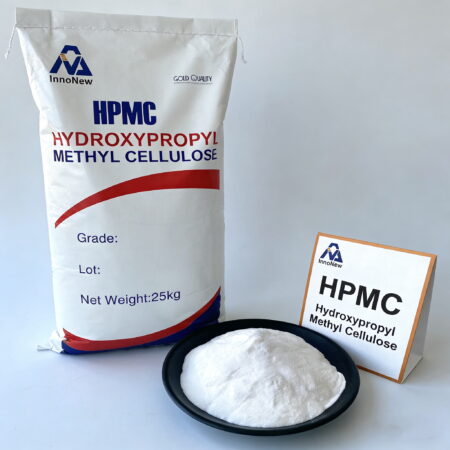
HPMC Process
- Alkalization (NaOH activation)
- Etherification with methyl chloride
- Secondary etherification with propylene oxide
- Neutralization & washing
- Drying & milling
Key Control Variables:
- MS (molar substitution hydroxypropyl)
- DS (degree of substitution methoxy)
- Particle size distribution
Impact:
- Directly determines gel temperature, viscosity stability, and water retention
MEHC Process
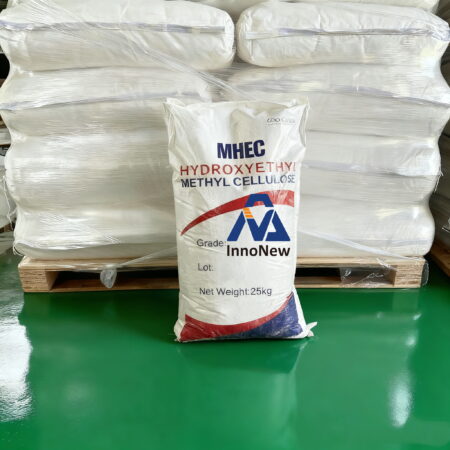
- Similar to HPMC, but uses ethylene oxide instead of propylene oxide
Technical Outcome:
- Lower steric hindrance → improved chain mobility
- Better spreadability and trowel feel
HEC Process
- Single etherification (ethylene oxide)
Engineering Consequences:
- Lower production cost
- Less structural complexity
- Reduced cement interaction
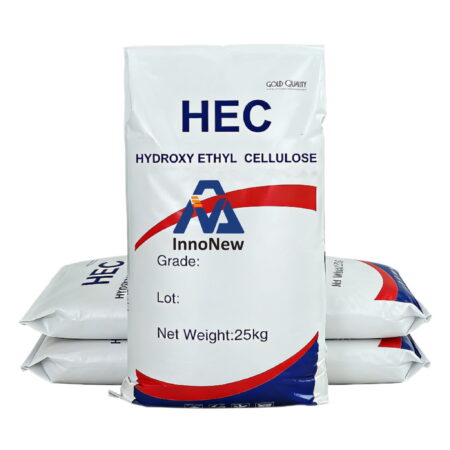
True Cost Model
| Factor | HPMC | MEHC | HEC |
|---|---|---|---|
| Raw material cost | High | Medium-high | Low |
| Production complexity | High | Medium-high | Low |
| Dosage efficiency | Low dosage | Medium | High dosage |
| Cost-in-use | ⭐⭐⭐⭐ | ⭐⭐⭐⭐ | ⭐⭐⭐ |
👉 Critical Insight (Procurement Level):
HEC may be cheaper per ton, but cost-in-use can be higher in cement systems due to:
- Higher dosage requirement
- Lower performance efficiency
Rheology & Hydration Behavior
| Property | HPMC | MEHC | HEC |
|---|---|---|---|
| Hydration rate | Controlled | Moderate | Fast |
| Yield stress | High | Medium | Low |
| Thixotropy | Strong | Medium | Weak |
| Film forming | Strong | Medium | Weak |
| Enzyme resistance | High | Medium | Low |
Interpretation:
- HPMC: structured gel → prevents water loss → supports cement hydration
- MEHC: optimized flow → ideal for manual construction
- HEC: Newtonian-like → ideal for liquid flow systems
Application Engineering Comparison
Tile Adhesive (C1 / C2 Systems)
Functional Requirements:
- Water retention (>95%)
- Open time (>20 min)
- Anti-sag
- Adhesion strength
| Product | Technical Evaluation |
|---|---|
| HPMC | Optimal hydration control + bonding |
| MEHC | Better open time + smooth application |
| HEC | Fails in water retention |
Engineering Conclusion:
- HPMC = Performance backbone
- MEHC = Workability enhancer
- Often used together in premium formulations
Paint & Coatings (Water-Based)
Key Requirements:
- Viscosity stability
- Flow & leveling
- Anti-splash
| Product | Performance |
|---|---|
| HEC | Industry standard |
| HPMC | Secondary thickener |
| MEHC | Rare |
Why HEC dominates:
- No gelation
- Excellent shear-thinning behavior
- High clarity
Wall Putty (Skim Coat)
Requirements:
- Water retention
- Crack resistance
- Smooth finish
HPMC provides:
- Delayed water evaporation
- Improved cement hydration
- Reduced shrinkage cracking
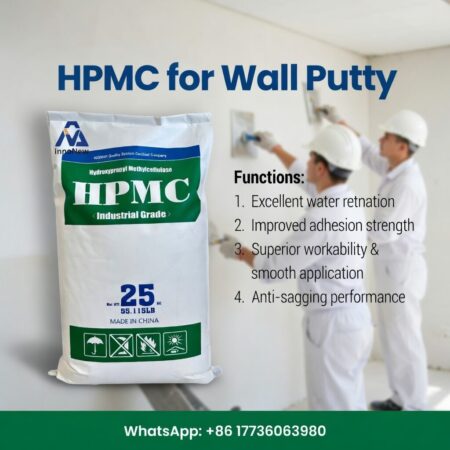
Oil Drilling Fluids
Requirements:
- Salt resistance
- Thermal stability
- Rheology control
HEC advantages:
- Stable viscosity in brine
- Compatible with drilling additives
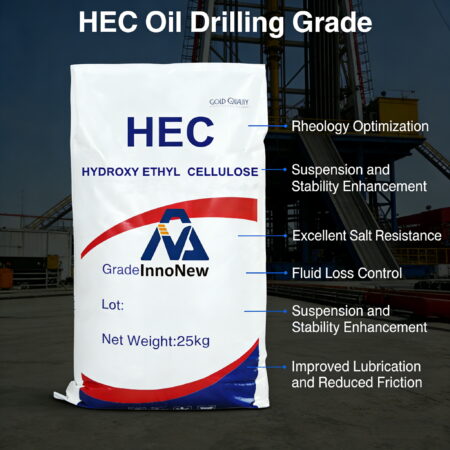
Detergent & Cosmetic Systems
Requirements:
- Transparency
- Skin feel
- Stability
HEC dominates:
- Non-ionic
- Compatible with surfactants
- Smooth sensory profile
Selection Framework
Step 1: Identify System Type
- Cement-based → HPMC / MEHC
- Water-based → HEC
Step 2: Define Priority
- Performance → HPMC
- Workability → MEHC
- Cost → HEC
Step 3: Optimize Blend
Advanced systems use:
- HPMC + MEHC synergy
- HEC for liquid phase control
WHY CHOOSE US (Hebei InnoNew Material)
- Full-grade cellulose ether portfolio
- Custom DS/MS tailoring
- Application-specific recommendations
- Strong supply chain for bulk orders
- Proven export to global markets
FAQ
Q1: Why is HPMC superior in tile adhesive?
Because it controls water retention and cement hydration kinetics
Q2: Can HEC be used in cement systems?
Not recommended due to poor water retention
Q3: MEHC vs HPMC key difference?
MEHC improves workability, HPMC improves strength
Q4: Which has best thickening efficiency?
HEC in liquid systems, HPMC in cement systems
Call to Action
Looking for a high-performance HPMC supplier, bulk HEC price, or MEHC factory direct solution?
👉 Visit: www.innonew-material.com
- Free technical consultation
- Tailored formulation support
- Competitive factory pricing
Email: chris@innonew-material.com | WhatsApp;+86 17736063980