
PCE Powder vs PCE Flake: Professional Comparison for Concrete Superplasticizers
Introduction
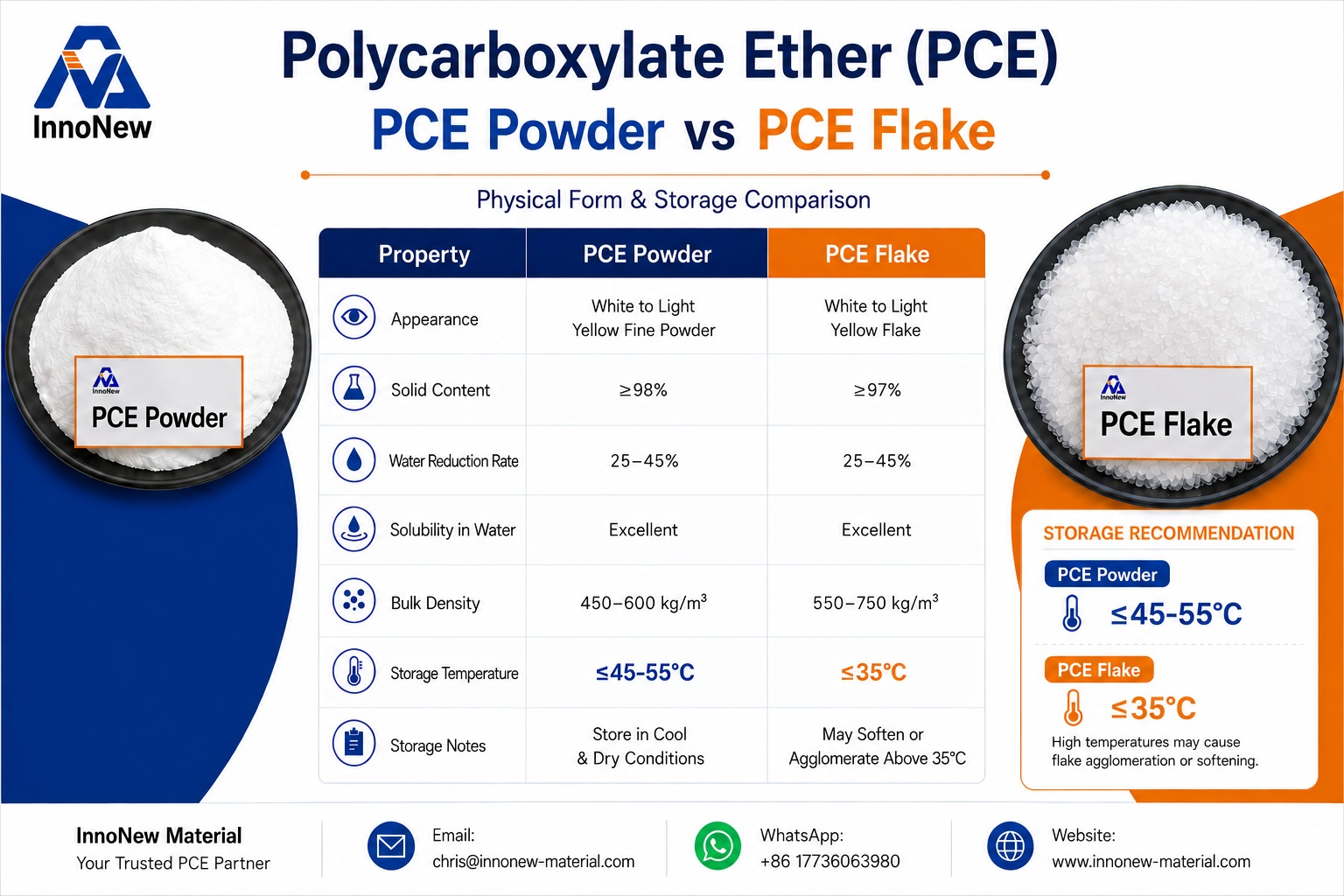
Polycarboxylate Ether (PCE) is a high-performance superplasticizer widely used in modern concrete production. Solid PCE products are commonly available in two forms: Powder and Flake. While both forms share the same chemical base and provide excellent water reduction and workability improvement, their handling, storage, and application characteristics differ significantly.
Understanding these differences is essential for concrete producers, especially in regions with extreme temperatures or for projects requiring automated dosing and high-performance mixes.
PCE Powder: Characteristics and Storage
Characteristics:
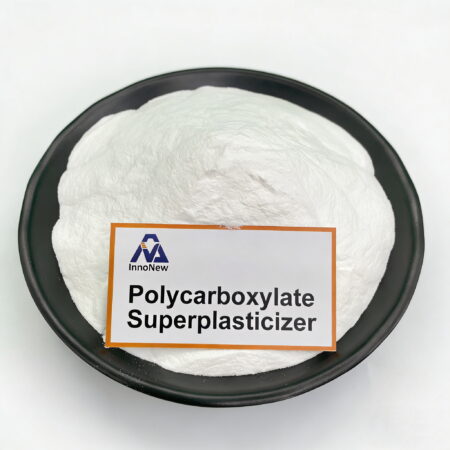
- Spray-dried, free-flowing fine powder
- White to light yellow
- Low moisture content
- Fast dissolution
Typical Specifications:
| Item | Value |
|---|---|
| Appearance | White Powder |
| Solid Content | ≥98% |
| Moisture | ≤2% |
| Bulk Density | 400–600 kg/m³ |
| pH | 6–8 |
Storage Recommendations:
- Maximum storage temperature: ≤50-60°C
- Keep dry and sealed
- Relative humidity: <75%
- Shelf life: 12–24 months
Advantages:
- Rapid dissolution and uniform dispersion in concrete
- Precise dosing suitable for automated batching
- Excellent long-term storage stability
- Reduced risk of caking, even in warm climates
PCE Flake: Characteristics and Storage
Characteristics:
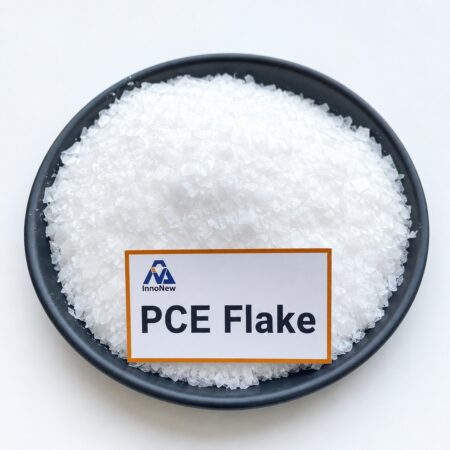
- Flake-shaped solid
- Yellowish color
- Produced by drying liquid PCE
- Requires pre-dissolution before use
Typical Specifications:
| Item | Value |
|---|---|
| Appearance | Yellowish Flake |
| Solid Content | ≥97% |
| Moisture | ≤5% |
| Dissolution Time | Moderate |
Storage Recommendations:
- Maximum storage temperature: ≤35°C
- Keep dry and sealed
- Relative humidity: <60%
- Shelf life: 6–12 months
Temperature Sensitivity:
- Above 35°C, flake may agglomerate, absorb moisture, or partially soften
- Prolonged exposure to >40°C in humid conditions can reduce dissolution efficiency and handling performance
Advantages:
- Lower initial material cost
- Reduced dust generation during handling
- Suitable for liquid admixture production where flakes are dissolved before use
PCE Powder vs PCE Flake: Direct Comparison
| Property | PCE Powder | PCE Flake |
|---|---|---|
| Appearance | Fine Powder | Flake |
| Dissolution Speed | Fast | Moderate |
| Handling | Easy | Moderate |
| Dust Generation | Higher | Lower |
| Transportation Efficiency | Excellent | Good |
| Storage Stability | Excellent | Good |
| Max Storage Temperature | ≤50-60°C | ≤35°C |
| Dosage Accuracy | High | Medium |
| Production Method | Spray Drying | Flake Drying |
| Cost | Slightly Higher | Lower |
| Popularity | Global | Regional |
Application and Performance Comparison
| Application | Recommended Form |
|---|---|
| Dry Mix Mortar | PCE Powder |
| Tile Adhesive | PCE Powder |
| Self-Leveling Mortar | PCE Powder |
| Concrete Admixture Manufacturing | PCE Flake |
| Ready-Mix Concrete | Both |
| Precast Concrete | Both |
Performance Insights:
- Water reduction: Similar for both, depends mainly on molecular structure
- Workability: PCE Powder often provides faster slump development and better uniformity
- Slump retention: Determined by polymer chemistry, less by physical form
Cost Considerations
- PCE Flake: Lower purchase cost, suitable for local production or budget projects
- PCE Powder: Slightly higher cost but reduces labor, dissolution time, and improves dosing accuracy, lowering overall operating cost
Storage and Transportation Recommendations
Key Takeaways:
- PCE Powder is more heat-tolerant (≤50-60°C) and better for long-distance transportation
- PCE Flake is sensitive to high temperatures (≤35°C) and humidity, requiring careful warehouse management
- For hot climates and export markets, PCE Powder is generally the safer choice to avoid caking and handling difficulties
Market Trend and Conclusion
Modern concrete production, particularly dry-mix mortar, high-performance concrete, and automated batching systems, is driving the global shift from PCE Flake to PCE Powder.
FAQ
1. What is the main difference between PCE Powder and PCE Flake?
The primary difference lies in their physical form, storage stability, and handling characteristics. PCE Powder is a spray-dried, free-flowing powder that dissolves quickly and offers excellent storage stability, while PCE Flake is a flake-shaped product that generally requires longer dissolution time and stricter storage conditions. Both products can provide effective water reduction when formulated correctly.
2. Which is better for hot climates, PCE Powder or PCE Flake?
PCE Powder is generally the preferred choice for hot climate regions. It can typically be stored at temperatures up to 50°C under dry conditions, whereas PCE Flake is usually recommended for storage below 35°C. In high-temperature environments, PCE Flake may experience agglomeration, moisture absorption, or reduced handling efficiency.
3. Does PCE Powder provide better concrete performance than PCE Flake?
Not necessarily. The water-reducing efficiency and slump retention of a polycarboxylate superplasticizer are primarily determined by its molecular structure rather than its physical form. However, PCE Powder often delivers more consistent performance because it dissolves faster and disperses more uniformly during mixing.
4. Why is PCE Powder becoming more popular in the construction industry?
PCE Powder is increasingly favored because it offers faster dissolution, easier transportation, improved storage stability, and greater compatibility with automated batching systems. These advantages make it particularly suitable for dry-mix mortar, self-leveling compounds, tile adhesives, and modern concrete production facilities.
5. Can PCE Flake be used to produce liquid concrete admixtures?
Yes. PCE Flake is widely used as a raw material for manufacturing liquid concrete admixtures. After proper dissolution, it can be blended with other additives to produce customized admixture formulations for ready-mix concrete, precast concrete, and infrastructure projects.
Conclusion:
Both PCE Powder and PCE Flake are effective superplasticizers. PCE Powder offers superior storage stability, faster dissolution, and better suitability for automated or high-performance concrete applications. PCE Flake remains a cost-effective option for local liquid admixture production and conventional concrete projects.
For concrete producers in hot and humid regions, PCE Powder is increasingly the preferred choice due to its higher temperature tolerance and lower risk of caking.
When selecting between PCE Powder and PCE Flake, buyers should evaluate not only material cost but also storage conditions, transportation distance, production efficiency, and climate factors. In modern construction environments where consistency, automation, and long-term storage stability are increasingly important, PCE Powder has become the preferred option for many concrete and dry-mix mortar manufacturers worldwide.