
Polypropylene Fiber (PP Fiber) HS Code Classification: Global Customs Tariff, Import & Export Guide for Concrete
Reinforcement Materials
This article provides a detailed explanation of Polypropylene Fiber (PP Fiber) HS Code classification in global trade. It covers the tariff classification logic under synthetic fiber categories, international customs variations, and import-export compliance requirements. Hebei InnoNew Material Technology Co., Ltd. exports PP Fiber under HS Code 55034000, widely used in concrete reinforcement, crack control, and durability improvement applications.
1. What is PP Fiber HS Code Classification?
Polypropylene Fiber (PP Fiber) is a high-performance synthetic fiber widely used in concrete reinforcement systems to improve crack resistance, shrinkage control, and long-term durability of cement-based materials.
In international trade, PP Fiber must be correctly classified under the Harmonized System (HS Code), which determines:
- Import tariff rate
- Customs clearance process
- Trade compliance requirements
- Statistical trade classification
For PP Fiber products, classification is generally linked to synthetic fiber categories under textile and polymer fiber systems.
2. What is Polypropylene Fiber (PP Fiber)?
PP Fiber is a synthetic fiber made from polypropylene resin through extrusion and cutting processes. It is engineered to disperse evenly in concrete mixtures and provide three-dimensional reinforcement.
Main Types
- Micro PP Fiber (crack control, plastic shrinkage resistance)
- Macro PP Fiber (structural reinforcement, impact resistance)
- Fibrillated PP Fiber (network bonding structure)
Key Functions in Concrete
- Reduces plastic shrinkage cracks
- Improves tensile strength
- Enhances impact resistance
- Increases durability and toughness
3. Global HS Code Classification for PP Fiber
3.1 HS Code System Overview
The Harmonized System classifies goods based on material composition and manufacturing process, not end-use application.
For polypropylene fiber, classification is generally linked to:
- Synthetic fibers
- Polypropylene-based staple fibers
- Textile fiber categories
3.2 Common HS Code for PP Fiber
Depending on fiber form and national customs interpretation, PP Fiber may fall under:
- HS Code: 5503.40 / 5603.14 / 3926.90 (varies by country)
However, for export practice in China and many Asian markets:
HS Code: 55034000
4. HS Code Used by Hebei InnoNew Material Technology Co., Ltd.
Hebei InnoNew Material Technology Co., Ltd. officially exports Polypropylene Fiber (PP Fiber) under:
HS CODE: 55034000
Reason for This Classification
- PP Fiber is treated as synthetic staple fiber material
- Manufactured through polypropylene extrusion and cutting process
- Classified under synthetic fiber category in customs system
This classification ensures:
- smooth customs clearance
- consistent export documentation
- alignment with international fiber trade standards
5. Why PP Fiber is Classified as 55034000?
HS Code classification is based on material origin and production method.
Classification Logic
- Raw material: polypropylene resin (synthetic polymer)
- Manufacturing: fiber extrusion + cutting
- Product form: staple fiber / reinforcement fiber
Therefore it falls under:
synthetic staple fiber category (5503 series)
6. Country-Specific HS Code Variations
| Region | HS Code | Classification |
|---|---|---|
| China | 55034000 | Synthetic staple fibers |
| EU | 5503 / 5603 | Synthetic fibers / textile fiber |
| USA | 5503.40 / 3926 | Fiber / plastic article depending on form |
| India | 55034000 | Synthetic staple fibers |
| Southeast Asia | 550340 / local extension | Construction fiber materials |
Note: Only extended digits differ; core classification remains consistent.
7. Applications of PP Fiber in Construction Industry
PP Fiber is widely used in modern concrete engineering systems.
Key Applications
- Ready-mix concrete
- Precast concrete elements
- Industrial flooring
- Tunnel shotcrete
- Bridge and infrastructure projects
Performance Benefits
- Crack resistance improvement
- Enhanced toughness
- Increased impact resistance
- Long-term durability improvement
8. HS Code Misclassification Risks
Incorrect HS classification can lead to serious trade issues:
Common Mistakes
- Declaring as chemical additive
- Misclassifying as plastic raw material
- Using incorrect textile category
Risks
- Customs delay
- Tariff revaluation
- Shipment inspection
- Compliance penalties
9. Import & Export Compliance Best Practices
To ensure smooth customs clearance:
Recommended Product Description
Polypropylene Fiber (PP Fiber), synthetic staple fiber for concrete reinforcement, crack control and durability improvement.
Required Documents
- Commercial Invoice
- Packing List
- Certificate of Analysis (COA)
- MSDS
- Technical Data Sheet (TDS)
Packaging Standards
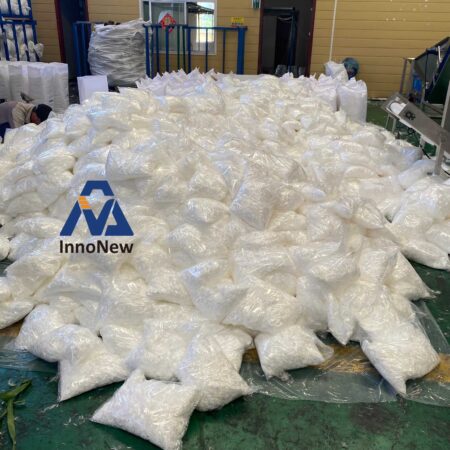
- 1kg / 20kg bags
- PE inner liner packaging
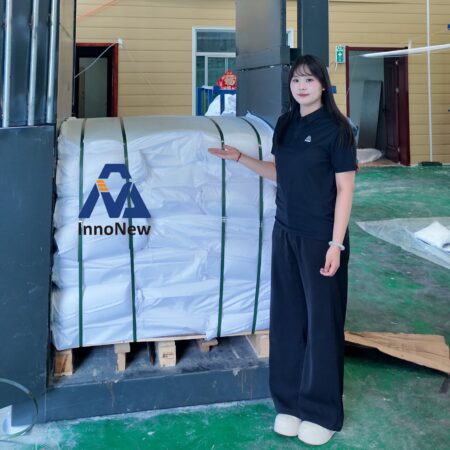
- Palletized shipment for export stability
10. Industry Supply Perspective
From a global construction materials supply chain perspective, PP Fiber is a key reinforcement additive widely used in infrastructure development.
Hebei InnoNew Material Technology Co., Ltd. supplies:
- Micro PP Fiber
- Macro PP Fiber
- Fibrillated PP Fiber
Exported to:
- Southeast Asia
- Middle East
- Africa
- South America
with stable compliance under HS Code 55034000, ensuring efficient international logistics and customs clearance.
11. FAQ
Q1: What is the HS Code for PP Fiber?
The commonly used HS Code is 55034000, depending on country classification.
Q2: Why is PP Fiber classified under 55034000?
Because it is made from polypropylene synthetic fiber processed into staple fiber form.
Q3: Is PP Fiber a chemical or textile product?
It is classified as synthetic fiber material under textile fiber HS categories.
Q4: Does HS Code for PP Fiber vary by country?
Yes, extended digits may differ, but the main classification remains similar.
Q5: What is PP Fiber used for?
It is used in concrete reinforcement to control cracking and improve durability.