
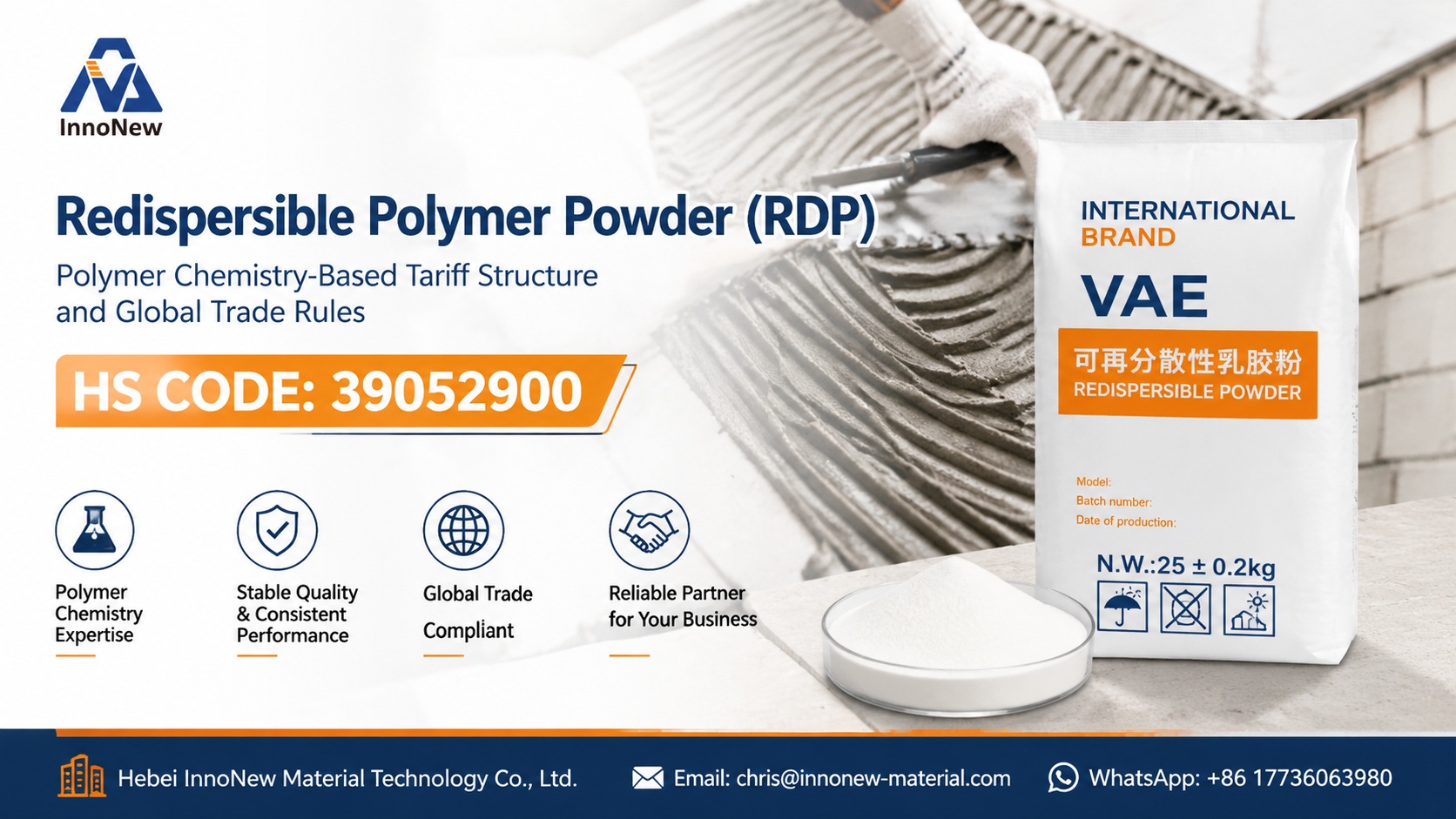
1. Introduction: What is RDP HS Code?
Redispersible Polymer Powder (RDP) is a spray-dried polymer emulsion powder widely used in construction chemical systems to improve adhesion, flexibility, and mechanical strength of cement-based materials.
In international trade, RDP is commonly exported under:
HS Code: 39052900
This classification places RDP under vinyl acetate polymers and related copolymers, which are widely used in dry mix mortar and tile adhesive systems.
Correct HS classification is essential for:
- customs clearance efficiency
- import duty calculation
- trade compliance
- international logistics standardization
2. What is Redispersible Polymer Powder (RDP)?
RDP is produced by spray-drying polymer emulsions (typically VAE-based or acrylic-based) into a free-flowing powder that can be re-dispersed in water.
Key Characteristics
- Thermoplastic polymer powder
- Redispersible in water
- Film-forming ability after hydration
- Excellent bonding performance
Main Chemical Systems
- Vinyl Acetate Ethylene (VAE)
- Vinyl Acetate Copolymer (VAC)
- Acrylic-based polymers
3. HS Code 39052900 Classification Logic
3.1 HS System Structure
The Harmonized System classifies goods based on chemical composition and polymer structure.
- 39 → Plastics and articles thereof
- 3905 → Polymers of vinyl acetate or other vinyl esters
- 39052900 → Other vinyl acetate copolymers
3.2 Why RDP Falls Under 39052900
RDP is derived from vinyl acetate-based polymer emulsions, which places it in:
vinyl acetate polymer / copolymer category
Even though it is in powder form, classification is based on polymer origin, not physical state.
4. Polymer Chemistry Basis for HS Classification
HS classification for RDP is determined by molecular structure and polymer backbone.
Key Structural Features
- Vinyl acetate monomer units
- Ethylene or acrylic modification
- Film-forming polymer chains
- Thermoplastic behavior
Classification Principle
HS Code is determined by polymer family, not final application (e.g., tile adhesive or mortar).
5. Global HS Code 39052900 Interpretation
5.1 International Classification Trend
Most customs systems recognize RDP under:
- 390529 (vinyl acetate copolymers)
- 39052900 (extended national codes)
5.2 Country Variations
| Region | HS Code | Description |
|---|---|---|
| China | 39052900 | Vinyl acetate copolymers |
| EU | 3905.29 | Polymers of vinyl acetate |
| USA | 3905.29.00 | Vinyl acetate copolymers |
| India | 39052990 | Other copolymers |
| SEA Countries | 390529 / extended | Polymer additives |
6. Application of RDP in Construction Industry
RDP is a critical additive in modern dry mix mortar systems.
Main Applications
- Tile adhesive systems
- EIFS insulation systems
- Wall putty / skim coat
- Self-leveling compounds
- Repair mortars
Functional Benefits
- Improved adhesion strength
- Increased flexibility
- Enhanced water resistance
- Better workability and cohesion
7. Why HS Code Classification Matters in Trade
Correct HS classification directly impacts international trade efficiency.
Key Impacts
- Import tariff determination
- Customs clearance speed
- Regulatory compliance
- Statistical trade tracking
Incorrect classification may result in:
- shipment delays
- customs revaluation
- additional taxation
8. Common HS Code Misclassification Risks
Frequent Errors
- Treating RDP as general chemical additive
- Confusing with latex or rubber powder
- Misclassifying under unrelated polymer groups
Trade Risks
- customs inspection delays
- tariff reassessment
- documentation rejection
9. Import & Export Compliance Best Practices
To ensure smooth international trade:
Recommended Product Description
Redispersible Polymer Powder (RDP), vinyl acetate copolymer-based polymer powder, used in construction chemicals such as tile adhesive and dry mix mortar.
Required Documentation
- Commercial Invoice
- Packing List
- COA (Certificate of Analysis)
- MSDS (Material Safety Data Sheet)
- TDS (Technical Data Sheet)
Packaging Standards
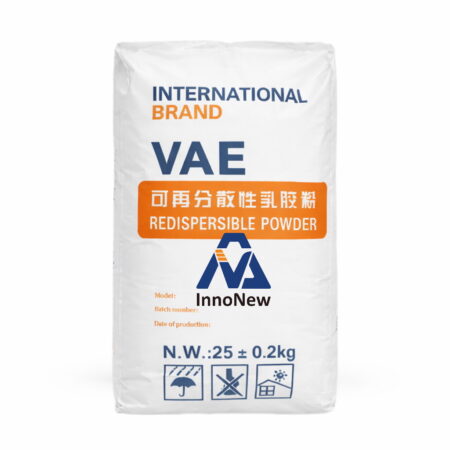
- 25kg moisture-proof paper bags
- PE inner liner protection
- palletized export packaging
10. Industry Supply Perspective
From a global construction chemical supply chain perspective, RDP plays a central role in dry mix mortar performance systems.
Hebei InnoNew Material Technology Co., Ltd. supplies high-quality:
- Redispersible Polymer Powder (RDP)
- VAE-based polymer powders
- Construction-grade polymer binders
All export shipments are classified under:
HS Code: 39052900
ensuring consistent compliance across global markets including Southeast Asia, Middle East, Africa, and South America.
11. FAQ
Q1: What is the HS Code for RDP?
RDP is commonly classified under HS Code 39052900.
Q2: Why is RDP classified under 39052900?
Because it is based on vinyl acetate copolymer chemistry.
Q3: Is RDP a chemical or polymer product?
It is a polymer material derived from vinyl acetate emulsions.
Q4: Does physical form affect HS code?
No, classification is based on polymer structure, not powder or liquid form.
Q5: What is RDP used for?
It is used in tile adhesive, dry mix mortar, EIFS, and construction systems.