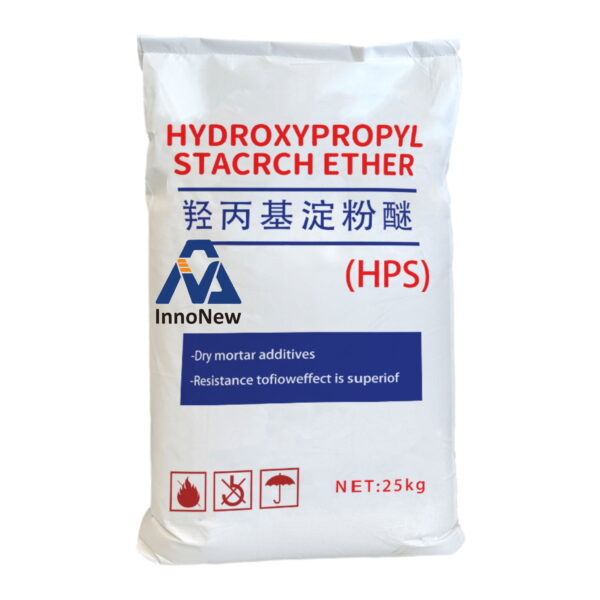
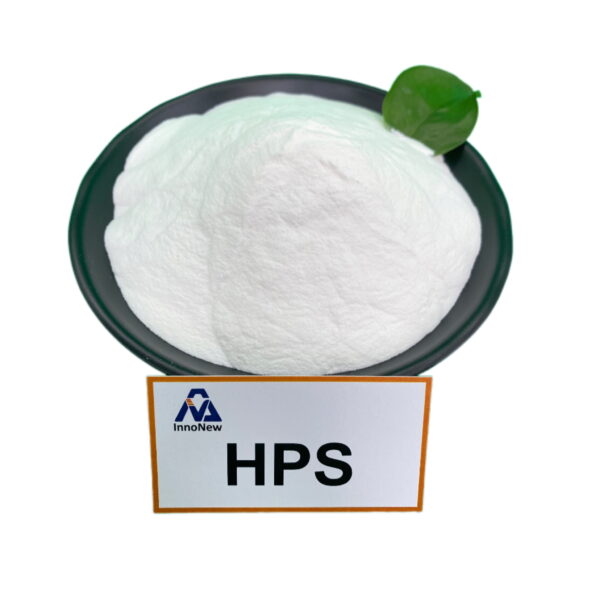
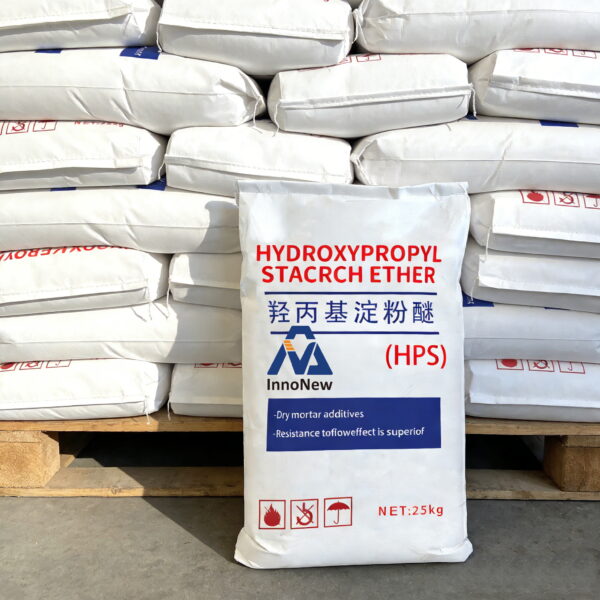
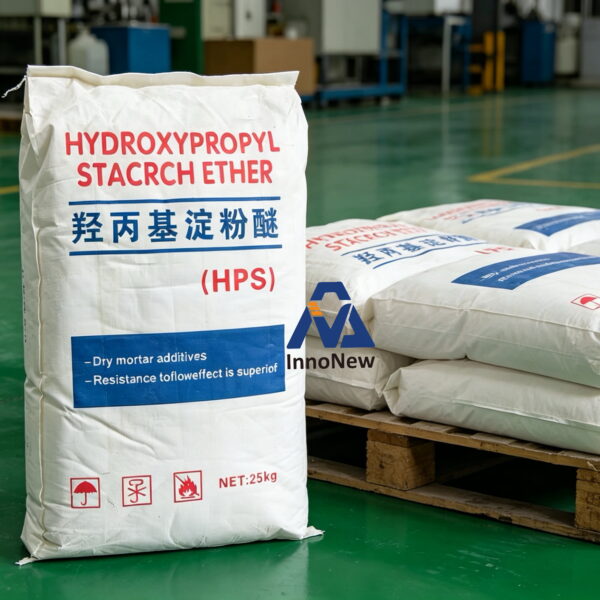
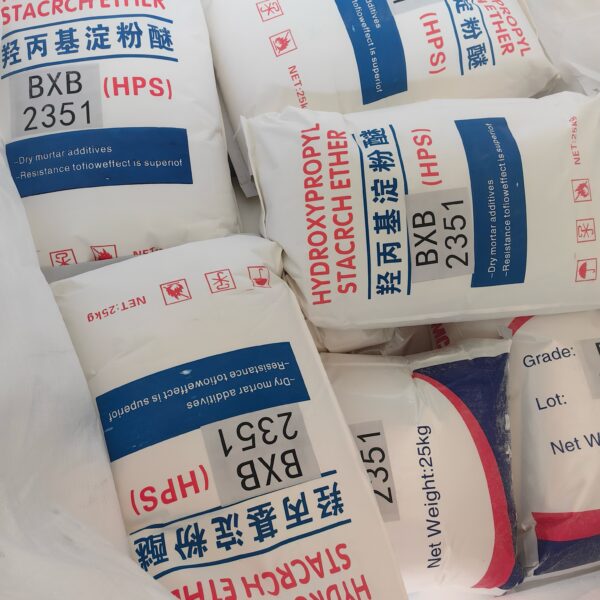
Hydroxypropyl Starch Ether for Tile Adhesive & Dry Mix Mortar
Hydroxypropyl Starch Ether is a high-performance modified starch ether widely used in dry mix mortar systems as a rheology modifier, anti-sagging additive, and workability enhancer. In modern construction materials, it plays a critical role in improving application stability, consistency, and construction efficiency.
At InnoNew, our Hydroxypropyl Starch Ether is specially developed for cement-based and gypsum-based systems, offering excellent anti-slip performance, optimized rheology control, and superior compatibility with cellulose ether and polymer-modified mortar formulations.
Designed for demanding construction environments, our HPS solutions are widely used in tile adhesive, wall putty, gypsum plaster, skim coat, self-leveling mortar, and EIFS systems.
What Does Hydroxypropyl Starch Ether Do in Mortar Systems?
In dry mix mortar formulations, Hydroxypropyl Starch Ether functions primarily as a rheology modifier and structural stabilizer.
Unlike cellulose ether, which mainly provides water retention, HPS focuses on:
- Anti-sagging performance
- Structural build-up
- Application consistency
- Slip resistance
- Workability optimization
Its unique rheological behavior helps mortar maintain stability after application while still allowing smooth troweling and easy spreading.
This balance is especially important in vertical tile adhesive applications and gypsum-based finishing systems.
Key Features & Benefits
- Excellent anti-sagging performance
- Improved mortar consistency
- Enhanced workability and troweling
- Better slip resistance in tile adhesive
- Stable rheology under different temperatures
- Reduced mortar segregation
- Improved structural stability
- Excellent compatibility with HPMC and MHEC
- Suitable for cement-based and gypsum-based systems
- Low dosage with high efficiency
Recommended Applications
Tile Adhesive
Hydroxypropyl Starch Ether is widely used in ceramic tile adhesive formulations to improve anti-slip performance and construction stability.
Benefits in Tile Adhesive
- Improved anti-sagging behavior
- Better tile positioning stability
- Enhanced open time stability
- Smooth application feel
- Reduced slipping during vertical application
Recommended for:
- C1 tile adhesive
- C2 tile adhesive
- Large-format tile systems
- Porcelain tile adhesive
- Flexible tile adhesive
Gypsum-Based Materials
HPS provides excellent rheology control and anti-sagging performance in gypsum systems.
Suitable for:
- Gypsum plaster
- Joint compound
- Gypsum skim coat
- Decorative gypsum mortar
Performance Advantages
- Smooth finishing
- Improved consistency
- Better surface quality
- Enhanced application stability
Wall Putty & Skim Coat
Hydroxypropyl Starch Ether improves workability and spreading performance while helping reduce cracking and segregation.
Self-Leveling Mortar
In self-leveling systems, HPS contributes to stable rheology and improved material consistency during application.
Synergy with Cellulose Ether & Polymer Systems
Modern dry mix mortar systems require balanced interaction between multiple additives.
Our Hydroxypropyl Starch Ether is highly compatible with:
- HPMC (Hydroxypropyl Methyl Cellulose)
- MHEC (Methyl Hydroxyethyl Cellulose)
- Redispersible Polymer Powder (RDP)
- PCE Superplasticizer
Functional Synergy
This synergistic system helps optimize overall mortar performance.
Optimized for Tropical Climate Construction
High-temperature and high-humidity environments create unique challenges for tile adhesive and dry mix mortar systems.
Our HPS solutions are optimized for tropical climate applications commonly found in:
- Thailand
- Vietnam
- Indonesia
- Philippines
- Malaysia
Key advantages include:
- Stable consistency under high temperature
- Better anti-slip performance
- Improved construction feel
- Reduced performance fluctuation during application
Technical Specifications
| Item | Specification |
|---|---|
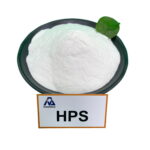
| Appearance | White to Off-White Powder |
| Chemical Type | Modified Starch Ether |
| Ionicity | Non-Ionic |
| Moisture Content | ≤ 10% |
| pH Value | 7.0 – 9.0 |
| Viscosity | 500 – 1200 mPa.s |
| Solubility | Soluble in Water |
| Compatibility | Excellent with Cement Additives |
| Recommended Dosage | 0.02% – 0.10% |
Packaging & Storage
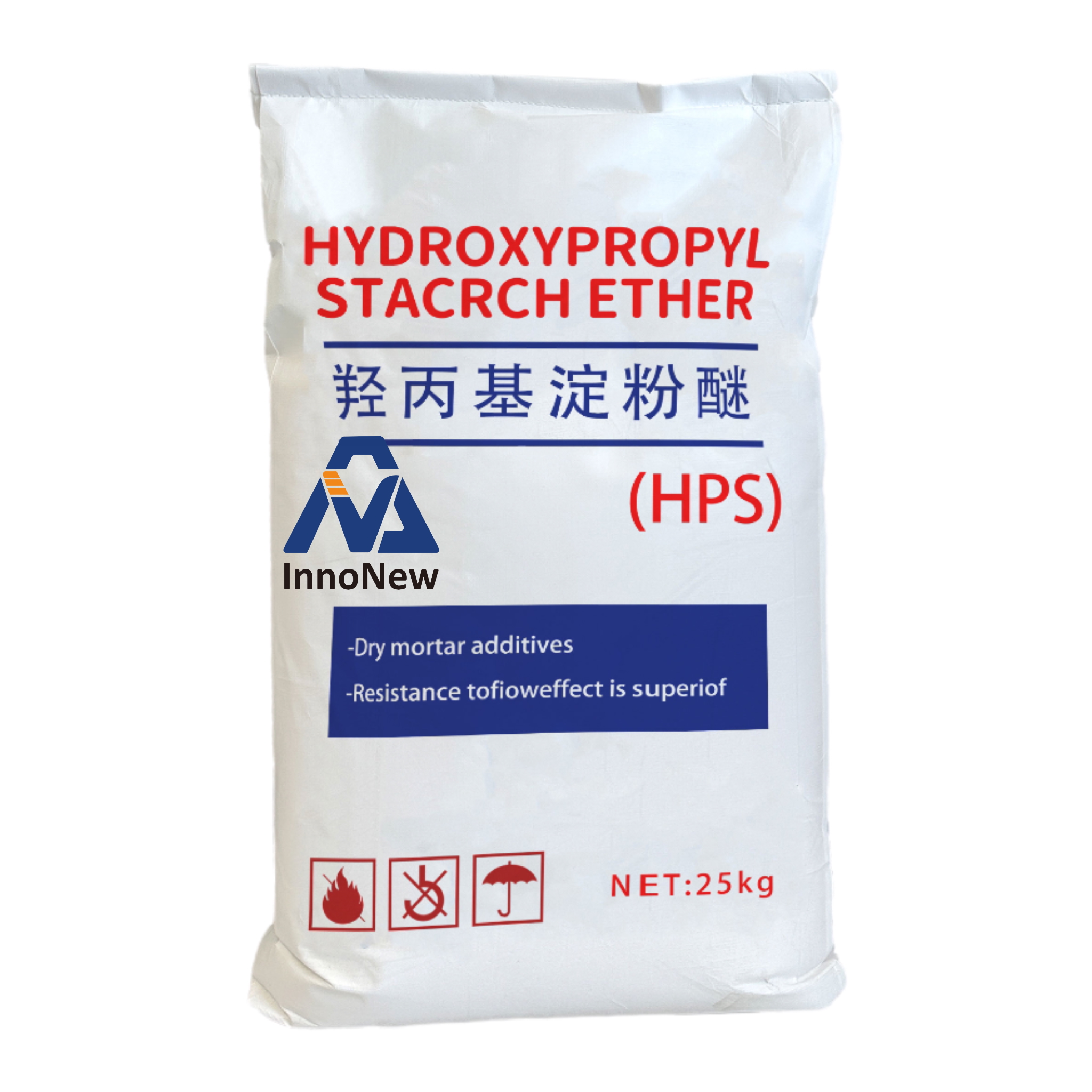
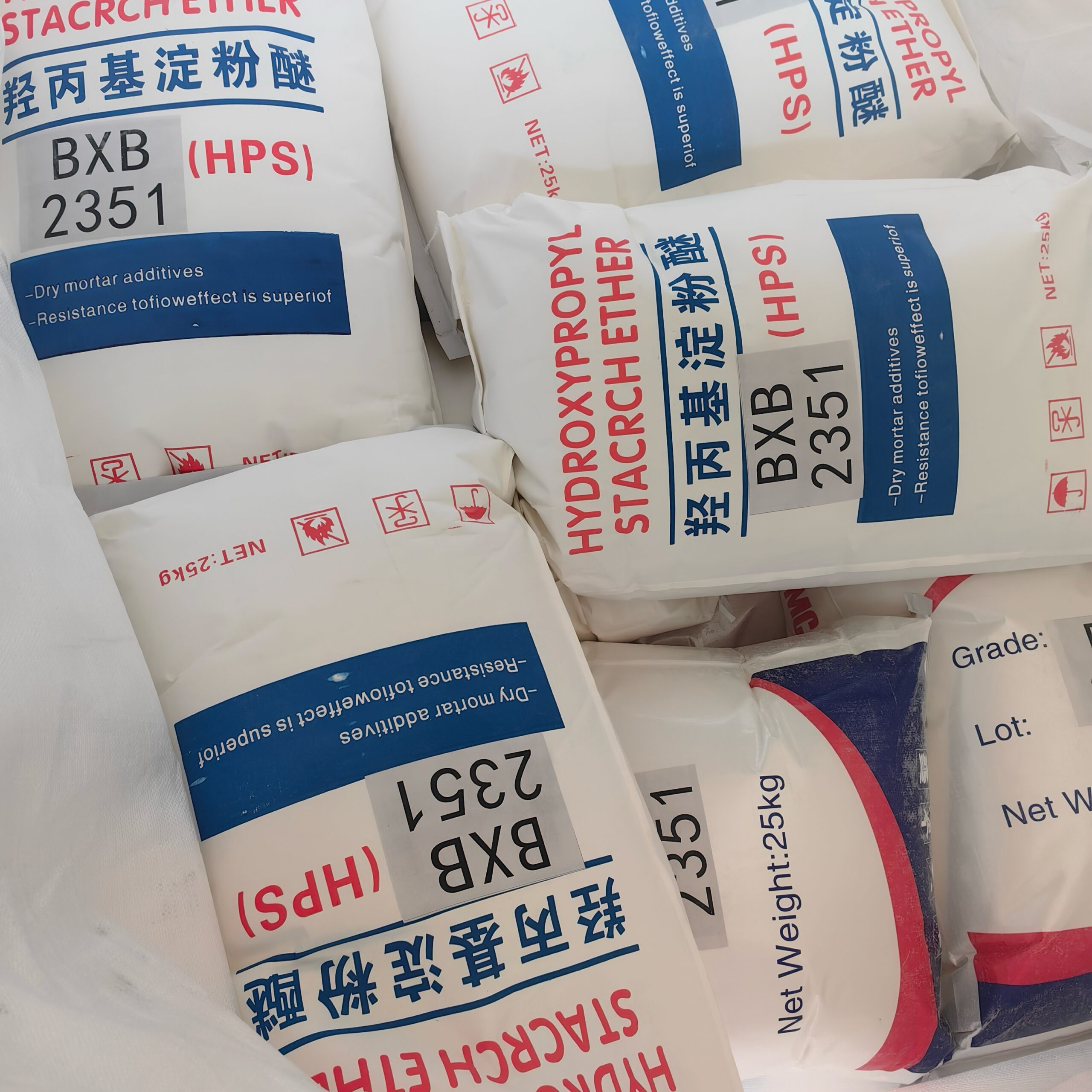
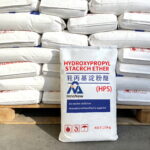
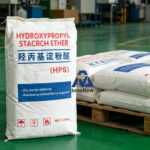
- 25 kg kraft paper bag with PE inner liner
- Store in a cool and dry place
- Protect from moisture exposure
- Shelf life: 12 months under sealed conditions
Why Choose InnoNew Hydroxypropyl Starch Ether
InnoNew focuses on high-performance construction chemical additives for modern dry mix mortar systems.
We provide:
- Stable production quality
- Customized formulation support
- Consistent rheology performance
- Technical guidance for mortar optimization
- Reliable export supply for global markets
- Professional support for tropical climate formulations
FAQ
What is the main function of Hydroxypropyl Starch Ether in tile adhesive?
Its primary function is improving anti-sagging performance and rheology control, helping stabilize tiles during vertical application.
What is the difference between HPS and HPMC?
HPMC mainly provides water retention, while HPS focuses more on anti-slip performance, structural build-up, and rheology modification.
Can HPS be used together with HPMC?
Yes. HPS and HPMC are commonly used together in dry mix mortar formulations to achieve balanced performance.
What is the recommended dosage of HPS?
Typical dosage ranges from 0.02% to 0.10%, depending on the formulation and required performance.
Is Hydroxypropyl Starch Ether suitable for gypsum systems?
Yes. It is widely used in gypsum plaster and joint compounds to improve workability and anti-sagging behavior.