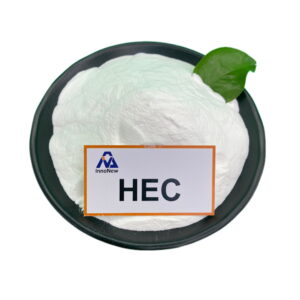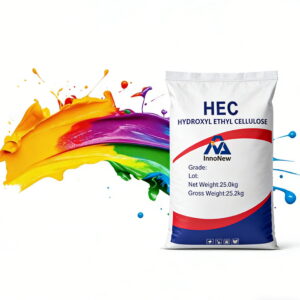
HEC Enhances Paint Flow and Leveling: Hydroxyethyl Cellulose for Smooth Coatings

How HEC Enhances Paint Flow and Leveling: Hydroxyethyl Cellulose for Smooth Coatings

HEC Enhances Paint Fow and Leveling: Hydroxyethyl Cellulose for Smooth Coatings One of the key benefits of HEC for paint is its ability to improve flow properties. By modifying the paint’s rheology, HEC ensures that coatings spread evenly on surfaces, reducing brush and roller marks. This is especially import In water-based coatings, achieving smooth flow […]

How HEC Enhances Paint Flow and Leveling: Hydroxyethyl Cellulose for Smooth Coatings Read More »
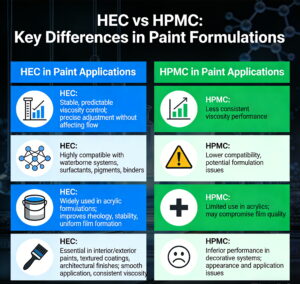
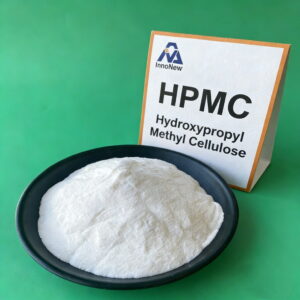
HEC vs HPMC in paint comparison showing viscosity performance and coating application differences

HEC vs HPMC in Paint Formulation: How to Choose the Right Cellulose Ether for Water-Based Coatings

HEC vs HPMC in Paint Formulation: Choosing the right Cellulose Ether In modern waterborne coating systems, selecting the right cellulose ether is critical for achieving optimal viscosity, workability, and coating performance. Among the most widely used materials, hydroxyethyl cellulose (HEC) and hydroxypropyl methyl cellulose (HPMC) are two key options. Understanding the differences between HEC and

HEC vs HPMC in Paint Formulation: How to Choose the Right Cellulose Ether for Water-Based Coatings Read More »

Hydroxyethyl cellulose HEC for paint high performance thickener for water based coatings rheology modifier latex paint additive

How HEC Improves Paint Viscosity and Coating Performance

In modern coating formulations, achieving optimal rheology, stability, and application performance is critical. Hydroxyethyl Cellulose (HEC) has become a key additive in water-based paints due to its excellent thickening, water retention, and film-forming support properties. For manufacturers seeking consistent quality and improved coating efficiency, HEC for paint plays a decisive role in controlling viscosity and

How HEC Improves Paint Viscosity and Coating Performance Read More »

HPMC (Hydroxypropyl Methyl Cellulose) powder

HPMC cải thiện hiệu suất keo dán gạch như thế nào trong khí hậu Việt Nam

Trong khí hậu nhiệt đới của Việt Nam, các dự án xây dựng gặp thách thức do độ ẩm cao và chất lượng xi măng không đồng đều. Điều này làm cho hiệu suất keo dán gạch trở nên rất quan trọng. Hydroxypropyl Methyl Cellulose (HPMC) là phụ gia không thể thiếu cho các nhà

HPMC cải thiện hiệu suất keo dán gạch như thế nào trong khí hậu Việt Nam Read More »

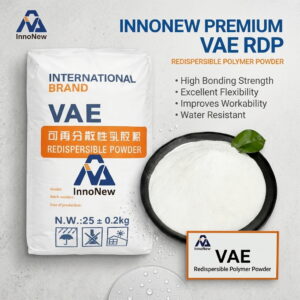
Premium VAE RDP ensures excellent flexibility and water resistance in tile adhesives

How Redispersible Polymer Powder RDP Enhances Tile Adhesive Performance: Mechanism and Benefits

In modern construction, tile adhesive performance is critical for ensuring long-term durability, strong bonding, and resistance to environmental stress. One of the most effective additives used in high-performance formulations is Redispersible Polymer Powder (RDP). As a leading manufacturer in this field, Hebei InnoNew Material Technology Co., Ltd. provides stable and customizable VAE powder designed specifically

How Redispersible Polymer Powder RDP Enhances Tile Adhesive Performance: Mechanism and Benefits Read More »

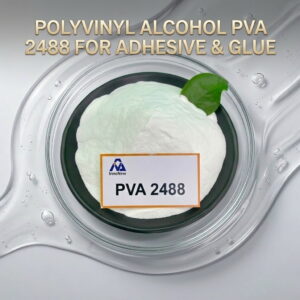
Polyvinyl Alcohol PVA 2488 for adhesive

Why PVA 2488 is Essential for Adhesives and Glue Formulations

Hebei InnoNew Material Technology Co., Ltd. is a professional manufacturer and global supplier of Polyvinyl Alcohol (PVA 2488) and construction chemicals, offering customized solutions and stable quality for industrial applications. With extensive experience in the PVA industry, we provide high-purity raw materials, consistent viscosity control, and reliable supply chains—making us a trusted partner for adhesive

Why PVA 2488 is Essential for Adhesives and Glue Formulations Read More »

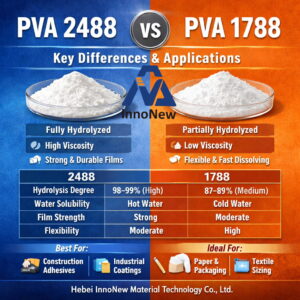
PVA 2488 vs PVA 1788: Key Differences & Best Applications Guide

PVA 2488 vs PVA 1788: Key Differences, Performance Comparison, and How to Choose the Right Grade for Your Application

In the global polymer market, selecting the correct grade of Polyvinyl Alcohol (PVA) is critical for achieving optimal performance in industrial applications. Among the most commonly used grades, PVA 2488 and PVA 1788 are frequently compared due to their similar chemical structure but distinct functional properties. As a professional manufacturer, Hebei InnoNew Material Technology Co.,

PVA 2488 vs PVA 1788: Key Differences, Performance Comparison, and How to Choose the Right Grade for Your Application Read More »

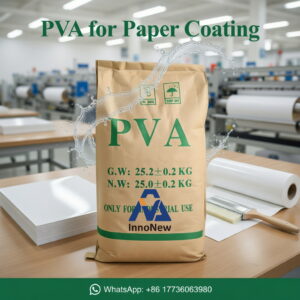
PVA Powder for Paper Coating

Why Polyvinyl Alcohol (PVA Powder) is Essential for Paper Coating: Performance Advantages and PVA 1788 & 2488 Guide

Polyvinyl Alcohol (PVA) for paper coating has become a cornerstone material in the coated paper industry. As a high-performance water-soluble polymer, PVA Powder is widely used as a binder to enhance coating structure, surface smoothness, and printing performance in paper industry. Among the various grades available, PVA 1788 and PVA 2488 are the most commonly

Why Polyvinyl Alcohol (PVA Powder) is Essential for Paper Coating: Performance Advantages and PVA 1788 & 2488 Guide Read More »

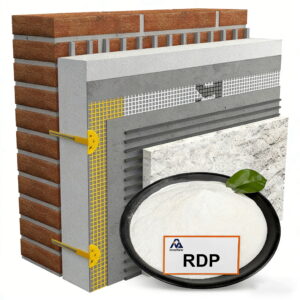
RDP Powder for EIFS applications enhancing adhesion, flexibility, and crack resistance in exterior insulation systems

How Redispersible Polymer Powder (RDP) Enhances EIFS Performance in Modern Energy-Efficient Buildings

With the rapid development of energy-efficient construction, the External Insulation and Finish System (EIFS) has become one of the most widely used solutions for building insulation and façade protection. This advanced multilayer system improves thermal performance, reduces energy consumption, and enhances the durability of exterior walls. A key ingredient that ensures the performance of EIFS

How Redispersible Polymer Powder (RDP) Enhances EIFS Performance in Modern Energy-Efficient Buildings Read More »

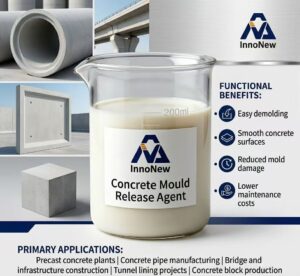
Concrete Mould Release Agent

How Concrete Mold Release Agents Improve Surface Quality and Reduce Labor Costs

In modern construction and precast concrete production, achieving smooth surfaces and efficient demolding is essential. One of the most effective solutions is the use of a concrete mold release agent. This specialized chemical product prevents concrete from bonding to formwork, allowing molds to be removed easily while maintaining high surface quality. For contractors, precast factories,

How Concrete Mold Release Agents Improve Surface Quality and Reduce Labor Costs Read More »

Scroll to Top