Warning: Undefined array key "url" in /www/wwwroot/innonew-material.com/wp-content/plugins/seo-by-rank-math/includes/modules/schema/snippets/class-author.php on line 41
+86-17736063980 ✉️ chris@innonew-material.com

admin

Concrete mold release agent, water-based form release oil for concrete construction, anti-adhesive demolding agent for precast concrete

How Concrete Mold Release Agents Improve Surface Quality and Reduce Labor Costs

How Concrete Mold Release Agent Improves Surface Quality and Reduces Labor Cost Introduction  In precast concrete production and construction formwork systems, surface quality and labor efficiency are two of the most critical cost drivers. Without an effective concrete mold release agent, manufacturers often face: Surface defects (sticking, honeycombing, tearing) High mold cleaning labor cost Longer […]

How Concrete Mold Release Agents Improve Surface Quality and Reduce Labor Costs Read More »

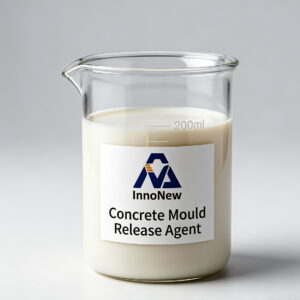
Concrete Mold Release Agent

Water-Based Concrete Form Release Agent | Mold Release Solution for Precast & Construction

Concrete Mold Release Agent (Water-Based) High-Performance Form Release Solution for Precast & Construction Industry What is Concrete Mold Release Agent? Concrete mold release agent is a specialized chemical applied to formwork surfaces to prevent fresh concrete from sticking during casting and demolding. It forms a thin anti-adhesion separation film between concrete and mold surface, ensuring:

Water-Based Concrete Form Release Agent | Mold Release Solution for Precast & Construction Read More »

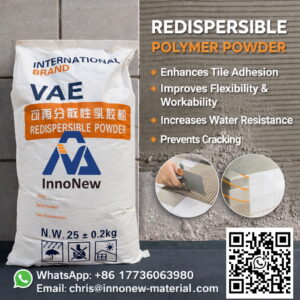
Redispersible Latex Powder (RDP)

Redispersible Polymer Powder (RDP): Properties, Applications and Benefits in Tile Adhesive

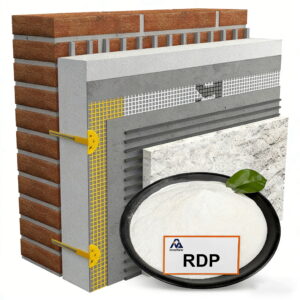
Redispersible Polymer Powder RDP for Tile Adhesive Modern tile installation systems have shifted from traditional cement-sand mortars to high-performance polymer-modified tile adhesives, driven by the increasing complexity of modern construction requirements. Large-format porcelain tiles, ultra-low absorption ceramic tiles, external façade systems, underfloor heating substrates, and high-moisture environments have significantly raised performance expectations for tile bonding

Redispersible Polymer Powder (RDP): Properties, Applications and Benefits in Tile Adhesive Read More »

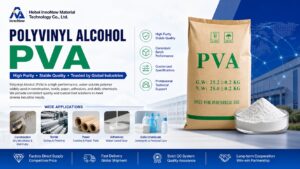
Polyvinyl Alcohol PVA Manufacturer & Supplier

Polyvinyl Alcohol (PVA): A Complete Guide to Properties, Uses and Benefits

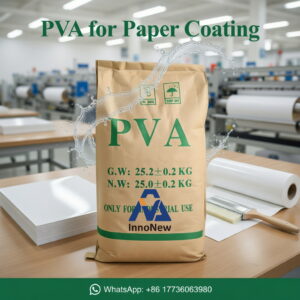
Polyvinyl Alcohol (PVA): Complete Technical Guide to Grades, Properties, Applications and Selection Polyvinyl Alcohol (PVA) is one of the most widely used water-soluble synthetic polymers in modern industry. Thanks to its unique combination of film-forming ability, adhesion, emulsification, water solubility, and mechanical strength, PVA has become an essential raw material for adhesives, construction materials, textiles,

Polyvinyl Alcohol (PVA): A Complete Guide to Properties, Uses and Benefits Read More »

Diethanol Isopropanolamine DEIPA 85%

How to Improve Cement Strength with DEIPA

How to Improve Cement Strength with DEIPA In modern cement production, improving grinding efficiency and cement performance is essential for reducing energy consumption and increasing productivity. One of the most widely used chemical additives in the cement industry is DEIPA (Diethanol Isopropanolamine). DEIPA improves hydration processes and enhances the formation of cementitious compounds, resulting in

How to Improve Cement Strength with DEIPA Read More »

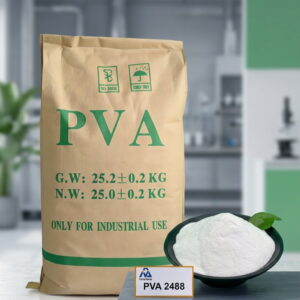
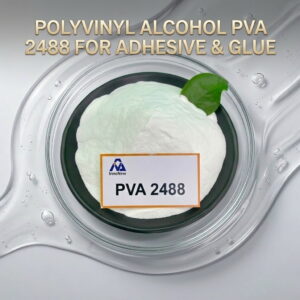
PVA 2488

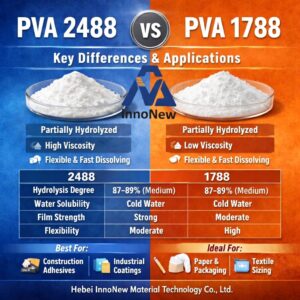
Polyvinyl Alcohol PVA 2488: Properties, Applications and Industrial Uses

Polyvinyl Alcohol PVA 2488 Application  Polyvinyl Alcohol (PVA 2488) is one of the most widely used water-soluble polymers in modern manufacturing. Among its various grades, PVA 2488 stands out as a preferred choice for many industrial applications due to its well-balanced performance in film formation, adhesion, and chemical stability. As a partially hydrolyzed grade of polyvinyl alcohol,

Polyvinyl Alcohol PVA 2488: Properties, Applications and Industrial Uses Read More »

PCE Superplasticizer Powder

What’s PCE Superplasticizer? The Advanced Concrete Admixture Transforming Modern Construction

Concrete Admixture Polycarboxylate Based Superplasticizer  In today’s construction industry, achieving stronger, more durable, and highly workable concrete is essential. One of the most important innovations that makes this possible is PCE Superplasticizer, a high-performance concrete admixture widely used in modern building projects. But what’s PCE Superplasticizer, and why has it become the preferred choice for

What’s PCE Superplasticizer? The Advanced Concrete Admixture Transforming Modern Construction Read More »

Concrete Admixture Sodium Gluconate

Sodium Gluconate for Concrete: A Complete Guide to Concrete Retarder Admixtures

Concrete Retarder Sodium Gluconate  In modern construction projects, concrete performance is no longer determined solely by cement, sand, and aggregates. Concrete admixtures have become essential components for improving workability, strength, and durability. Among the various construction chemicals available today, Sodium Gluconate Concrete Admixture is widely recognized as a highly effective concrete retarder and water-reducing additive.

Sodium Gluconate for Concrete: A Complete Guide to Concrete Retarder Admixtures Read More »

MHEC vs HEC

MHEC vs HEC: Choosing the Right Cellulose Ether for Construction and Coating Applications

MHEC vs HEC | Choose the Right Cellulose Ether for Construction In modern construction chemicals, cellulose ether additives play a crucial role in improving the performance of building materials. Among the most widely used cellulose ethers are Methyl Hydroxyethyl Cellulose (MHEC) and Hydroxyethyl Cellulose (HEC). Both products are derived from natural cellulose and widely used

MHEC vs HEC: Choosing the Right Cellulose Ether for Construction and Coating Applications Read More »

High Gel Temperature MHEC for Tile Adhesive & Wall Putty | MHEC Manufacturer

MHEC vs HPMC for Tile Adhesive: Which Cellulose Ether Performs Better?

HPMC vs MHEC: A Formulator’s Guide to Selecting the Right Cellulose Ether for Construction Materials Introduction One of the most common questions among drymix mortar formulators is whether HPMC or MHEC delivers better performance. The answer is more complex than most product comparisons suggest. Although both are non-ionic cellulose ethers, differences in substitution chemistry significantly

MHEC vs HPMC for Tile Adhesive: Which Cellulose Ether Performs Better? Read More »

Scroll to Top