
PAC LV vs PAC HV for Water-Based Drilling Fluids
Introduction
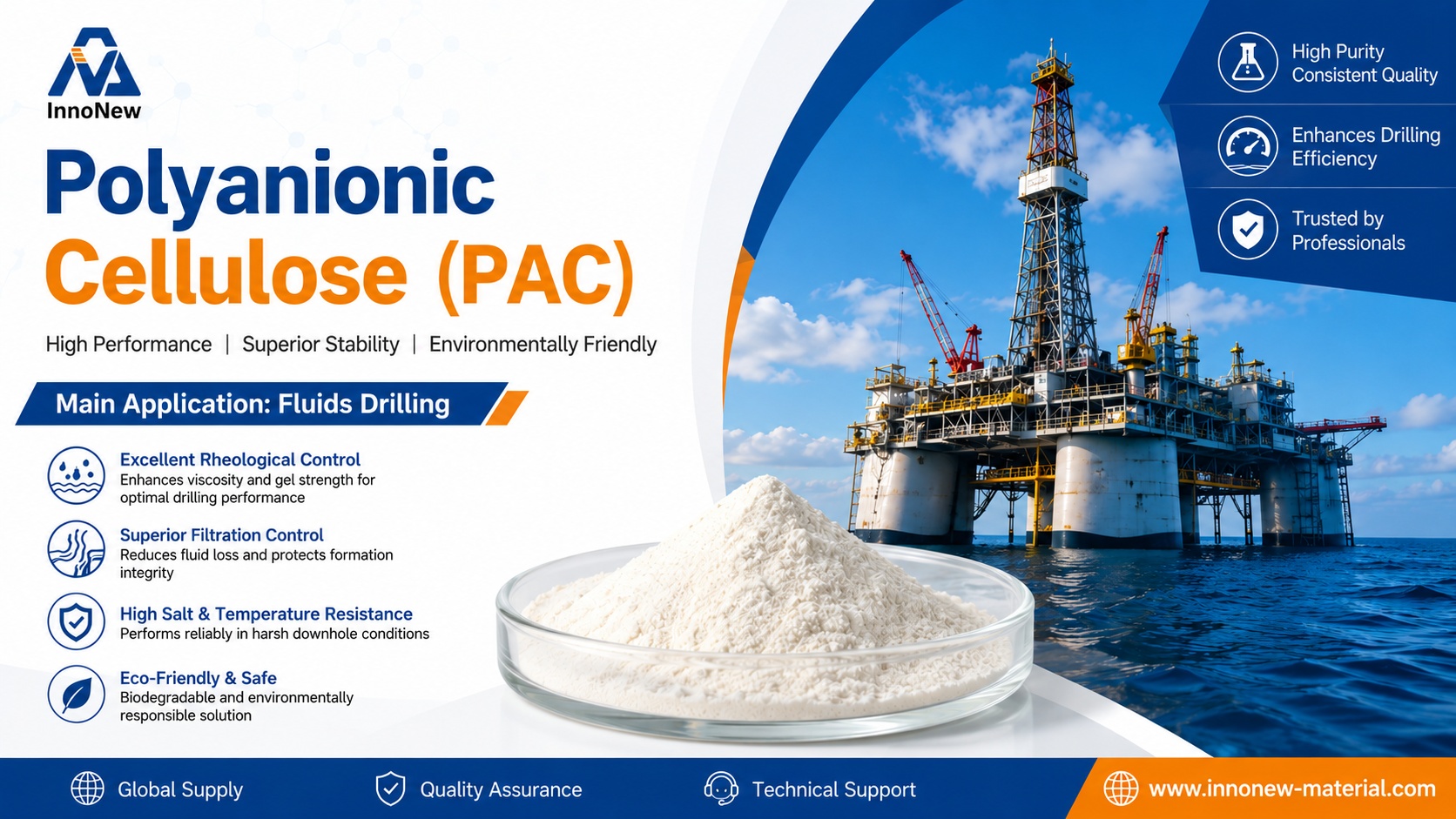
In modern oilfield drilling operations, water-based drilling fluids play a critical role in borehole stability, cuttings transportation, lubrication, and pressure control. Among the most widely used drilling fluid additives, Polyanionic Cellulose (PAC) is recognized as an essential component for improving drilling mud performance and fluid loss control.
PAC is generally classified into two main grades:
- PAC LV (Low Viscosity)
- PAC HV (High Viscosity)
Although both products are widely used in water-based drilling fluids, they serve different engineering purposes in drilling mud systems. Selecting the correct PAC grade is extremely important for optimizing drilling fluid rheology, reducing filtration loss, improving wellbore stability, and enhancing overall drilling efficiency.
This article provides a professional comparison of PAC LV vs PAC HV for water-based drilling fluids, including their technical differences, applications, performance characteristics, and selection recommendations for oilfield drilling systems.
What Is PAC in Water-Based Drilling Fluids?
Polyanionic Cellulose (PAC) is a water-soluble cellulose polymer widely used in oilfield drilling fluid formulations. It functions primarily as:
- Fluid loss control additive
- Rheology modifier
- Suspension stabilizer
- Borehole cleaning enhancer
PAC helps improve drilling mud performance by reducing water filtration into geological formations while maintaining stable rheological properties in water-based mud systems.
In modern drilling operations, PAC is commonly used in:
- Oil drilling fluids
- Gas drilling fluids
- Horizontal drilling systems
- Offshore drilling mud
- Freshwater and seawater drilling systems
PAC LV vs PAC HV: Key Differences
1. Viscosity Performance
PAC LV
PAC LV is designed to provide excellent fluid loss control with relatively low viscosity increase in drilling mud systems.
Main characteristics:
- Low viscosity contribution
- Better flowability
- Suitable for low-solids drilling fluids
- Minimal impact on mud density
PAC LV is commonly used when filtration control is required without significantly increasing drilling fluid viscosity.
PAC HV
PAC HV provides both strong fluid loss control and significant viscosity enhancement.
Main characteristics:
- High viscosity performance
- Improved suspension capability
- Enhanced cuttings transport
- Strong rheology modification
PAC HV is preferred for drilling systems requiring higher carrying capacity and improved borehole cleaning efficiency.
2. Fluid Loss Control Performance
Both PAC LV and PAC HV are effective fluid loss control additives in water-based drilling fluids.
However:
| Property | PAC LV | PAC HV |
|---|---|---|
| Fluid Loss Reduction | Excellent | Excellent |
| Viscosity Increase | Low | High |
| Rheology Modification | Moderate | Strong |
| Suspension Stability | Good | Excellent |
| Cuttings Carrying Capacity | Moderate | High |
PAC LV is ideal for controlling filtration without excessive thickening, while PAC HV is more suitable for demanding drilling environments requiring stronger suspension performance.
3. Rheology Control in Drilling Fluids
Drilling fluid rheology is critical for maintaining efficient drilling operations.
PAC HV provides stronger rheological control due to its higher molecular weight and viscosity performance. It improves:
- Yield point
- Gel strength
- Cuttings suspension
- Hole cleaning performance
PAC LV, on the other hand, offers more controlled rheology adjustment and is preferred when maintaining lower drilling fluid viscosity is important.
Applications of PAC LV in Water-Based Drilling Fluids
PAC LV is widely used in:
Low-Solids Drilling Fluid Systems
PAC LV helps reduce filtration loss without significantly increasing mud viscosity.
High-Speed Drilling Operations
Lower viscosity allows better circulation efficiency and faster drilling performance.
Freshwater Drilling Mud
PAC LV performs well in freshwater drilling environments requiring stable fluid control.
Thin Mud Systems
PAC LV is suitable for lightweight drilling fluid formulations where excessive viscosity must be avoided.
Applications of PAC HV in Water-Based Drilling Fluids
PAC HV is commonly used in:
Deep Well Drilling
Provides strong suspension capability and improved borehole cleaning.
High-Temperature Drilling Systems
Maintains drilling fluid stability under demanding drilling conditions.
Complex Geological Formations
Improves wellbore stability and reduces drilling fluid filtration.
Horizontal Drilling Operations
Enhances cuttings transport efficiency in extended reach drilling systems.
How to Select PAC LV or PAC HV for Drilling Mud Systems
Choosing the correct PAC grade depends on multiple engineering factors.
Choose PAC LV When:
- Low viscosity is required
- Filtration reduction is the main objective
- Faster drilling fluid circulation is needed
- Lightweight mud systems are used
Choose PAC HV When:
- Strong rheology control is required
- Cuttings suspension is critical
- Borehole cleaning performance must be improved
- High-viscosity drilling mud is preferred
In many oilfield drilling operations, PAC LV and PAC HV can also be combined to achieve balanced drilling fluid performance.
Recommended Usage Method
For optimal drilling fluid performance:
- Add PAC slowly into circulating water-based mud systems.
- Ensure sufficient mixing to avoid polymer agglomeration.
- Adjust dosage according to drilling fluid density and formation conditions.
- Monitor rheology and filtration properties during drilling operations.
Recommended dosage typically depends on:
- Drilling depth
- Mud system type
- Geological conditions
- Desired rheology performance
Advantages of PAC in Oilfield Drilling Operations
Excellent Fluid Loss Control
PAC effectively reduces filtration into permeable formations.
Improved Borehole Stability
Helps maintain stable wellbore conditions during drilling operations.
Enhanced Drilling Fluid Rheology
Optimizes suspension and carrying capacity.
Better Cuttings Transportation
Improves drilling efficiency and reduces drilling risks.
Strong Compatibility
Compatible with various water-based drilling fluid systems.
Cost-Effective Performance
Improves drilling mud efficiency while reducing operational problems.
Why Choose Hebei InnoNew Material Technology Co., Ltd.
Hebei InnoNew Material Technology Co., Ltd. specializes in high-performance oilfield drilling additives and industrial cellulose products for global energy and drilling industries.
Our advantages include:
- Stable PAC LV and PAC HV quality
- Professional oil drilling application support
- Strict production quality control
- Customized drilling fluid solutions
- Reliable international supply capability
- Technical support for drilling mud optimization
We provide PAC products suitable for:
- Water-based drilling fluids
- Oilfield drilling mud systems
- Horizontal drilling
- Offshore drilling
- Deep well drilling operations
FAQ
What is the difference between PAC LV and PAC HV?
PAC LV provides fluid loss control with lower viscosity, while PAC HV offers stronger viscosity enhancement and rheology control in drilling fluids.
Which PAC grade is better for water-based drilling fluids?
The selection depends on drilling conditions. PAC LV is preferred for low-viscosity systems, while PAC HV is better for strong suspension and borehole cleaning performance.
Can PAC improve drilling mud performance?
Yes. PAC improves filtration control, rheology stability, suspension performance, and wellbore stability in water-based drilling systems.
Is PAC suitable for offshore drilling operations?
Yes. PAC is widely used in offshore water-based drilling fluids due to its stable rheological performance and filtration control capability.
Can PAC LV and PAC HV be used together?
Yes. Many drilling fluid formulations combine PAC LV and PAC HV to balance filtration control and rheology performance.
Conclusion
PAC LV and PAC HV are both essential drilling fluid additives for modern water-based drilling systems. Understanding their differences in viscosity, filtration control, suspension stability, and rheology performance is critical for optimizing drilling mud efficiency and improving oilfield drilling operations.
PAC LV is ideal for low-viscosity filtration control applications, while PAC HV provides stronger rheology modification and cuttings suspension performance for demanding drilling environments.
Selecting the correct PAC grade can significantly improve drilling fluid stability, reduce operational risks, and enhance drilling efficiency.
Contact Us
Looking for high-performance PAC LV and PAC HV for water-based drilling fluids?
Contact Hebei InnoNew Material Technology Co., Ltd. today for:
- Professional drilling fluid solutions
- PAC technical support
- Customized oilfield additive recommendations
- Competitive global supply services
Email: chris@innonew-material.com
WhatsApp: +86 17736063980