
PVA Marble Release Film in Artificial Marble Manufacturing: Surface Engineering, Release Science, and Production Optimization
Introduction
In artificial marble manufacturing, surface quality and demolding efficiency directly impact product value. While resin formulation and filler distribution are commonly discussed, the critical role of release interface engineering is often overlooked. Among various release materials, PVA Marble Release Film has emerged as a key solution for modern engineered stone production, enabling clean demolding, surface defect reduction, and enhanced production efficiency.
Understanding Surface Engineering in Artificial Marble Production
Surface engineering is a core element in artificial marble production, alongside raw material selection and process control.
Key components of surface engineering:
- Mold design and preparation
- Release technology
- Surface transfer and texture replication
PVA release film integrates into this system to ensure surface quality, production consistency, and reduced defect rates.
Why Surface Quality Determines Market Value
The final market value of engineered stone is largely determined by its surface. Critical factors include:
- Surface Gloss: Determines mirror-like appearance
- Texture Reproduction: Maintains pattern and stone-like aesthetics
- Color Uniformity: Ensures batch-to-batch consistency
- Defect-Free Finish: Minimizes pinholes, bubbles, scratches, and sticking marks
Even with high-quality resins, poor surface engineering can significantly reduce product competitiveness.
What Is PVA Marble Release Film?
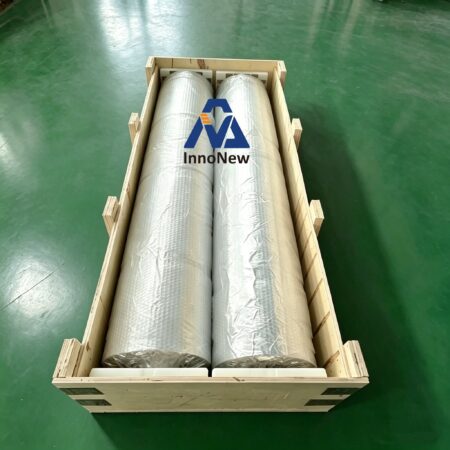
PVA Marble Release Film is a thin, polyvinyl alcohol-based film applied between the mold and resin during casting and curing. It functions as a surface engineering tool rather than just a release aid, providing:
- Clean demolding
- Surface protection
- Gloss enhancement
- Defect prevention
- Production consistency
The Science Behind PVA Release Film
1. Surface Energy Regulation
PVA film establishes a stable interface between mold and resin, lowering adhesion and preventing surface defects during demolding.
2. Controlled Interfacial Separation
During curing, resin shrinkage and thermal stress are absorbed by the PVA layer, reducing surface cracks and edge damage.
3. Surface Replication Enhancement
High-quality PVA film ensures smoothness and transparency, accurately transferring mold textures and patterns to the final product.
Key Functions of PVA Marble Release Film
- Surface Protection: Safeguards mold surfaces from damage
- Gloss Improvement: Enhances reflective mirror-like surfaces
- Bubble Reduction: Minimizes trapped air defects
- Defect Prevention: Reduces pinholes, fish eyes, and surface marks
- Production Consistency: Maintains batch uniformity and yield
Artificial Marble Manufacturing Process
Mold Preparation
      ↓
Mold Cleaning
      ↓
PVA Film Application
      ↓
Gel Coat Layer
      ↓
Resin Mixture Casting
      ↓
Vacuum Degassing
      ↓
Curing
      ↓
Demolding
      ↓
Surface Finishing
      ↓
Inspection
Comparison of Common Release Technologies
| Technology | Surface Quality | Release Performance | Environmental Impact |
|---|---|---|---|
| Wax | Medium | Medium | Medium |
| Silicone Agent | Good | Good | Medium |
| PE Film | Good | Good | Medium |
| PET Film | Very Good | Good | Medium |
| PVA Film | Excellent | Excellent | Excellent |
Critical Performance Indicators
- Thickness Uniformity: Ensures consistent release
- Transparency: Allows visual monitoring during casting
- Tensile Strength: Withstands handling without tearing
- Surface Smoothness: Directly affects final gloss
- Dissolution Behavior: Facilitates post-processing
- Release Stability: Maintains demolding quality across batches
Common Defects and Root Cause Analysis
| Defect | Possible Cause |
|---|---|
| Surface Bubbles | Air entrapment |
| Film Wrinkles | Improper application |
| Poor Gloss | Surface contamination |
| Difficult Demolding | Insufficient release layer |
| Surface Marks | Mold cleanliness issues |
Sustainability and Future Development
Global stone manufacturing is moving toward green and sustainable production. PVA release film contributes to:
- Water-soluble surface systems reducing chemical residues
- Low-emission manufacturing for eco-friendly operations
- Smart production integration with automated systems
- High-gloss decorative surfaces for premium applications
- Functional composite films with improved mechanical and thermal properties
FAQ
Conclusion
PVA Marble Release Film is no longer just a release material—it is an essential element of surface engineering in artificial marble and engineered stone manufacturing. Its ability to control interfacial behavior, enhance surface replication, reduce defects, and support sustainable production makes it a critical tool for modern production lines and high-quality stone products.