
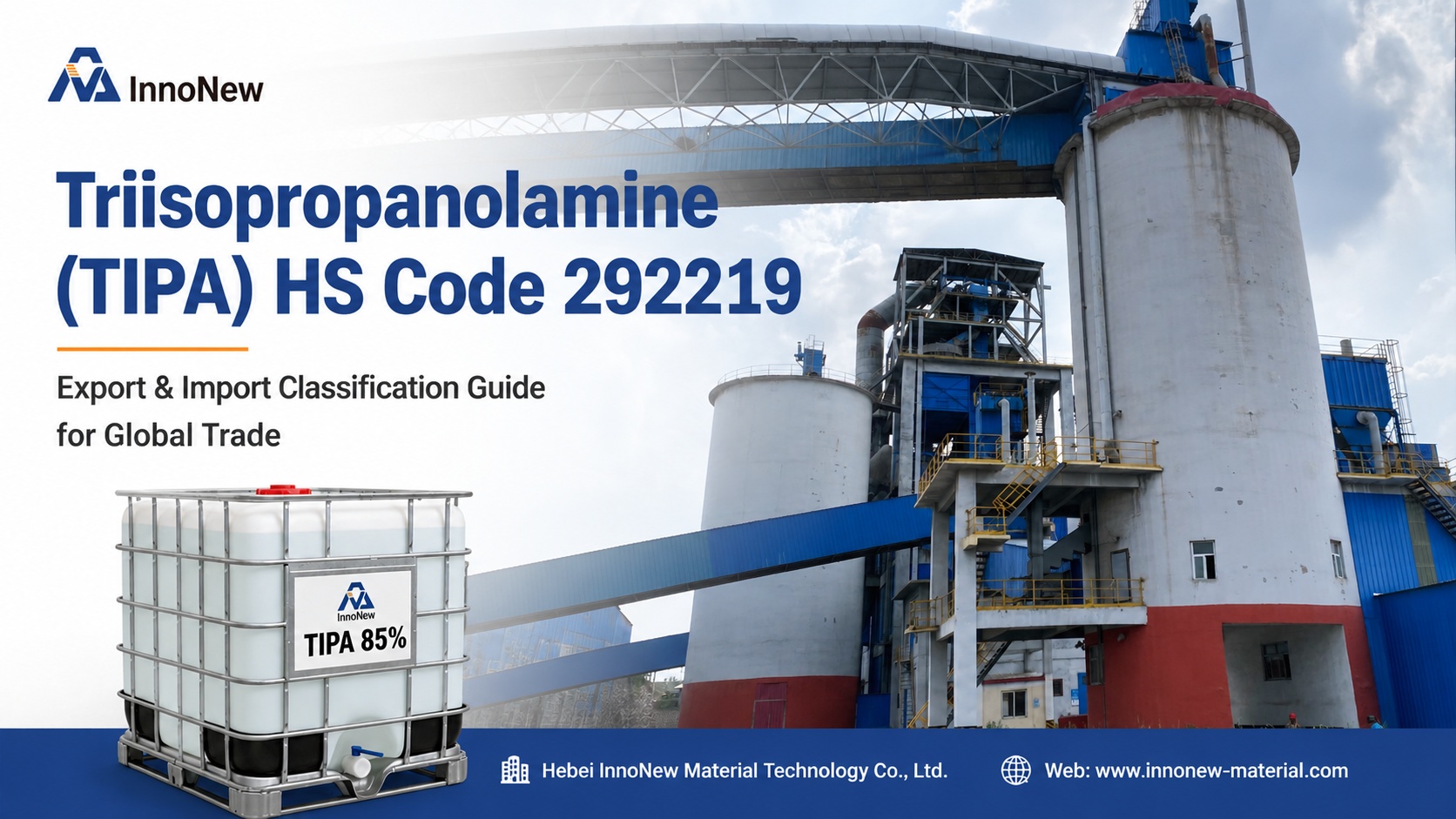
1. Introduction: What is TIPA HS Code 292219?
Triisopropanolamine (TIPA) is an organic amine alcohol widely used in the cement and construction chemical industry, particularly as a grinding aid and performance enhancer in cement production systems.
In international trade classification, TIPA is commonly assigned to:
HS Code: 292219 (or 2922.19 / 29221990 depending on country extension)
This HS category belongs to oxygen-function amino compounds, specifically amino-alcohol derivatives.
Correct classification is essential for:
- Customs clearance efficiency
- Import duty calculation
- International trade compliance
- Chemical regulatory documentation
2. What is Triisopropanolamine (TIPA)?
TIPA is an amino alcohol compound with both amine and hydroxyl functional groups. Its molecular structure allows it to interact effectively with cement particles and improve grinding efficiency.
Key Properties
- Chemical family: amino alcohol
- High alkalinity buffer behavior
- Water-soluble organic compound
- Stable under industrial processing conditions
Main Industrial Applications
- Cement grinding aid systems
- Concrete strength enhancement
- Gypsum-based formulations
- Synergistic additive with DEIPA
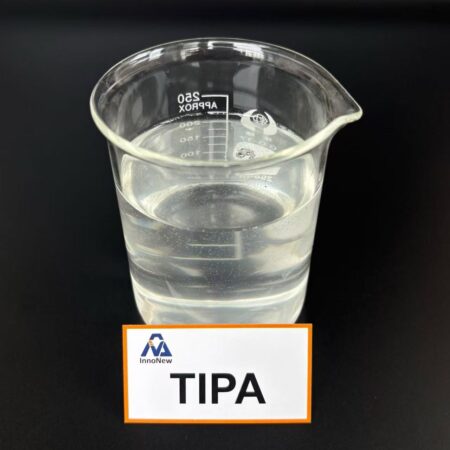
3. HS Code 292219 Classification Principle
3.1 HS System Structure
The Harmonized System (HS Code) is globally standardized:
- 29 → Organic chemicals
- 2922 → Oxygen-function amino-compounds
- 292219 → Amino-alcohols, other (residual category)
Therefore:
TIPA is classified under HS 292219 as an amino alcohol derivative.
3.2 Why TIPA Falls Under 292219
TIPA is classified based on chemical functional structure, not industrial application.
It contains:
- Amino group (-NH)
- Alcohol group (-OH)
This places it under:
oxygen-function amino compounds → amino alcohols → residual category 292219
4. Country-Specific HS Code Variations
Although the global HS category is consistent, countries extend the code:
| Region | HS Code | Description |
|---|---|---|
| EU | 292219 | Amino-alcohol derivatives |
| USA | 29221990 | Other amino alcohols |
| China | 29221900 | Organic amine compounds |
| India | 29221990 | Other amino alcohols |
| Southeast Asia | 292219 / extended code | Industrial amines |
The first 6 digits remain harmonized globally.
5. TIPA Industrial Application in Cement Systems
TIPA is widely used in cement manufacturing as a high-performance additive.
Function in Cement Grinding
- Improves clinker grinding efficiency
- Reduces energy consumption
- Enhances cement particle distribution
Performance Benefits
- Increased early and late strength
- Improved hydration efficiency
- Better particle dispersion
Synergy with DEIPA
TIPA is often used together with DEIPA to optimize:
- grinding efficiency
- compressive strength
- cost-performance balance
6. Why HS Code Matters for TIPA Trade
Correct HS classification affects international trade performance:
Key Impacts
- Import duty variation
- Customs clearance speed
- Regulatory compliance risk
- Trade documentation accuracy
Incorrect classification may lead to:
- shipment delay
- customs reassessment
- penalty risk
7. HS Code Misclassification Risks
Common mistakes in TIPA classification:
❌ Mistake 1: Classifying as general chemical additives
❌ Mistake 2: Misplacing under polymer or resin categories
❌ Mistake 3: Confusing with ethanolamine derivatives
Consequences
- customs inspection delays
- tariff adjustment
- reclassification penalties
8. Import & Export Compliance Best Practices
To ensure smooth customs clearance:
Recommended Product Description
Triisopropanolamine (TIPA), amino alcohol compound, cement grinding aid chemical, industrial use.
Required Documents
- Commercial Invoice
- Packing List
- COA (Certificate of Analysis)
- MSDS (Material Safety Data Sheet)
- TDS (Technical Data Sheet)
Packaging Standards
- 200kg steel drum or IBC tank
- sealed and corrosion-resistant containers
- chemical-grade labeling
9. Industry Supply Perspective
From a global cement chemical supply chain perspective, TIPA is a key performance additive in grinding systems.
Hebei InnoNew Material Technology Co., Ltd. supplies cement grinding aid raw materials including:
These products are widely exported to:
- Southeast Asia
- Middle East
- South America
- Africa
ensuring stable performance and compliance with international HS Code 292219 classification standards.
10. FAQ
Q1: What is the HS Code for TIPA?
TIPA is commonly classified under HS Code 292219 or 29221990 depending on country.
Q2: What category does TIPA belong to?
It belongs to amino alcohols under oxygen-function organic chemicals.
Q3: Is TIPA the same HS code as DEIPA?
They are in the same HS chapter but may have different sub-classifications depending on jurisdiction.
Q4: Why is TIPA classified under 292219?
Because it contains both amino and hydroxyl functional groups.
Q5:What is TIPA used for?
Primarily used in cement grinding aid systems and construction chemical applications.