
Water-Based vs Oil-Based Concrete Mold Release Agent: Which is Better for Precast Production?
Introduction: Why This Comparison Matters in Modern Precast Engineering
In modern precast concrete manufacturing, the selection of a concrete mold release agent directly affects:
- Surface quality consistency
- Demolding efficiency
- Production cost per unit
- Mold lifespan
- Labor intensity in cleaning operations
The two dominant systems used globally are:
- Water-based concrete mold release agent
- Oil-based concrete mold release agent
Although both serve the same function—preventing concrete adhesion—their mechanism, environmental impact, and industrial performance differ significantly.
This article provides a technical, engineering-level comparison based on real precast production conditions, including a Malaysia precast factory case study.
1. Water-Based Concrete Mold Release Agent
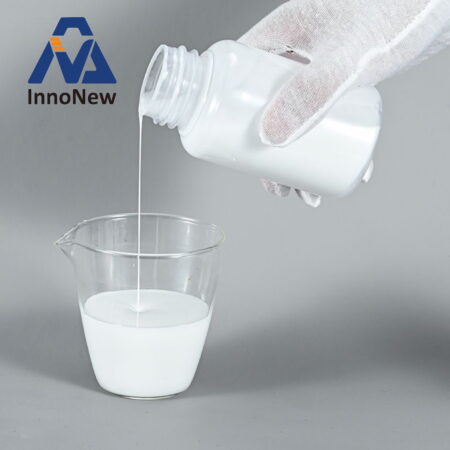
A water-based concrete mold release agent is a chemically formulated emulsion system designed to create a micro-scale separation film between cement hydration products and mold surfaces.
Working Mechanism:
- Forms uniform molecular film on steel/wood formwork
- Reduces interfacial surface energy
- Blocks cement hydration bonding at early stage
- Enables controlled demolding after initial set
Engineering Characteristics:
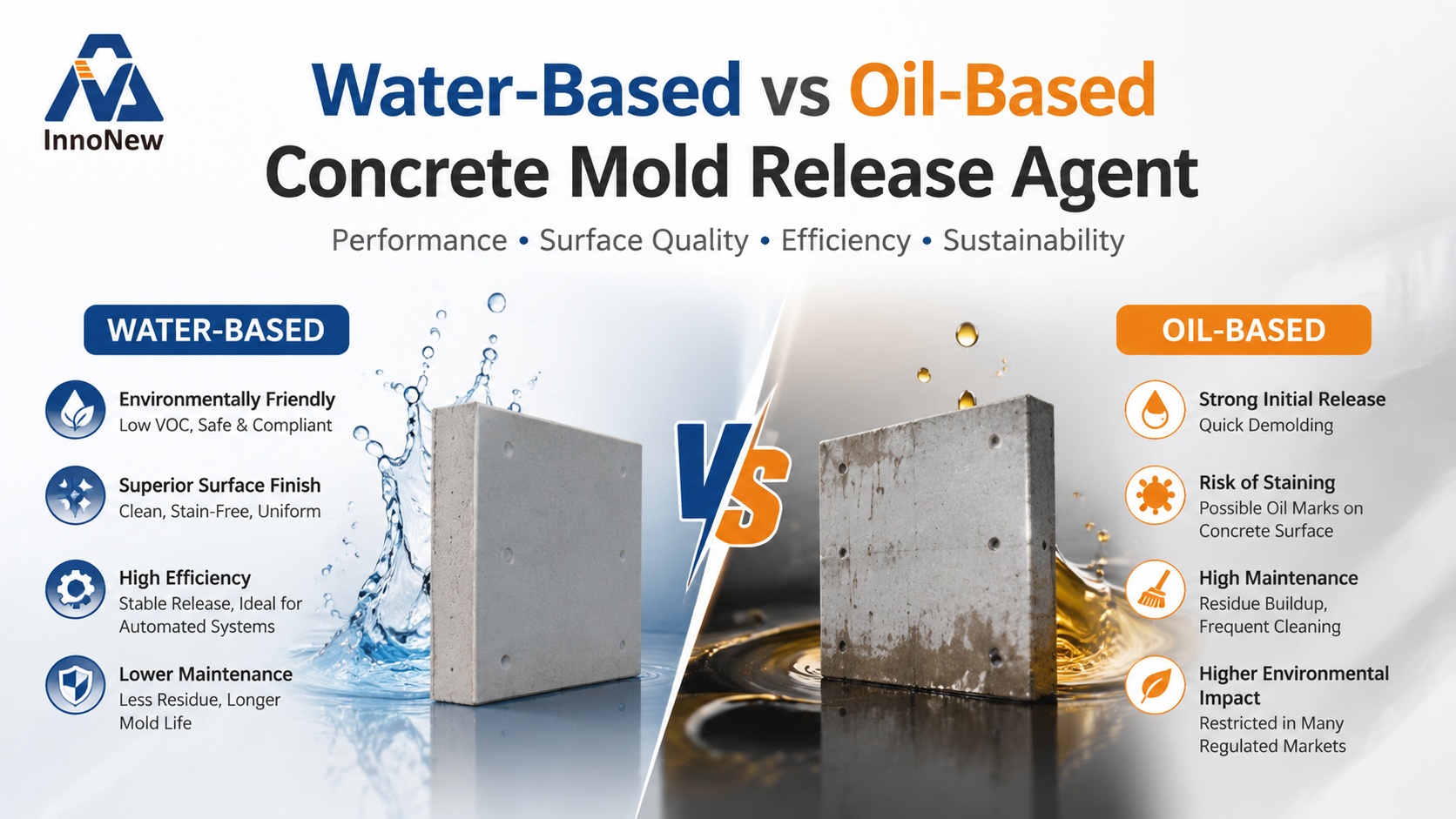
- Low VOC, environmentally compliant
- Stable in humid tropical climates
- Compatible with automated spray systems
- Produces clean, stain-free concrete surfaces
2. Oil-Based Concrete Mold Release Agent
Oil-based systems typically use mineral oil or petroleum derivatives to form a physical lubrication layer.
Working Mechanism:
- Creates thick lubricating oil film
- Physically separates concrete from mold surface
- Reduces friction during demolding
Engineering Characteristics:
- Strong immediate release performance
- Higher risk of surface contamination
- Oil staining on concrete surface in some cases
- Less suitable for modern environmental regulations
3. Technical Comparison: Water-Based vs Oil-Based Mold Release Agent
3.1 Surface Quality Performance
Water-based systems provide:
- Higher surface uniformity
- No oil stains or discoloration
- Better suitability for architectural concrete
Oil-based systems:
- May cause surface patching or oil marks
- Less consistent finish in high-end precast products
3.2 Demolding Efficiency
Water-based:
- Stable demolding after curing
- Optimized for automated precast cycles
Oil-based:
- Fast initial release
- But inconsistent in long-cycle production
3.3 Mold Longevity & Maintenance Cost
Water-based systems:
- Lower residue accumulation
- Reduced cleaning labor
- Extended mold lifespan
Oil-based systems:
- Higher residue buildup
- Frequent cleaning required
- Increased maintenance cost
3.4 Environmental & Regulatory Compliance
Water-based:
- Low VOC emissions
- Compliant with modern ESG standards
- Preferred in Southeast Asia and EU markets
Oil-based:
- Higher environmental burden
- Increasingly restricted in regulated markets
4. Malaysia Case Study: Precast Factory Performance Optimization
A precast concrete manufacturer in Selangor, Malaysia producing wall panels and drainage components experienced typical issues:
Before Optimization (Oil-Based System):
- Oil staining on architectural panels
- High cleaning labor demand
- Mold surface degradation after repeated cycles
- Inconsistent surface finish in humid weather
After Switching to Water-Based Concrete Mold Release Agent:
- Surface defect rate reduced significantly
- Mold cleaning labor reduced by ~35–50%
- Stable demolding performance under 85–95% humidity
- Improved consistency in mass production cycles
Engineering Insight:
Malaysia’s tropical climate accelerates oil oxidation and residue accumulation. Water-based systems provide superior stability due to:
- Emulsion stability in humidity
- Controlled evaporation behavior
- Reduced chemical residue formation
5. Engineering Decision Guide: Which One Should You Choose?
Choose Water-Based Concrete Mold Release Agent if:
- You operate precast factories
- You require high surface quality
- You use automated spraying systems
- You export to regulated markets
- You prioritize labor cost reduction
Choose Oil-Based System if:
- You operate low-cost manual casting
- Surface quality is not critical
- Initial cost is the only priority
6. Industrial Trend: Why Water-Based Systems Are Replacing Oil-Based
Global precast industry trends show:
- Shift toward low-VOC materials
- Automation in formwork systems
- Higher demand for architectural concrete
- ESG compliance pressure
As a result, water-based concrete mold release agent is becoming the industry default standard.
7. Why Choose Us
Hebei InnoNew Material Technology Co., Ltd. provides:
- Water-based concrete mold release systems
- PCE superplasticizer systems for precast optimization
- Defoamer / Concrete Accelerator and other concrete admixtures
- Integrated concrete chemical solutions
We support:
- Precast factory process optimization
- Formulation guidance
- Technical field support in Southeast Asia
8. FAQ
1. What is the difference between water-based and oil-based concrete mold release agents?
Water-based systems use emulsion chemistry for clean separation, while oil-based systems rely on lubrication films.
2. Which is better for precast concrete production?
Water-based mold release agents are better for high-quality precast production due to cleaner surfaces and lower labor cost.
3. Does mold release agent affect concrete strength?
No. It only acts at the interface layer and does not interfere with cement hydration inside the concrete matrix.
4. Why is water-based release agent preferred in Malaysia?
Due to high humidity and environmental regulations, water-based systems provide more stable and cleaner performance.
5. Can oil-based agents cause surface defects?
Yes. Oil residues may lead to staining, uneven coloration, and surface contamination.
6. Is water-based system suitable for automated spraying?
Yes. It is fully compatible with industrial spray systems used in precast factories.
7. Which is more cost-effective in long-term production?
Water-based systems reduce labor, cleaning, and mold maintenance cost, making them more economical long-term.