EIFS Solutions: System Engineering, Materials & Performance
Key HPMC & RDP Additives for EIFS Systems
1. EIFS as a Multi-Layer Engineering System
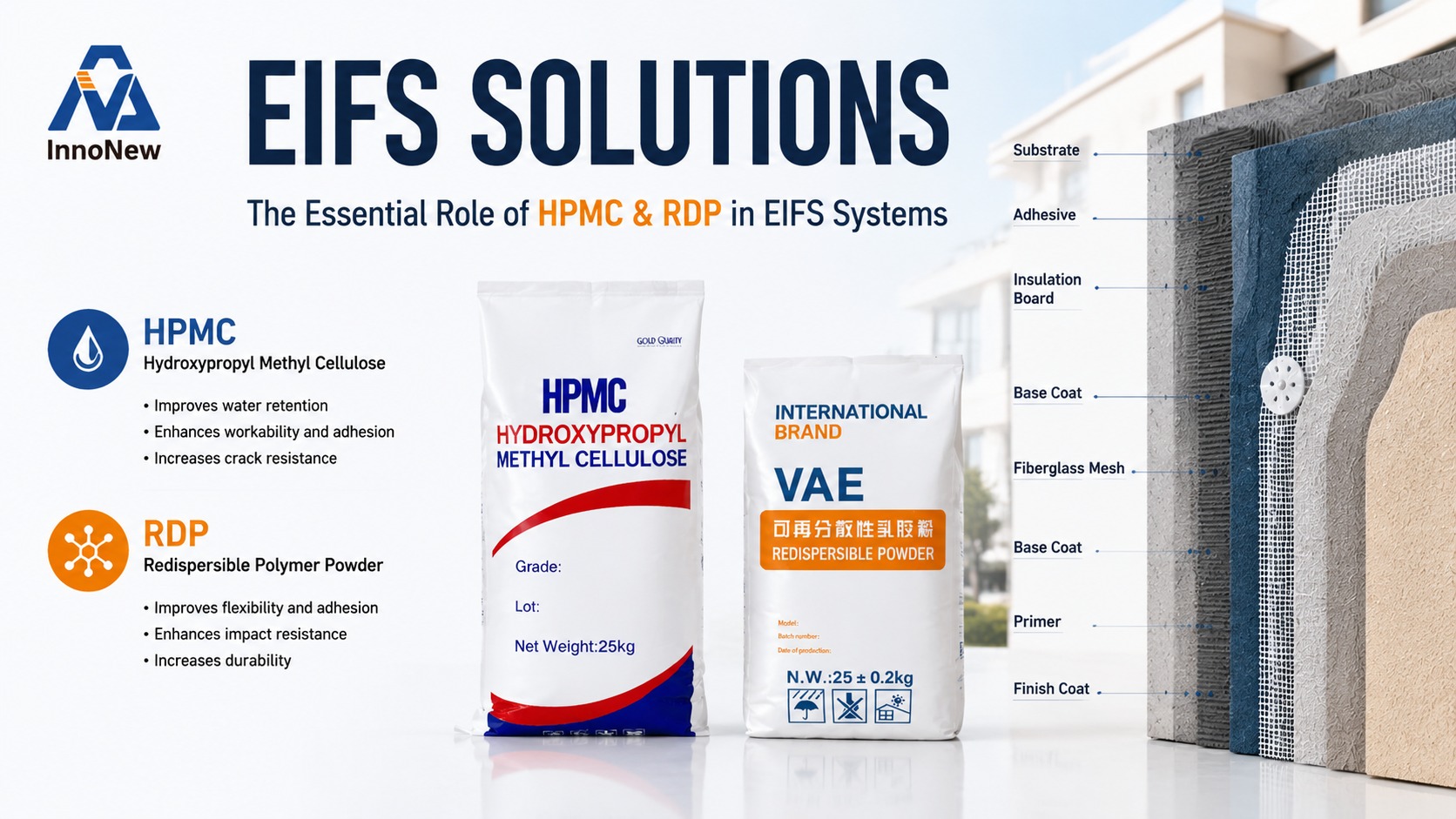
EIFS (Exterior Insulation and Finish System) is not a single product, but a functional multilayer engineering system designed for building envelope performance.
Its primary objectives include:
Thermal insulation and energy efficiency
Weather protection of exterior walls
Crack resistance and structural durability
Architectural surface finishing
Core Engineering Principle
EIFS performance is governed by interface engineering rather than insulation material alone.
EIFS failure is typically caused by mortar interface degradation, not insulation board failure.
2. EIFS System Architecture and Functional Design
2.1 Adhesive Mortar Layer (Load Transfer Interface)
The adhesive layer is responsible for bonding insulation boards to the substrate wall.
Polymer modified mortar is the functional backbone of EIFS systems.
Role of RDP (Redispersible Polymer Powder)
RDP enhances:
Flexibility of cement matrix
Adhesion to low-energy substrates (EPS/XPS)
Freeze-thaw resistance
Micro-crack bridging
Key Mechanism:
RDP forms a continuous polymer film inside the hydrated cement matrix, creating a hybrid inorganic-organic structure.
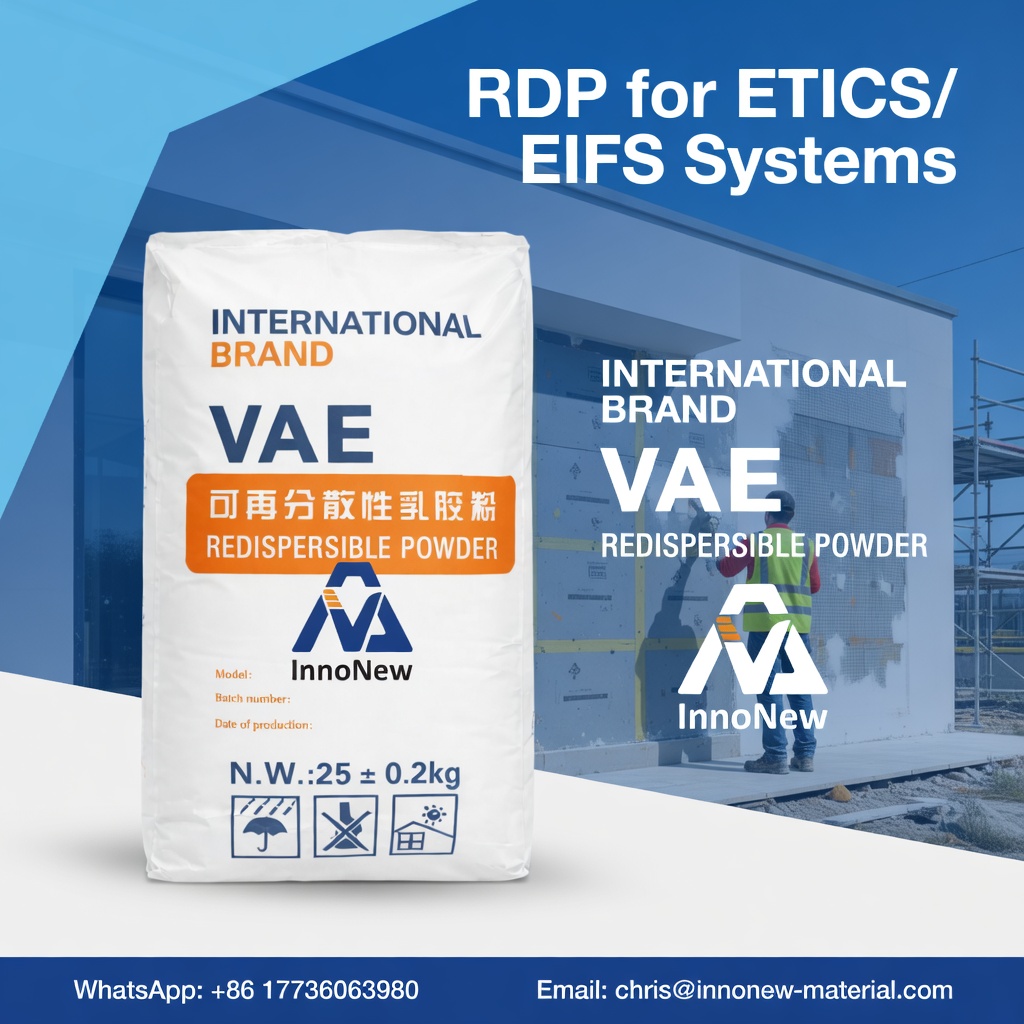
Redispersible Polymer Powder (RDP) designed for ETICS / EIFS exterior insulation systems
3.2 Function of HPMC in EIFS Mortar Systems
HPMC acts as a rheology and hydration control modifier.
Functions:
Water retention control
Extended open time for installation
Anti-sagging behavior on vertical surfaces
Uniform cement hydration
Engineering Insight:
Without HPMC, EIFS mortar loses workability control and bonding consistency, leading to interface failure.
InnoNew Material is a trusted HPMC supplier delivering high-quality Hydroxypropyl Methylcellulose (cellulose ether) for construction applications worldwide.
3.3 Synergistic Effect of RDP + HPMC
EIFS performance depends on system synergy rather than single additives.
Material
Function
System Contribution
RDP
Polymer elasticity
Crack resistance + adhesion
HPMC
Water retention
Workability + curing stability
Combined Effect:
Stable adhesion interface
Controlled hydration kinetics
Improved long-term durability
4. EIFS Failure Mechanisms
4.1 Cracking Failure (Most Common Issue)
Root Causes:
Low polymer content in base coat
Improper mesh embedding depth
High shrinkage cement system
Thermal cycling stress
Mechanism:
Differential shrinkage generates tensile stress exceeding matrix strength, resulting in microcracks that propagate into visible cracks.
4.2 Adhesion Failure / Debonding
Causes:
Insufficient RDP dosage
Dust-contaminated substrate
Inadequate water retention (HPMC deficiency)
Mechanism:
Interface adhesion energy is lower than thermal stress load → separation occurs.
4.3 Water Infiltration Failure
Causes:
Porous finish coat structure
Lack of hydrophobic modification
Crack propagation in base layer
Consequences:
Freeze-thaw damage
Mold growth
Long-term structural degradation
5. EIFS System Optimization Strategies
5.1 Polymer System Optimization
Key strategies:
Increase RDP dosage for high-flex systems
Adjust Tg (glass transition temperature) based on climate conditions
Climate Engineering:
Hot climate → flexible polymer systems
Cold climate → freeze-thaw resistant formulations
5.2 Crack Resistance Engineering
Critical parameters:
Fiberglass mesh density (160–300 g/m²)
Base coat thickness control
Polymer/cement ratio optimization
5.3 Hydrophobic Performance Upgrade
Advanced solutions:
Silane/siloxane modification systems
Hydrophobic RDP grades
Surface energy reduction engineering
6. EIFS Material Selection Guide
System Layer
Recommended Materials
Adhesive mortar
Cement + RDP + HPMC system
Base coat
High-flex polymer modified mortar
Insulation bonding
EPS/XPS compatible adhesive system
Finish coat
Silicone-acrylic or mineral coating
7. Application Scenarios
EIFS systems are widely applied in:
High-rise residential buildings
Commercial building facades
Energy-efficient renovation projects
Hot and humid climates (Southeast Asia, Middle East)
Cold climate insulation systems (Europe, Russia, North America)
8. Engineering Insight: Why EIFS Systems Fail in Real Projects
Most EIFS failures are not material failures but system engineering failures:
Incorrect mortar formulation design
Poor interface preparation
Improper polymer selection
Construction quality variability
EIFS performance is determined at the system design stage, not during installation alone.
EIFS system performance is strongly influenced by:
RDP polymer quality and Tg design
HPMC viscosity and substitution degree
Aggregate grading and packing density
These parameters directly affect:
Adhesion strength
Crack resistance
Long-term durability
Weather resistance
10. FAQ
Q1: What is EIFS in construction? EIFS is a multi-layer exterior insulation system combining adhesive mortar, insulation boards, reinforced base coat, and finish layers.
Q2: Why does EIFS crack? Cracking is caused by shrinkage stress, thermal movement, and insufficient polymer modification in the base coat system.
Q3: What is the function of RDP in EIFS? RDP improves flexibility, adhesion, and crack resistance by forming a polymer network within the cement matrix.
Q4: How does HPMC improve EIFS performance? HPMC controls water retention and workability, ensuring proper curing and bonding strength.
Q5: Can EIFS be used in humid climates? Yes, but it requires hydrophobic modification and properly designed finish coat systems.