
Anti-Crack Wall Putty System Solution: Engineering Formulation & Performance Analysis
Introduction
Wall cracking remains one of the most common quality issues in residential, commercial, and industrial construction projects worldwide. While cracks may initially appear as minor cosmetic defects, they often indicate deeper problems related to material shrinkage, thermal movement, substrate deformation, moisture variation, and poor formulation design.
Traditional wall putties often focus on whiteness, smoothness, and workability while neglecting long-term dimensional stability. As a result, cracking, powdering, debonding, and surface defects frequently occur after construction.
An effective anti-crack wall putty system requires a scientific balance between:
- Adhesion strength
- Flexibility
- Water retention
- Shrinkage control
- Workability
- Durability
This article provides a professional engineering perspective on anti-crack wall putty formulation design, crack prevention mechanisms, and performance optimization strategies.
Understanding Why Wall Putty Cracks
Before developing an anti-crack solution, it is essential to understand the root causes of cracking.
1. Drying Shrinkage
As water evaporates during curing, the putty layer experiences volume reduction.
Excessive shrinkage creates tensile stress within the coating. When this stress exceeds the tensile strength of the putty, cracks develop.
Common Causes
- High cement content
- Excessive water demand
- Poor water retention
- Fast drying environment
2. Thermal Expansion and Contraction
Walls continuously expand and contract due to temperature fluctuations.
Without sufficient flexibility, the putty layer cannot absorb movement and eventually cracks.
Particularly critical in:
- Exterior wall systems
- Tropical climates
- Desert regions
- High-rise buildings
3. Substrate Movement
Concrete, AAC blocks, gypsum boards, and cement plaster all exhibit different movement characteristics.
Differential movement between substrate and putty often creates:
- Hairline cracks
- Joint cracks
- Delamination
4. Poor Adhesion
Insufficient bonding strength allows stress concentration at the interface.
Typical symptoms include:
- Hollow sounding areas
- Edge cracking
- Peeling
- Debonding
Engineering Design Principles for Anti-Crack Wall Putty
A successful anti-crack system should simultaneously improve:
Mechanical Performance
- Tensile strength
- Flexural strength
- Cohesion
Rheological Performance
- Workability
- Trowelability
- Sag resistance
Durability
- Water resistance
- Weather resistance
- Freeze-thaw resistance
Dimensional Stability
- Shrinkage reduction
- Crack resistance
- Stress relaxation
Recommended Anti-Crack Wall Putty Formulation
Interior Wall Putty Formula
| Raw Material | Dosage (%) |
|---|---|
| Calcium Carbonate | 65–75 |
| Talc Powder | 10–15 |
| White Cement | 8–12 |
| HPMC | 0.25–0.40 |
| RDP | 1.0–2.0 |
| PP Fiber | 0.05–0.15 |
| Starch Ether | 0.02–0.05 |
Exterior Wall Putty Formula
| Raw Material | Dosage (%) |
|---|---|
| Calcium Carbonate | 45–55 |
| Quartz Powder | 15–25 |
| White Cement | 20–30 |
| HPMC | 0.30–0.45 |
| RDP | 2.0–4.0 |
| PP Fiber | 0.10–0.20 |
| Starch Ether | 0.02–0.05 |
Exterior-grade formulations require significantly higher polymer modification to withstand environmental stress and thermal cycling.
Key Additives for Crack Resistance
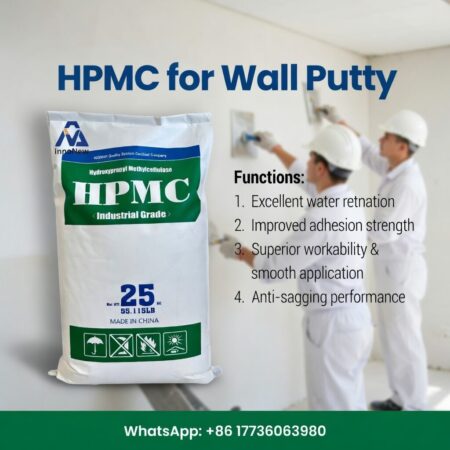
1. Hydroxypropyl Methyl Cellulose (HPMC)
Primary Functions
- Water retention
- Open time extension
- Workability enhancement
- Uniform hydration
Contribution to Crack Resistance
Proper water retention prevents:
- Plastic shrinkage cracking
- Rapid moisture loss
- Uneven curing
Recommended Dosage
0.25–0.45%
2. Redispersible Polymer Powder (RDP)
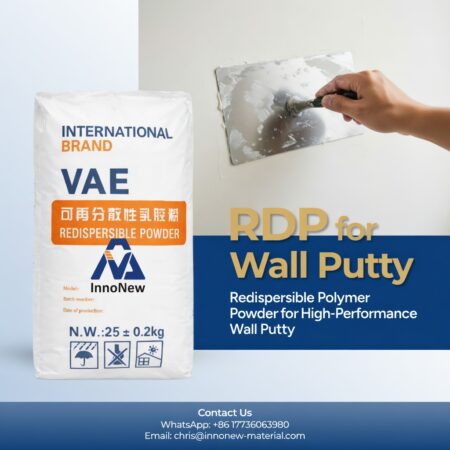
RDP is the most critical anti-crack additive in modern wall putty systems.
Mechanism
After hydration and drying:
- Polymer particles coalesce
- Continuous polymer films form
- Internal flexibility increases
Benefits include:
- Higher adhesion
- Improved elasticity
- Reduced brittleness
- Better impact resistance
Recommended Dosage
Interior putty:
1–2%
Exterior putty:
2–4%
3. Polypropylene Fiber (PP Fiber)
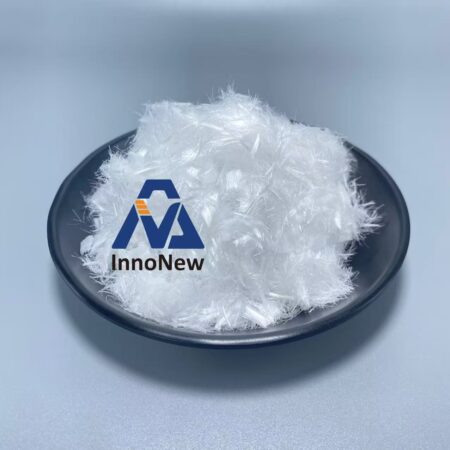
Anti-Crack Mechanism
Fibers create a three-dimensional reinforcement network.
They:
- Disperse internal stress
- Restrict crack propagation
- Reduce shrinkage cracking
Recommended Length
3–6 mm
Dosage
0.05–0.20%
4. Starch Ether
Starch ether improves:
- Anti-sag performance
- Application feel
- Material stability
Although not a primary anti-crack additive, it contributes to more uniform layer thickness and better field application quality.
Engineering Crack Prevention Mechanisms
Mechanism 1: Shrinkage Stress Reduction
HPMC controls water evaporation.
Fibers distribute stress.
Polymers absorb movement.
Together they significantly reduce shrinkage-induced cracking.
Mechanism 2: Flexible Polymer Network
RDP forms flexible bridges between mineral particles.
This creates:
- Improved tensile deformation capacity
- Enhanced crack resistance
- Better substrate accommodation
Mechanism 3: Micro-Reinforcement
PP fibers function similarly to steel reinforcement in concrete at a micro scale.
Benefits include:
- Crack arrest
- Stress transfer
- Toughness improvement
Mechanism 4: Improved Adhesion
Strong adhesion reduces interface failure.
The stress is distributed more uniformly throughout the system rather than concentrating at weak points.
Laboratory Performance Evaluation
A professional anti-crack putty system should undergo the following tests.
Adhesion Strength
Target:
≥0.50 MPa
Premium systems:
≥0.80 MPa
Flexural Strength
Target:
≥2.5 MPa
Higher values indicate improved crack resistance.
Water Retention
Target:
≥95%
Ensures proper cement hydration.
Linear Shrinkage
Target:
≤0.10%
Lower shrinkage generally correlates with better crack resistance.
Crack Resistance Test
Observation period:
7–28 days
Evaluation criteria:
- No visible cracks
- No edge separation
- No delamination
Common Formulation Mistakes
Excessive Cement
Problems:
- Increased shrinkage
- Higher brittleness
- Reduced flexibility
Insufficient Polymer
Problems:
- Poor adhesion
- Weak crack resistance
- Delamination risk
Low Water Retention
Problems:
- Rapid drying
- Plastic cracking
- Reduced strength development
Poor Aggregate Grading
Problems:
- Uneven packing density
- Increased water demand
- Higher shrinkage
Recommended Premium Anti-Crack System
For high-performance residential and commercial projects:
Binder System
- White Cement: 20–25%
- RDP: 3–4%
Rheology System
- HPMC: 0.35–0.45%
- Starch Ether: 0.02–0.05%
Reinforcement System
- PP Fiber: 0.10–0.20%
Filler System
- Calcium Carbonate
- Quartz Powder
- Talc Powder
This combination provides an excellent balance between:
- Crack resistance
- Adhesion
- Workability
- Durability
- Cost efficiency
Future Trends in Anti-Crack Wall Putty Technology
The next generation of wall putty systems is moving toward:
Flexible Polymer Modification
Higher-performance polymer networks for improved crack resistance.
Fiber-Reinforced Systems
Advanced microfibers for superior dimensional stability.
Low-Shrinkage Formulations
Engineered particle packing technology to minimize drying stress.
Sustainable Construction Materials
Reduced cement content while maintaining mechanical performance.
Smart Functional Putties
Future products may integrate:
- Self-healing technology
- Moisture regulation
- Enhanced thermal insulation
Conclusion
Crack prevention in wall putty is not achieved through a single additive but through a carefully engineered system combining optimized fillers, binders, cellulose ethers, polymer powders, and reinforcing fibers.
A high-performance anti-crack wall putty should deliver:
✓ Excellent adhesion strength
✓ Controlled drying shrinkage
✓ Superior flexibility
✓ Long-term dimensional stability
✓ Enhanced durability under real construction conditions
For manufacturers aiming to develop premium wall putty products, the most effective strategy is a synergistic formulation based on HPMC + RDP + PP Fiber + optimized aggregate grading, supported by rigorous laboratory testing and field validation.
This engineering approach provides a reliable pathway toward durable, crack-resistant wall finishing systems capable of meeting modern construction quality standards and long-term building performance requirements.
FAQ
1. Why does wall putty crack?
Wall putty cracks mainly due to shrinkage during drying, poor water retention, weak adhesion, or substrate movement.
Common causes include:
- High cement content
- Fast water loss
- Poor curing conditions
- Temperature changes
A proper anti-crack system uses HPMC, RDP, and fibers to reduce stress.
2. What is the most important additive for anti-crack performance?
Redispersible Polymer Powder (RDP) is the key additive.
It improves:
- Flexibility
- Adhesion
- Crack resistance
- Durability
Typical dosage:
- Interior: 1–2%
- Exterior: 2–4%
3. Can HPMC prevent wall putty cracking alone?
No.
HPMC improves water retention and workability, but cannot fully prevent cracking.
Best performance comes from a system of:
- HPMC
- RDP
- PP Fiber
4. Is PP fiber necessary in wall putty?
Not always, but it is highly recommended for anti-crack systems.
Benefits:
- Reduces shrinkage stress
- Prevents crack propagation
- Improves toughness
Dosage: 0.05–0.20%
5. What is a good anti-crack wall putty formula for exterior use?
A typical high-performance system includes:
- Cement: 20–30%
- Calcium carbonate: 45–55%
- Quartz powder: 15–25%
- HPMC: 0.30–0.45%
- RDP: 2–4%
- PP fiber: 0.10–0.20%
This system improves:
- Crack resistance
- Weather durability
- Adhesion strength