Warning: Undefined array key "url" in /www/wwwroot/innonew-material.com/wp-content/plugins/seo-by-rank-math/includes/modules/schema/snippets/class-author.php on line 41
+86-17736063980 ✉️ chris@innonew-material.com

admin

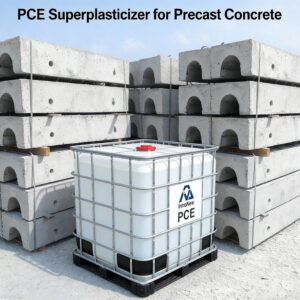
Polycarboxylate Superplasticizer PCE Water Reducer for Precast Concrete

Concrete Mix Design Guide | Formula, Ratio & Admixture Optimization

Concrete Mix Design Guide | Formula, Ratio & Admixture Optimization Concrete performance depends not only on raw materials, but on precise mix design. A well-designed concrete mix formula ensures: Optimal strength Good workability Long-term durability This Concrete Mix Design Guide provides a practical framework to design mixes for different applications using modern concrete admixtures. Basic […]

Concrete Mix Design Guide | Formula, Ratio & Admixture Optimization Read More »

High-purity PCE Superplasticizer Liquid for high-performance concrete

Best Concrete Admixture for Hot Climate

Best Concrete Admixture for Hot Climate Concrete construction in hot climates such as the Middle East faces serious challenges: Rapid water evaporation Fast slump loss Increased cracking risk Choosing the right concrete admixture for hot climate is essential to ensure workability, strength, and durability. This guide explains how to select the best solution for high-temperature

Best Concrete Admixture for Hot Climate Read More »

Polycarboxylate Superplasticizer Liquid for high strength concrete

Concrete Admixture Selection Guide | Choose the Right Additives for Concrete Performance

Concrete Admixture Selection Guide  Modern concrete performance depends heavily on selecting the right concrete admixtures. From improving workability and strength to enhancing durability and crack resistance, each additive plays a specific role in the mix design. This Concrete Admixture Selection Guide helps engineers, contractors, and buyers choose the most suitable solution based on project requirements.

Concrete Admixture Selection Guide | Choose the Right Additives for Concrete Performance Read More »

Concrete water reducing agent Polycarboxylate Superplasticizer PCE Liquid

PCE HWR vs HSR Superplasticizer | High Water Reduction vs Slump Retention Explained

PCE HWR vs HSR Superplasticizer | High Water Reduction vs Slump Retention When selecting a polycarboxylate ether (PCE) superplasticizer, the most common question is: 👉 Should you choose HWR (High Water Reduction) or HSR (High Slump Retention)? These two types of PCE admixtures serve different purposes in concrete performance optimization. Understanding the difference between HWR

PCE HWR vs HSR Superplasticizer | High Water Reduction vs Slump Retention Explained Read More »

Hydroxyethyl cellulose HEC for paint high performance thickener for water based coatings rheology modifier latex paint additive

Best Thickener for Water-Based Paint | Complete Guide

Best Thickener for Water-Based Paint: Complete Selection Guide Choosing the best thickener for water-based paint is critical for achieving optimal viscosity, application performance, and coating quality.Different thickeners provide different rheology behaviors, affecting leveling, sag resistance, and storage stability. This guide compares the most widely used water-based paint thickeners, helping formulators and buyers select the right

Best Thickener for Water-Based Paint | Complete Guide Read More »

Hydroxyethyl cellulose HEC for paint high performance thickener for water based coatings rheology modifier latex paint additive

HEC vs HPMC in Coatings | Key Differences & Selection Guide

HEC vs HPMC in Coatings: Complete Selection Guide for Paint Formulators Selecting the right Cellulose Ether is critical for coating performance and formulation stability.When comparing HEC vs HPMC in coatings, the decision is not simply about thickening—it directly impacts rheology behavior, application properties, and final film quality. This guide provides a formulation-driven comparison of hydroxyethyl

HEC vs HPMC in Coatings | Key Differences & Selection Guide Read More »

PVOH for ceramics, ceramic grade PVA binder

Ceramic Binder Formulation Guide | PVOH, CMC, PEG Optimization

Ceramic Binder Formulation Guide: Optimize Strength, Stability & Sintering Performance In modern ceramic manufacturing, ceramic binder formulation plays a decisive role in determining product quality, shaping performance, and sintering success. Whether in technical ceramics, structural ceramics, or abrasive materials, selecting the right binder system directly affects green strength, particle bonding, and defect control. Among various

Ceramic Binder Formulation Guide | PVOH, CMC, PEG Optimization Read More »

HEC hydroxyethyl cellulose for natural stone paint high fluidity

Mala Color Stone Paint Additive Guide

Why Mala Color Stone Paint Additive Is Essential Amid the ongoing upgrading trend of architectural coatings, mala color stone paint additive has evolved into a core element for boosting product performance and market competitiveness. Whether for dry powder systems or water-based systems, the proper selection of stone paint additive can greatly enhance adhesion, workability and

Mala Color Stone Paint Additive Guide Read More »

Infographic comparing PVA and RDP polymers in tile adhesive, highlighting bond strength, flexibility, water resistance, and durability for construction applications.

PVA vs RDP in Tile Adhesive | Cost, Performance & Application Comparison

PVA vs RDP in Tile Adhesive – Which Is Better? In modern tile adhesive formulations, both Polyvinyl Alcohol (PVA) and Redispersible Polymer Powder (RDP) are widely used to improve performance. However, many manufacturers face a key question: 👉 Should you use PVA or RDP? This guide provides a detailed comparison of cost, performance, flexibility, and

PVA vs RDP in Tile Adhesive | Cost, Performance & Application Comparison Read More »

Polyvinyl Alcohol PVA Manufacturer and Supplier

PVA Glue Formulation Guide | How to Make Polyvinyl Alcohol Adhesive

PVA Glue Formulation Guide: Industrial Manufacturing, Performance Optimization and Troubleshooting Handbook Introduction Polyvinyl Alcohol (PVA) adhesives are widely used in industries including: Woodworking and furniture manufacturing Paper and packaging Bookbinding Textile processing Although PVA adhesives are water-based and seemingly simple, their final performance depends on careful engineering, including: Selection of PVA grade Degree of hydrolysis

PVA Glue Formulation Guide | How to Make Polyvinyl Alcohol Adhesive Read More »

Scroll to Top