+86-17736063980 ✉️ chris@innonew-material.com
Polycarboxylate Ether PCE Powder - High Efficiency Concrete Superplasticizer

How to Maintain Slump Retention in Hot Weather Concrete Pile Construction

How to Maintain Slump Retention in Hot Weather Concrete Pile Construction In modern pile foundation engineering, concrete performance stability has become increasingly critical — especially in tropical and high-temperature regions where environmental conditions directly affect workability, pumpability, and pile integrity. For bored piles, spun piles, precast piles, and deep foundation systems, one of the most […]

How to Maintain Slump Retention in Hot Weather Concrete Pile Construction Read More »
Hydroxypropyl Methylcellulose (HPMC) used in fire retardant paint

How HPMC Prevents Sedimentation in Intumescent Coatings: Rheology Control & Suspension Stability Explained

How HPMC Prevents Sedimentation in Intumescent Coatings: Rheology Control & Suspension Stability Explained Introduction Water-based intumescent coatings are widely used for passive fire protection in steel structures, tunnels, industrial facilities, and commercial buildings. These coatings rely heavily on flame-retardant fillers such as ammonium polyphosphate (APP), aluminum hydroxide (ATH), magnesium hydroxide, and expandable graphite. However, one

How HPMC Prevents Sedimentation in Intumescent Coatings: Rheology Control & Suspension Stability Explained Read More »

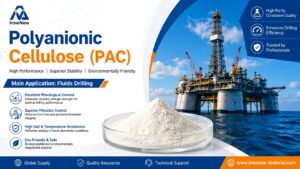
Polyanionic Cellulose PAC powder for drilling fluids by InnoNew Material used in oilfield drilling mud for rheology control and fluid loss reduction

PAC LV vs PAC HV for Water-Based Drilling Fluids | Complete Oilfield Drilling Guide

PAC LV vs PAC HV for Water-Based Drilling Fluids Introduction In modern oilfield drilling operations, water-based drilling fluids play a critical role in borehole stability, cuttings transportation, lubrication, and pressure control. Among the most widely used drilling fluid additives, Polyanionic Cellulose (PAC) is recognized as an essential component for improving drilling mud performance and fluid

PAC LV vs PAC HV for Water-Based Drilling Fluids | Complete Oilfield Drilling Guide Read More »

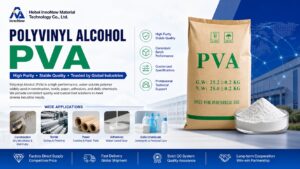
Polyvinyl Alcohol PVA Manufacturer & Supplier

PVA 2488 Viscosity (44–55 mPa·s): Properties, Applications & Industrial Guide

PVA 2488 Viscosity (44–55 mPa·s): Properties, Applications & Industrial Guide Why PVA 2488 Viscosity is Widely Used PVA 2488 viscosity (44–55 mPa·s) is one of the most versatile polyvinyl alcohol grades, offering a balanced combination of solubility, film formation, and adhesion. This makes it suitable for a wide spectrum of industries, from construction construction building

PVA 2488 Viscosity (44–55 mPa·s): Properties, Applications & Industrial Guide Read More »

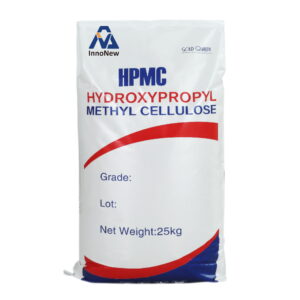
Hydroxypropyl Methyl Cellulose HPMC powder for tile adhesive and dry mix mortar applications

HPMC vs MHEC vs HEC: Technical Comparison for Construction, Coatings, Oilfield & Home Care (2026)

HPMC vs MHEC vs HEC: Complete Technical Comparison for Construction and Coating Applications Introduction In modern construction chemicals and industrial formulations, cellulose ethers play a critical role in controlling water retention, workability, rheology, open time, and application performance. Among the most widely used cellulose ethers are Hydroxypropyl Methyl Cellulose (HPMC), Methyl Hydroxyethyl Cellulose (MHEC/HEMC), and

HPMC vs MHEC vs HEC: Technical Comparison for Construction, Coatings, Oilfield & Home Care (2026) Read More »

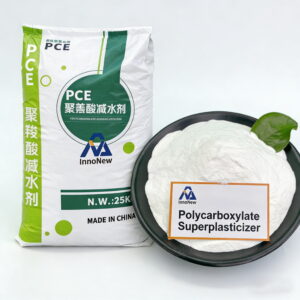
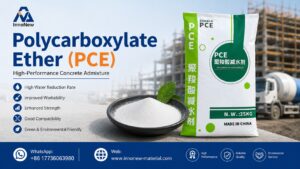
Polycarboxylate Ether PCE Powder - High Efficiency Concrete Superplasticizer

PCE vs SNF: Polycarboxylate Ether vs Sulfonated Naphthalene Superplasticizer (Difference, Cost & Applications)

PCE vs SNF: Complete Guide for Concrete Admixture Selection Introduction In the global construction chemicals market, PCE vs SNF is one of the most frequently asked questions among engineers, contractors, and procurement managers. Both Polycarboxylate Ether (PCE) and Sulfonated Naphthalene Formaldehyde (SNF) are widely used superplasticizers (water reducers) in concrete and dry mix mortar. However,

PCE vs SNF: Polycarboxylate Ether vs Sulfonated Naphthalene Superplasticizer (Difference, Cost & Applications) Read More »

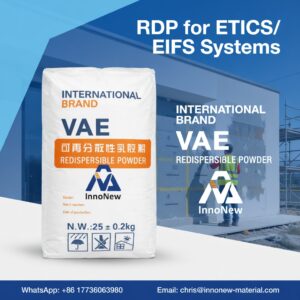
RDP adhesive for ETICS and EIFS exterior insulation finishing system construction

HPMC vs RDP: Key Differences, Applications & Best Combination | InnoNew

HPMC vs RDP: Key Differences, Applications & Best Combination  HPMC and RDP both have film-forming, water retention, and adhesion capabilities. However, they differ in gelation mechanism, flexibility, and application performance. This guide focuses on functional differences and synergistic effects, rather than cost comparisons. This guide explains the differences between InnoNew HPMC (Hydroxypropyl Methyl Cellulose) and

HPMC vs RDP: Key Differences, Applications & Best Combination | InnoNew Read More »

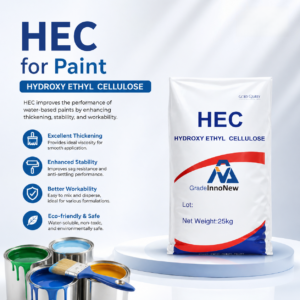
Hydroxyethyl Cellulose for water-based paint

Hydroxyethyl Cellulose (HEC) – Natrosol 250 HBR Equivalent

Hydroxyethyl Cellulose (HEC) – Natrosol 250 HBR Equivalent Hydroxyethyl Cellulose (HEC) is a non-ionic, water-soluble cellulose ether widely used as a thickener, stabilizer, rheology modifier, and water-retention agent in water-based systems. Our product is a high-performance equivalent to Natrosol 250 HBR, delivering excellent viscosity, salt tolerance, and smooth flow behavior—ideal for coatings, construction, and oilfield

Hydroxyethyl Cellulose (HEC) – Natrosol 250 HBR Equivalent Read More »

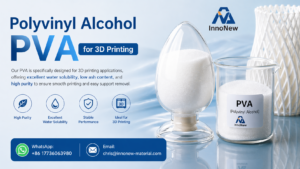
Polyvinyl Alcohol PVA 0588 Raw Material for 3D Printing, Low Viscosity (4-6 mPa·s), 87-89% Hydrolysis Degree

Best PVA for 3D Printing | Complete Guide to Water-Soluble Support Material

What is the Best PVA for 3D Printing? Polyvinyl Alcohol (PVA) is a water-soluble polymer widely used as a support material in FDM 3D printing. Choosing the best PVA for 3D printing is critical for achieving: Clean support removal Smooth surface finish Stable extrusion performance However, not all PVA grades are suitable. The right selection

Best PVA for 3D Printing | Complete Guide to Water-Soluble Support Material Read More »

High-Range Water Reducer Polycarboxylate Ether Based PCE Superplasticizer

Best Concrete Water Reducer in 2026 | PCE Powder vs Liquid Superplasticizer Guide

Best Concrete Water Reducer – Complete Guide for Modern Concrete This guide explains the best concrete water reducer technologies, including lignosulfonate, naphthalene, and advanced Polycarboxylate Superplasticizers (PCE). Learn how to choose between PCE powder and liquid water reducers for superior concrete strength, workability, and cost efficiency. Choosing the best concrete water reducer is no longer

Best Concrete Water Reducer in 2026 | PCE Powder vs Liquid Superplasticizer Guide Read More »

Scroll to Top