Warning: Undefined array key "url" in /www/wwwroot/innonew-material.com/wp-content/plugins/seo-by-rank-math/includes/modules/schema/snippets/class-author.php on line 41
+86-17736063980 ✉️ chris@innonew-material.com

admin

Compare HPS, PAC & CMC polysaccharide polymers for oil drilling fluids. Learn their differences in filtration control, salt tolerance, viscosity, cost & best applications for drilling mud systems.

Best Drilling Fluid Additives: Polysaccharide Polymer (PAC/CMC/HPS) Complete Buying Guide

Best Drilling Fluid Additives: Polysaccharide Polymer Complete Procurement Guide Introduction to Drilling Fluid Additives In the oil and gas industry, drilling fluid additives play a critical role in ensuring safe and efficient drilling operations. Choosing the best drilling fluid additives directly impacts wellbore stability, fluid loss control, and overall drilling performance. Among all available solutions, […]

Best Drilling Fluid Additives: Polysaccharide Polymer (PAC/CMC/HPS) Complete Buying Guide Read More »

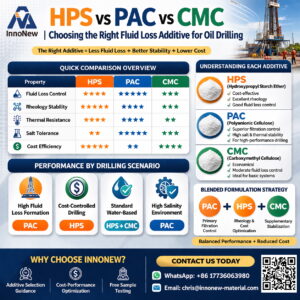
Compare HPS, PAC & CMC polysaccharide polymers for oil drilling fluids. Learn their differences in filtration control, salt tolerance, viscosity, cost & best applications for drilling mud systems.

HPS vs PAC vs CMC in Oil Drilling Fluids | Which Fluid Loss Additive Is Best? (2026 Guide)

HPS, PAC & CMC Comparison: Best Polysaccharide Polymers for Drilling Mud Fluid Loss & Rheology Why Fluid Loss Is a Critical Problem  Fluid loss is one of the most common and costly issues in drilling operations. When drilling fluid invades the formation, it leads to: Formation damage Wellbore instability Reduced drilling efficiency Increased operational cost

HPS vs PAC vs CMC in Oil Drilling Fluids | Which Fluid Loss Additive Is Best? (2026 Guide) Read More »

Hydroxypropyl Starch Ether (HPS) for Oil Drilling Fluid

Hydroxypropyl Starch Ether (HPS) for Oil Drilling | Advanced Fluid Loss Control & Rheology Stabilizer

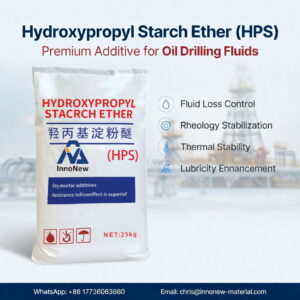
Hydroxypropyl Starch Ether (HPS) in Oil Drilling Fluids Engineered Polymer for High-Performance Drilling Operations Why HPS Matters in Modern Drilling Systems  In oil and gas drilling, fluid performance directly impacts: Wellbore stability Drilling efficiency Operational cost Key challenges include: Excessive fluid loss into formations Poor rheology control under high shear Thermal degradation of additives 👉

Hydroxypropyl Starch Ether (HPS) for Oil Drilling | Advanced Fluid Loss Control & Rheology Stabilizer Read More »

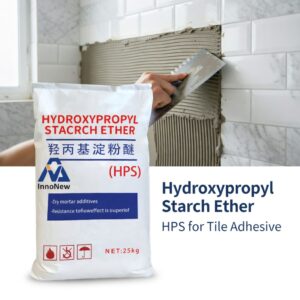
Hydroxypropyl Starch Ether HPS for tile adhesive

Best Additives for Dry Mix Mortar: Complete Formulation Guide (2026)

Dry Mix Mortar Additives – Technical Performance System Guide Dry mix mortar is a pre-engineered powder system composed of cementitious binders, graded aggregates, and functional chemical additives. Compared with site-mixed mortar, its core advantage lies in formulation precision, performance stability, and industrial reproducibility. In modern construction chemistry, dry mix mortar performance is no longer determined

Best Additives for Dry Mix Mortar: Complete Formulation Guide (2026) Read More »

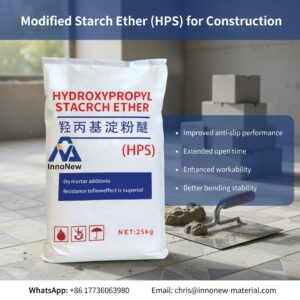
White powder of Hydroxypropyl Starch Ether (HPS) for construction, a modified starch derivative used in dry mortar and tile adhesives

Why Dry Mix Mortar Is Sagging? Complete Solution with HPS (Hydroxypropyl Starch Ether)

Sagging is one of the most common and costly problems in dry-mix mortar applications, especially in: Tile adhesive Wall putty Plaster systems If not properly controlled, it leads to: Poor adhesion Uneven thickness Rework and material waste Main Causes of Mortar Sagging 1. Insufficient Yield Stress Mortar lacks internal structure → cannot resist gravity 2.

Why Dry Mix Mortar Is Sagging? Complete Solution with HPS (Hydroxypropyl Starch Ether) Read More »

high quality artificial marble release film, heat-resistant tear-proof marble casting release film

Best Release Film for Artificial Marble Manufacturing in 2026 (Complete Buyer’s Guide)

Introduction: The Modern Challenge of Artificial Marble Manufacturing Artificial marble and cultured stone production has grown rapidly worldwide. While these materials offer superior aesthetics and durability, manufacturers face persistent challenges during mold demolding: Surface adhesion to molds Residual resin on molds Labor-intensive cleaning Risk of surface defects Traditional methods such as wax, silicone oil, or

Best Release Film for Artificial Marble Manufacturing in 2026 (Complete Buyer’s Guide) Read More »

Biodegradable water soluble release film, dissolves completely in water, non-toxic and eco-friendly industrial solution

Artificial Marble Defects and How to Fix Them (Complete Factory Guide)

Artificial Marble Defects and Solutions | Improve Surface Quality & Reduce Production Loss In artificial marble manufacturing, product quality consistency is the key to profitability. However, many factories experience recurring defects that lead to: High rejection rates Increased polishing and rework Production delays Customer complaints Understanding the root causes of artificial marble defects is essential

Artificial Marble Defects and How to Fix Them (Complete Factory Guide) Read More »

High-quality PVA water soluble release film, eco-friendly and heat-resistant for mold release applications

PVA Release Film vs Wax Release Agent: Which is Better for Artificial Marble?

PVA Release Film vs Wax Release Agent: Which is Better for Artificial Marble? In artificial marble manufacturing, choosing the right mould release system is a critical decision that directly impacts: Surface quality and gloss Production efficiency Defect rate Overall manufacturing cost For decades, wax-based release agents have been widely used due to their low initial

PVA Release Film vs Wax Release Agent: Which is Better for Artificial Marble? Read More »

- High Transparency PVOH Water Soluble Release Film for Artificial Marble Mould Demolding

Why Artificial Marble Sticks to Mould | Best Release Film Solution for Easy Demoulding

Why Artificial Marble Sticks to Mould | Best Release Film Solution for Easy Demoulding In artificial marble manufacturing, mould sticking is one of the most critical production problems, directly affecting product quality, production efficiency, and operational costs. When artificial marble sticks to the mould, it can result in: Surface damage or tearing Increased defect rate

Why Artificial Marble Sticks to Mould | Best Release Film Solution for Easy Demoulding Read More »

high quality artificial marble release film, heat-resistant tear-proof marble casting release film

How to Improve Artificial Marble Surface Gloss | PVA Release Film Solution for High-Gloss Marble

How to Improve Artificial Marble Surface Gloss | PVA Release Film Solution for High-Gloss Marble In artificial marble manufacturing, surface gloss is not just a visual parameter—it is a direct indicator of product quality, process stability, and market competitiveness. High-gloss artificial marble commands significantly higher prices, especially in premium applications such as countertops, decorative panels,

How to Improve Artificial Marble Surface Gloss | PVA Release Film Solution for High-Gloss Marble Read More »

Scroll to Top