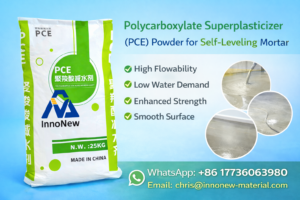
PCE powder for self leveling mortar, polycarboxylate superplasticizer powder

Why Self-Leveling Mortar Is Not Flowing? 7 Common Problems & Proven Solutions

Why Self-Leveling Mortar Is Not Flowing? 7 Common Problems & Proven Solutions Self-leveling mortar is designed to flow smoothly and level itself without manual spreading. But in real production and application, many manufacturers face a frustrating issue: 👉 The mortar does not flow properly,👉 It becomes thick, uneven, or difficult to spread. This not only […]

Why Self-Leveling Mortar Is Not Flowing? 7 Common Problems & Proven Solutions Read More »
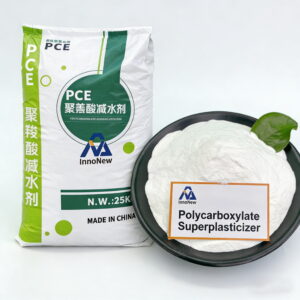
High-Range Water Reducer Polycarboxylate Ether Based PCE Superplasticizer

PCE Powder vs SNF: Which is Better for Self-Leveling Mortar?

PCE Powder vs SNF: Which is Better for Self-Leveling Mortar? Choosing the right superplasticizer is critical for achieving optimal performance in self-leveling mortar. Many manufacturers still use traditional SNF (naphthalene-based superplasticizer) due to lower cost — but modern high-performance systems increasingly rely on PCE powder (polycarboxylate superplasticizer). So which one is actually better? This guide

PCE Powder vs SNF: Which is Better for Self-Leveling Mortar? Read More »

PCE powder for self leveling mortar, polycarboxylate superplasticizer powder

Self-Leveling Mortar Formulation Guide | Optimize Flow, Strength & Cost with PCE Powder

Self-Leveling Mortar Formulation Guide: Optimize Flowability, Strength & Cost Self-leveling mortar is a high-performance dry mix material designed to create smooth, flat surfaces with minimal manual effort. A well-optimized formulation directly determines: Flowability (self-leveling ability) Surface finish quality Crack resistance Production cost In this guide, we break down a professional self-leveling mortar formulation, including raw

Self-Leveling Mortar Formulation Guide | Optimize Flow, Strength & Cost with PCE Powder Read More »

How to Reduce Foam in Metalworking Fluids

How to Reduce Foam in Metalworking Fluids: Complete Industrial Guide Foaming is one of the most common and costly problems in metalworking fluids. It reduces cooling efficiency, causes overflow, and increases maintenance costs. 1. Why Foam Occurs Excess surfactants High-pressure systems TEA-based formulations 2. Impact of Foam Reduced heat transfer Tool wear Machine downtime 3.

How to Reduce Foam in Metalworking Fluids Read More »

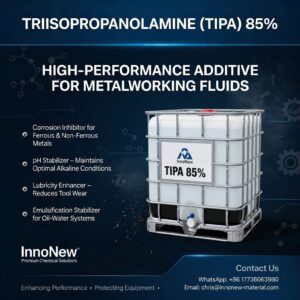
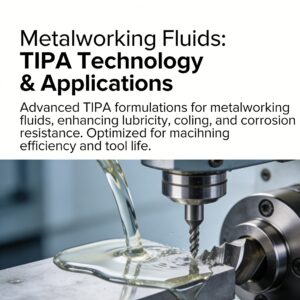
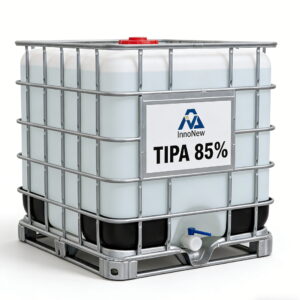
Triisopropanolamine (TIPA) - High-Performance Additive for Metalworking Fluids

Metalworking Fluid Formulation Guide: Ingredients, Ratios & Additives for High-Performance Cutting Fluids

Metalworking Fluid Formulation Guide: Ingredients, Ratios & Performance Optimization Designing a high-performance metalworking fluid formulation requires precise balancing of lubrication, corrosion protection, cooling efficiency, and pH stability. Whether developing cutting fluids, grinding fluids, or industrial coolants, selecting the right raw materials and ratios is critical. This comprehensive cutting fluid formulation guide provides a practical, industry-ready

Metalworking Fluid Formulation Guide: Ingredients, Ratios & Additives for High-Performance Cutting Fluids Read More »

TIPA Additive for Metalworking Fluids - pH Regulator & Corrosion Protector

TIPA vs TEA in Metalworking Fluids: Which Performs Better in Corrosion Protection & pH Stability?

TIPA vs TEA in Metalworking Fluids: Which One Delivers Better Performance? In modern metalworking fluids, selecting the right alkanolamine directly impacts corrosion protection, pH stability, lubrication, and fluid lifespan. Among the most widely used amines, TIPA (Triisopropanolamine) and TEA (Triethanolamine) dominate the market. This in-depth TIPA vs TEA comparison reveals which performs better in real-world

TIPA vs TEA in Metalworking Fluids: Which Performs Better in Corrosion Protection & pH Stability? Read More »

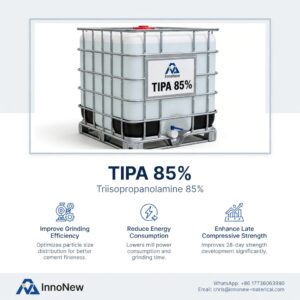
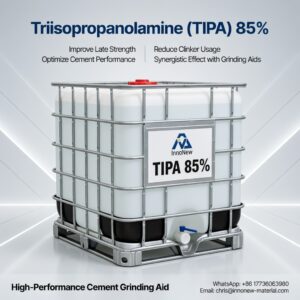
TIPA triisopropanolamine for cement grinding - high efficiency grinding aid solution

Triisopropanolamine TIPA Supplier in Turkey | Buy TIPA for Cement Industry

Triisopropanolamine Supplier in Turkey – Complete Buying Guide for Cement Industry Turkey has become one of the fastest-growing cement and construction markets, driving strong demand for high-performance additives such as Triisopropanolamine (TIPA). For cement plants and admixture manufacturers, choosing the right Triisopropanolamine supplier in Turkey is essential for achieving consistent quality and cost efficiency. In

Triisopropanolamine TIPA Supplier in Turkey | Buy TIPA for Cement Industry Read More »

TIPA cement grinding aid

Top 5 Benefits of Using Triisopropanolamine in Cement Production

Top 5 Benefits of Using Triisopropanolamine in Cement Production Triisopropanolamine (TIPA) isn’t just a cement grinding aid—it’s a versatile alkanolamine that many producers are turning to because it quietly solves multiple pain points at once. Its bulkier molecular structure (with three isopropanol groups) gives it unique dispersing properties and selective ion-complexing abilities, particularly with iron

Top 5 Benefits of Using Triisopropanolamine in Cement Production Read More »

TIPA cement grinding aid, triisopropanolamine 85% for cement production

How to Choose a Reliable Triisopropanolamine TIPA Supplier | Complete Buying Guide

How to Choose a Reliable Triisopropanolamine Supplier Choosing the right Triisopropanolamine TIPA supplier is critical for ensuring consistent quality in cement grinding aids and concrete admixtures. With the global demand for TIPA chemical increasing, buyers face challenges in identifying a trustworthy manufacturer that offers stable quality, competitive pricing, and reliable supply. In this guide, we

How to Choose a Reliable Triisopropanolamine TIPA Supplier | Complete Buying Guide Read More »

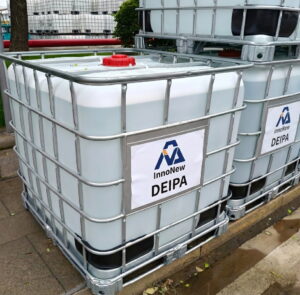
High efficiency DEIPA 85% cement grinding aid

DEIPA vs TIPA: Which One Improves Cement Strength Better? Expert Comparison

DEIPA vs TIPA: The Ultimate Guide to Choosing the Best Cement Strength Enhancer In the competitive cement industry, every percentage point in compressive strength and every kWh saved in grinding directly impacts profitability and product quality. Two leading alkanolamines—DEIPA (Diethanolisopropanolamine) and TIPA (Triisopropanolamine)—have become industry standards as high-performance cement grinding aids and strength enhancers. But

DEIPA vs TIPA: Which One Improves Cement Strength Better? Expert Comparison Read More »

Scroll to Top