+86-17736063980 ✉️ chris@innonew-material.com
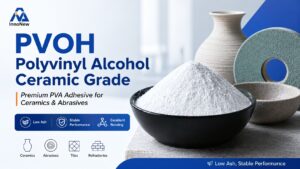
PVOH for ceramics, ceramic grade PVA binder

Ceramic Binder Formulation Guide | PVOH, CMC, PEG Optimization

Ceramic Binder Formulation Guide: Optimize Strength, Stability & Sintering Performance In modern ceramic manufacturing, ceramic binder formulation plays a decisive role in determining product quality, shaping performance, and sintering success. Whether in technical ceramics, structural ceramics, or abrasive materials, selecting the right binder system directly affects green strength, particle bonding, and defect control. Among various […]

Ceramic Binder Formulation Guide | PVOH, CMC, PEG Optimization Read More »
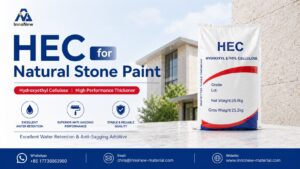
HEC hydroxyethyl cellulose for natural stone paint high fluidity

Mala Color Stone Paint Additive Guide

Why Mala Color Stone Paint Additive Is Essential Amid the ongoing upgrading trend of architectural coatings, mala color stone paint additive has evolved into a core element for boosting product performance and market competitiveness. Whether for dry powder systems or water-based systems, the proper selection of stone paint additive can greatly enhance adhesion, workability and

Mala Color Stone Paint Additive Guide Read More »

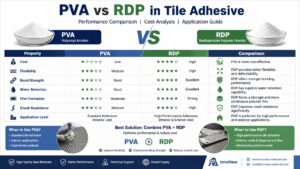
Infographic comparing PVA and RDP polymers in tile adhesive, highlighting bond strength, flexibility, water resistance, and durability for construction applications.

PVA vs RDP in Tile Adhesive | Cost, Performance & Application Comparison

PVA vs RDP in Tile Adhesive – Which Is Better? In modern tile adhesive formulations, both Polyvinyl Alcohol (PVA) and Redispersible Polymer Powder (RDP) are widely used to improve performance. However, many manufacturers face a key question: 👉 Should you use PVA or RDP? This guide provides a detailed comparison of cost, performance, flexibility, and

PVA vs RDP in Tile Adhesive | Cost, Performance & Application Comparison Read More »

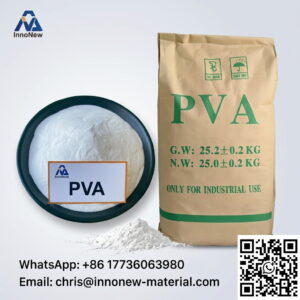
Polyvinyl Alcohol PVA Manufacturer and Supplier

PVA Glue Formulation Guide | How to Make Polyvinyl Alcohol Adhesive

PVA Glue Formulation Guide: Industrial Manufacturing, Performance Optimization and Troubleshooting Handbook Introduction Polyvinyl Alcohol (PVA) adhesives are widely used in industries including: Woodworking and furniture manufacturing Paper and packaging Bookbinding Textile processing Although PVA adhesives are water-based and seemingly simple, their final performance depends on careful engineering, including: Selection of PVA grade Degree of hydrolysis

PVA Glue Formulation Guide | How to Make Polyvinyl Alcohol Adhesive Read More »

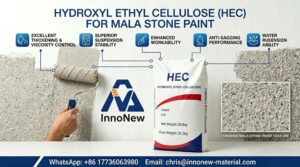
Cellulose Ether HEC for Mala stone paint

HEC Hydroxyethyl Cellulose: Essential Thickener for Mala Color Stone Coating

Why HEC is Critical in Mala Color Stone Coating Mala color stone coating (real stone paint) is widely used in exterior wall decoration due to its natural granite-like appearance and excellent durability. However, achieving stable viscosity, uniform suspension, and smooth application remains a key formulation challenge. Hydroxyethyl Cellulose (HEC) is an essential cellulose ether that

HEC Hydroxyethyl Cellulose: Essential Thickener for Mala Color Stone Coating Read More »

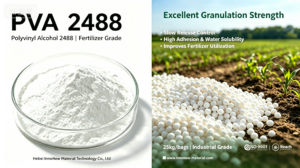
Eco-Friendly PVA 2488 Binder for Fertilizer Granulation, High-Solubility Polyvinyl Alcohol

PVA para Fertilizantes | Aglutinante e Revestimento de Liberação Controlada no Brasil

O que é PVA em fertilizantes? O álcool polivinílico (PVA) é um polímero solúvel em água usado como aglutinante, agente de revestimento e modificador de liberação controlada na produção de fertilizantes. Por que usar PVA no Brasil? Reduz perdas de nutrientes (chuvas intensas no Brasil) Melhora resistência dos grânulos Ideal para fertilizantes NPK Compatível com

PVA para Fertilizantes | Aglutinante e Revestimento de Liberação Controlada no Brasil Read More »

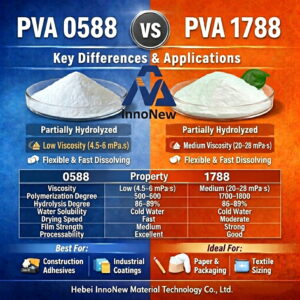
PVA 0588 vs PVA 1788 - Viscosity and Application Comparison of Polyvinyl Alcohol Grades

PVA 0588 vs PVA 1788: Key Differences, Applications & How to Choose

PVA 0588 vs PVA 1788: What’s the Difference and Which One Should You Choose? Introduction  Polyvinyl Alcohol (PVA) is widely used in adhesives, textile sizing, paper coating, and construction materials. Among various grades, PVA 0588 and PVA 1788 are two of the most commonly used—but they serve very different purposes. If you are selecting raw

PVA 0588 vs PVA 1788: Key Differences, Applications & How to Choose Read More »

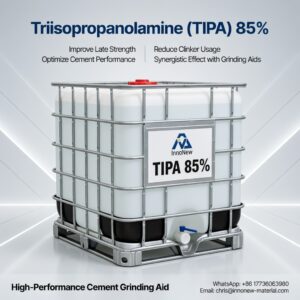
Triisopropanolamine TIPA 85 cement grinding aid

TIPA Supplier in Vietnam | Triisopropanolamine for Cement Industry

TIPA Supplier in Vietnam | Triisopropanolamine for Cement Industry What is Triisopropanolamine TIPA? Triisopropanolamine (TIPA) is a high-efficiency alkanolamine grinding aid and strength enhancer widely used in cement and concrete production in Vietnam. It reduces particle agglomeration, improves grinding efficiency, lowers energy consumption, and significantly boosts 7-day and 28-day compressive strength, especially for slag, fly

TIPA Supplier in Vietnam | Triisopropanolamine for Cement Industry Read More »

TIPA cement grinding aid

TIPA Supplier in Thailand | Triisopropanolamine for Cement & Concrete

TIPA Supplier in Thailand for Cement, Concrete & Agrochemical Industry TIPA Market Demand in Thailand Thailand is a rapidly developing construction and infrastructure market in Southeast Asia. The demand for high-performance cement and concrete continues to grow, driving the need for efficient additives like Triisopropanolamine (TIPA). TIPA is widely used in cement grinding aids and

TIPA Supplier in Thailand | Triisopropanolamine for Cement & Concrete Read More »

Polyvinyl Alcohol (PVA) | High-Quality Industrial Water-Soluble Polymer

PVA 2488 vs PVA 2688: Key Differences, Applications & How to Choose (Expert Guide)

PVA 2488 vs PVA 2688: What’s the Difference and Which One Should You Choose? Introduction to PVA Grades Polyvinyl Alcohol (PVA), also known as PVOH, is a water-soluble polymer widely used in adhesives, films, coatings, and construction materials. Among the most commercially significant grades, PVA 2488 and PVA 2688 are frequently compared due to their

PVA 2488 vs PVA 2688: Key Differences, Applications & How to Choose (Expert Guide) Read More »

Scroll to Top