+86-17736063980 ✉️ chris@innonew-material.com
RDP redispersible polymer powder for repair mortar, construction additive

High-Performance Mortar Protective Layer for EPS Decorative Lines: Technical Analysis of HPMC and RDP Synergistic Application

High-Performance Mortar Protective Layer for EPS Decorative Lines: HPMC and RDP Synergistic Application EPS decorative lines are widely used for exterior architectural decoration, including cornices, window surrounds, columns, arches, and other customized profiles. Their lightweight structure and design flexibility make EPS an attractive alternative to traditional heavy decorative materials. However, the EPS substrate itself requires […]

High-Performance Mortar Protective Layer for EPS Decorative Lines: Technical Analysis of HPMC and RDP Synergistic Application Read More »

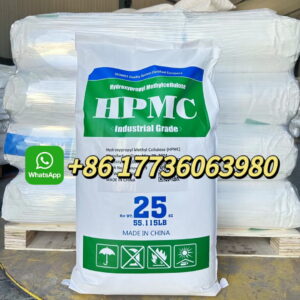
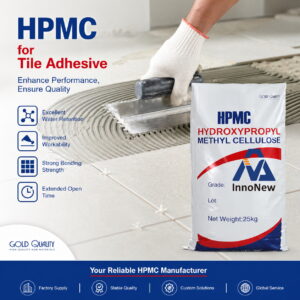
HPMC powder for tile adhesive, high water retention for stable bonding.

Technical White Paper The Role of HPMC in Modern Tile Adhesive Formulations: Molecular Mechanism, Formulation Strategy and Performance Optimization

Technical White Paper The Role of HPMC in Modern Tile Adhesive Formulations: Molecular Mechanism, Formulation Strategy and Performance Optimization Abstract The evolution of ceramic tile installation technology has significantly changed the requirements for cement-based tile adhesive systems. The increasing adoption of large-format tiles, porcelain stoneware, low water absorption ceramics, and demanding construction environments has created

Technical White Paper The Role of HPMC in Modern Tile Adhesive Formulations: Molecular Mechanism, Formulation Strategy and Performance Optimization Read More »

HPMC for wall putty improving workability and wate retention

Wall Putty Additives System Engineering Failure Mode & Field Application Optimization Guide

Wall Putty Additives System | Field Performance & Failure Analysis Guide 1. Introduction: Why Lab Formulation Often Fails in Real Construction In laboratory formulation, wall putty systems often show: Good smoothness Acceptable adhesion Stable viscosity But in real construction environments (hot climate, high absorption walls, fast drying substrates), performance often fails. The reason is simple:

Wall Putty Additives System Engineering Failure Mode & Field Application Optimization Guide Read More »

Cellulose Ether HPMC Powder Manufacturer

Cellulose Ether HS Code 39123900 Explained: HPMC, HEC, MHEC Customs Classification & Global Trade Guide

1. Introduction: What is Cellulose Ether HS Code 39123900? Cellulose ethers are a major class of water-soluble polymer additives widely used in construction chemicals, coatings, pharmaceuticals, and industrial formulations. In international trade, these materials are typically classified under: HS Code 39123900 This HS code is globally recognized for cellulose ether derivatives, including key construction-grade materials

Cellulose Ether HS Code 39123900 Explained: HPMC, HEC, MHEC Customs Classification & Global Trade Guide Read More »

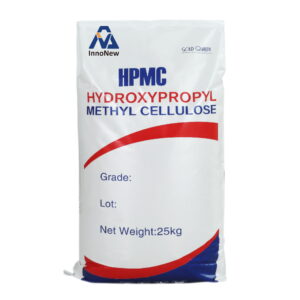
Hydroxypropyl Methyl Cellulose HPMC powder for tile adhesive and dry mix mortar applications

Dry Mix Mortar Formulation Guide: Raw Materials, Additives, and Performance Optimization Principles

Dry Mix Mortar Formulation Guide: Raw Materials, Additives, and Performance Optimization Principles 1. Introduction: From “Formula” to “System Engineering” Dry mix mortar is no longer a simple ratio-based mixture of cement, sand, and additives. In modern construction chemistry, it is better understood as a multi-phase engineered system, where performance is determined by the interaction between

Dry Mix Mortar Formulation Guide: Raw Materials, Additives, and Performance Optimization Principles Read More »

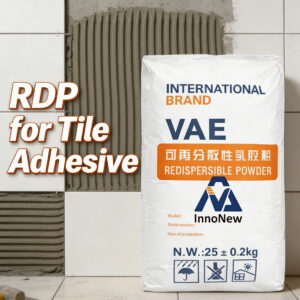
RDP for tile adhesive improving bonding strength and flexibility in dry mix mortar

C1 Tile Adhesive Formula Explained: Standard Cement-Based Tile Adhesive Composition, Materials & Performance Optimization

C1 Tile Adhesive Formula (EN Standard System): Composition, Performance Mechanism & Optimization Guide 1. Introduction: What Makes C1 Tile Adhesive a “System” Material? C1 tile adhesive is not simply a cement mixture—it is a controlled hydration and polymer-modified bonding system defined under EN 12004. Unlike traditional mortar, its performance depends on: Cement hydration kinetics Polymer

C1 Tile Adhesive Formula Explained: Standard Cement-Based Tile Adhesive Composition, Materials & Performance Optimization Read More »

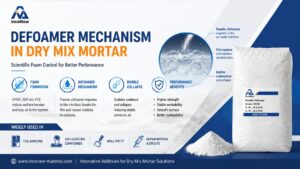
Defoamer mechanism in dry mix mortar showing foam formation, bubble collapse process, and powder defoamer application in tile adhesive, self-leveling, putty, and repair mortar systems.

Defoamer Mechanism in Dry Mix Mortar: A Technical Analysis of Foam Control in Cement-Based Systems

Advanced Technical Review: Defoamer Mechanism in Dry Mix Mortar Systems (From Foam Formation Physics to Application-Level Performance Control) In modern dry mix mortar engineering, foam is no longer treated as a simple “air defect.” It is a multi-phase, polymer-stabilized colloidal system governed by surface chemistry, rheology, and mixing energy. When formulations include high-performance additives such

Defoamer Mechanism in Dry Mix Mortar: A Technical Analysis of Foam Control in Cement-Based Systems Read More »

Real stone paint additives HEC, RDP, PCE for exterior stone texture coating raw materials

Real Stone Paint Additives System: Technical Guide to HPMC, HEC, MHEC, RDP & PCE in Exterior Coating Formulations

Real Stone Paint Additives System: Technical Guide to HPMC, HEC, MHEC, RDP & PCE in Exterior Coating Formulations Introduction: Engineering Nature of Real Stone Paint Systems Real stone paint (also known as exterior textured stone coating) is a high-solids, multi-phase dispersion system composed of: Mineral aggregates (quartz sand, colored sand) Inorganic binders (cement or silicate

Real Stone Paint Additives System: Technical Guide to HPMC, HEC, MHEC, RDP & PCE in Exterior Coating Formulations Read More »

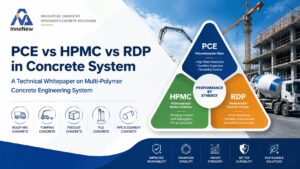
PCE, HPMC and RDP concrete admixture system diagram showing three-layer performance structure for ready mix, pumping, precast and pile concrete applications

PCE vs HPMC vs RDP in Concrete System

A Technical Whitepaper on Admixture Synergy in Modern Concrete Engineering (Ready Mix, Pumping, Precast, Pile & Segment Applications) 1. Executive Summary Modern concrete engineering is no longer governed solely by cement chemistry. Instead, it is controlled by a multi-polymer admixture system that determines: fresh concrete rheology (flowability + stability) transport behavior (pumpability + slump retention)

PCE vs HPMC vs RDP in Concrete System Read More »

HPMC powder for tile adhesive, high water retention for stable bonding.

Tile Adhesive Open Time Optimization

A System-Level Kinetic Analysis of Cement Hydration, Moisture Transport, HPMC and RDP Interaction 1. Introduction: Open Time as a System Behavior In tile adhesive technology, open time is not a fixed material property, but a time-dependent system behavior influenced by cement hydration, moisture transport, and polymer modification. Among all components, HPMC (Hydroxypropyl Methylcellulose) and RDP

Tile Adhesive Open Time Optimization Read More »

Scroll to Top